

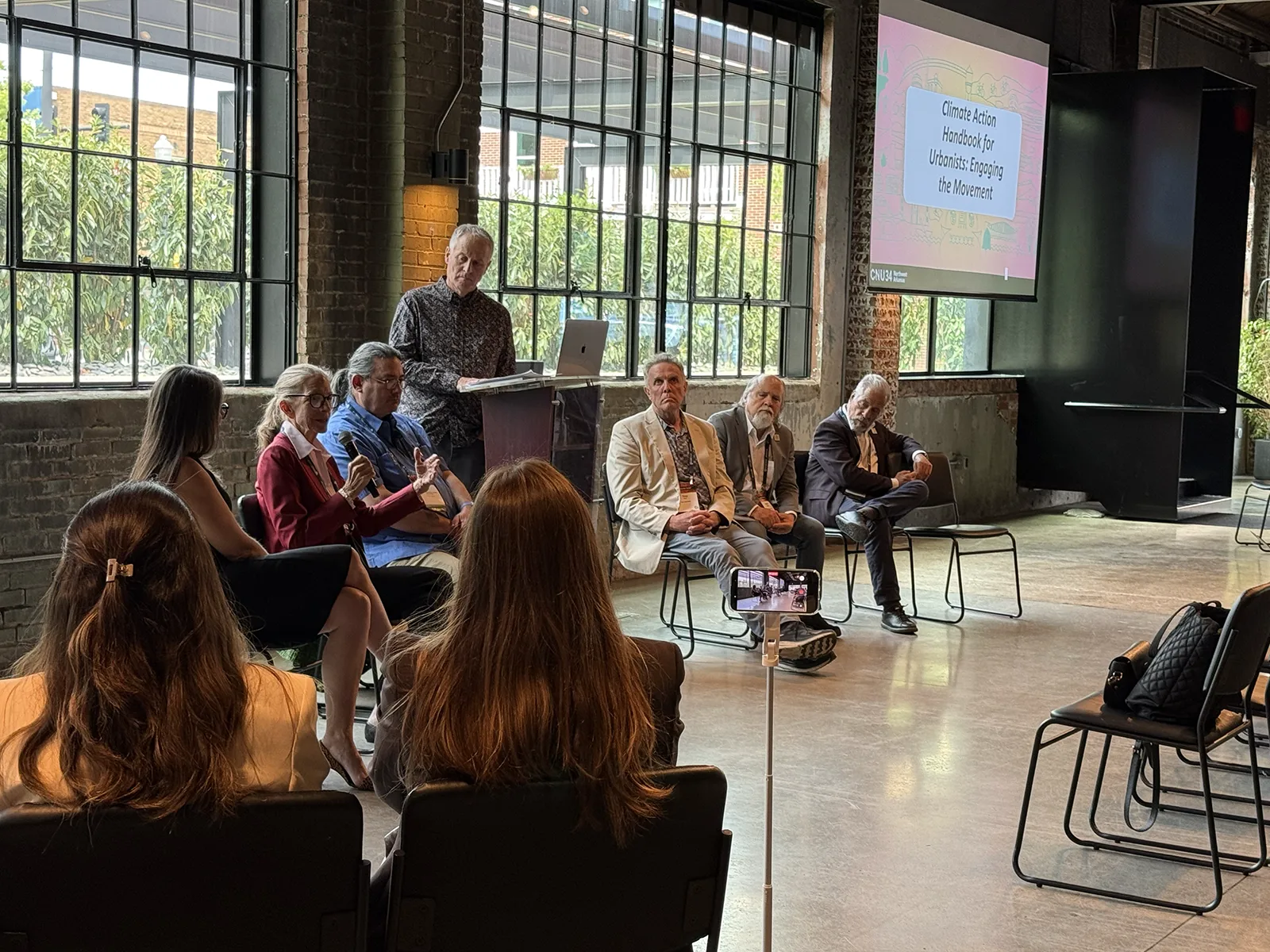
Lizz and Andres joined a few of the contributors to the CNU’s recently published Climate Action Handbook for Urbanists in a lively discussion.
DPZ at CNU34 – Northwest Arkansas
Mid-May found DPZ at the CNU’s 34th congress hosted this year in Arkansas, a state where DPZ has been active since 1995. This conference celebrated more recent efforts in the northwest region where our firm and other CNU colleagues have been working in multiple municipalities to bring awareness to the benefits of New Urbanist strategies and form-based coding.
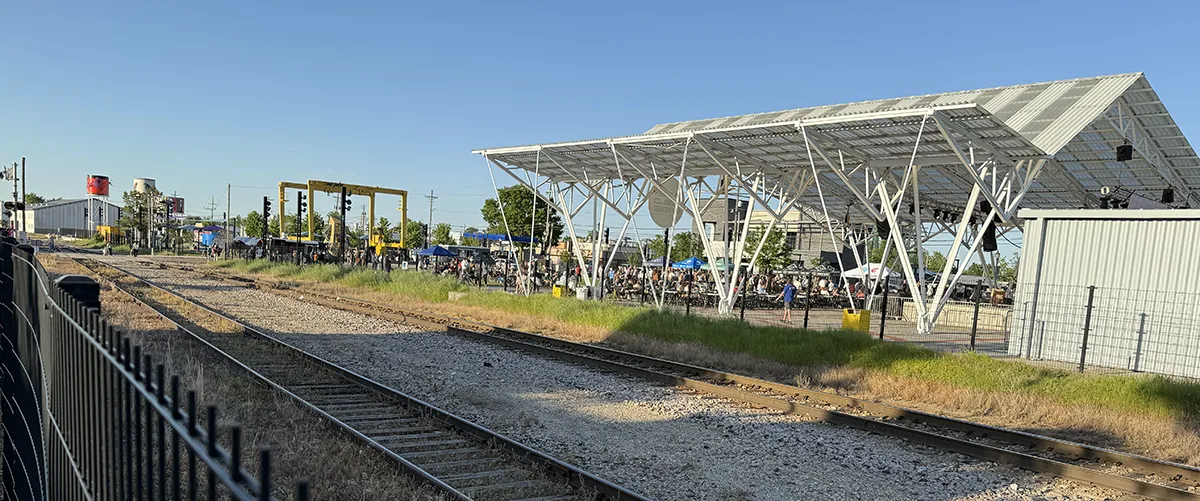
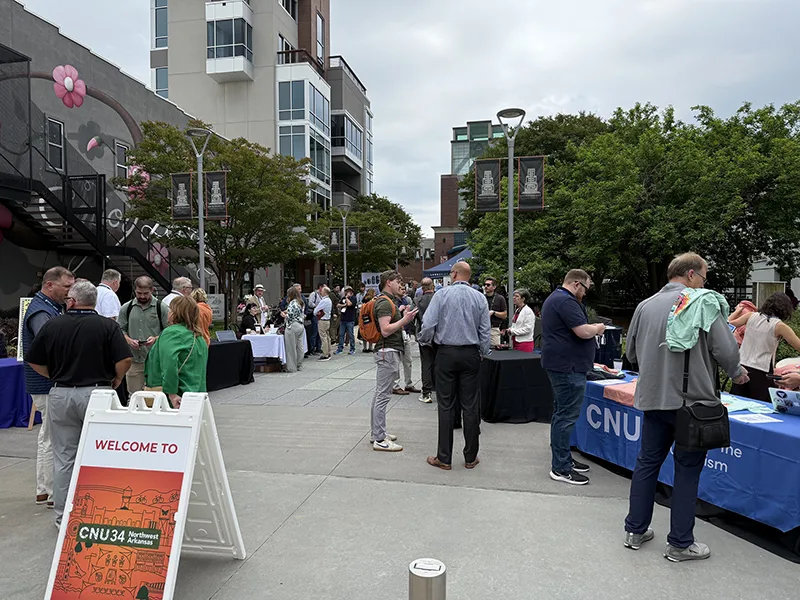
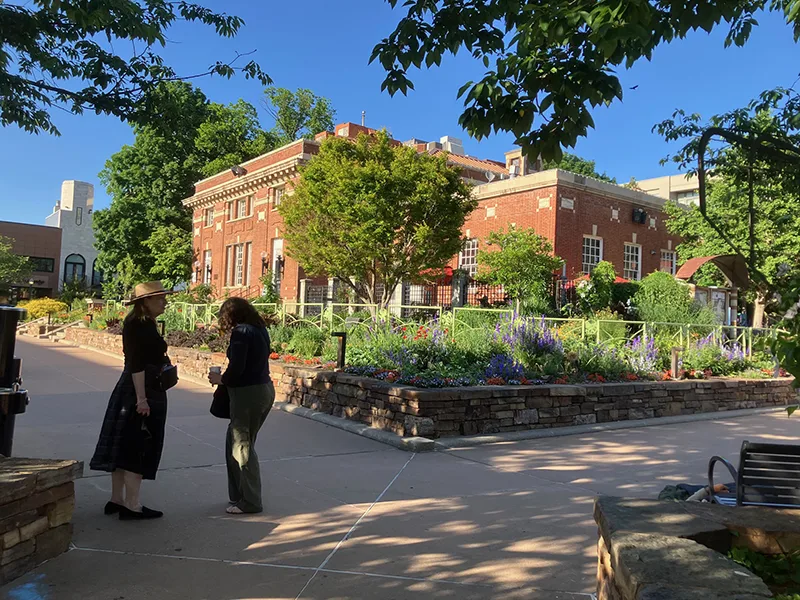
The Railyard in Rogers was the venue for the CNU34 Opening Party (upper). CNU booths filled the sidewalk outside the Fayetteville Town Center conference facility (lower left). Attendees enjoyed the plant collections and gathering spaces of the Downtown Square Gardens surrounding Fayetteville’s historic Old Post Office – the site of the twice-weekly Farmers’ Market (lower right).
This congress was unique in that it was hosted by two cities, Fayetteville and Bentonville, with events being held in the two downtowns and in neighboring communities. The format reflected the spirit of regional collaboration in embracing smart growth, municipal cooperation, and intergovernmental dialogue that has become a hallmark of Northwest Arkansas. Supporting this broader vision is our client, the Northwest Arkansas Council—a coalition of business and civic leaders from Washington and Benton Counties. Working with the council this past year, a team led by DPZ and Placemakers is helping to craft The Northwest Arkansas Regional Growth Strategy that emphasizes the importance of collaboration among municipalities, institutions, and organizations in shaping a more connected, resilient, and prosperous future for the region.
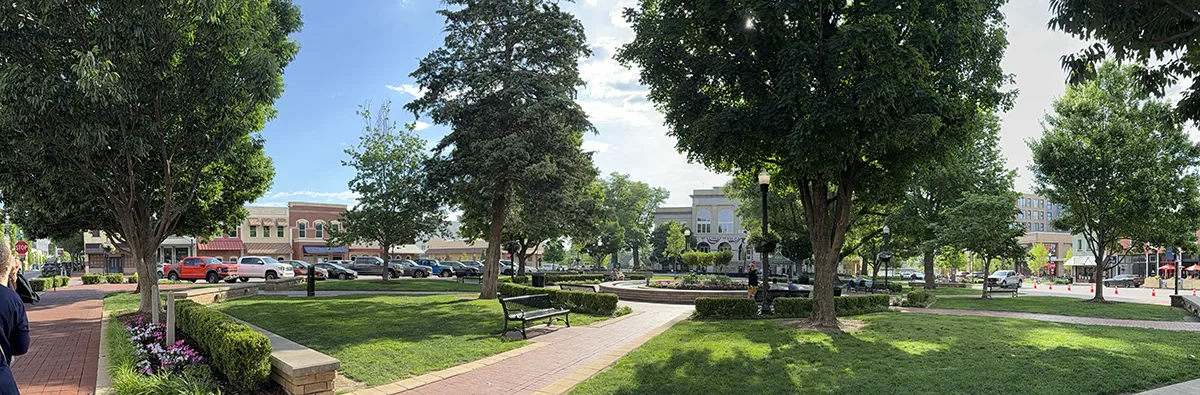
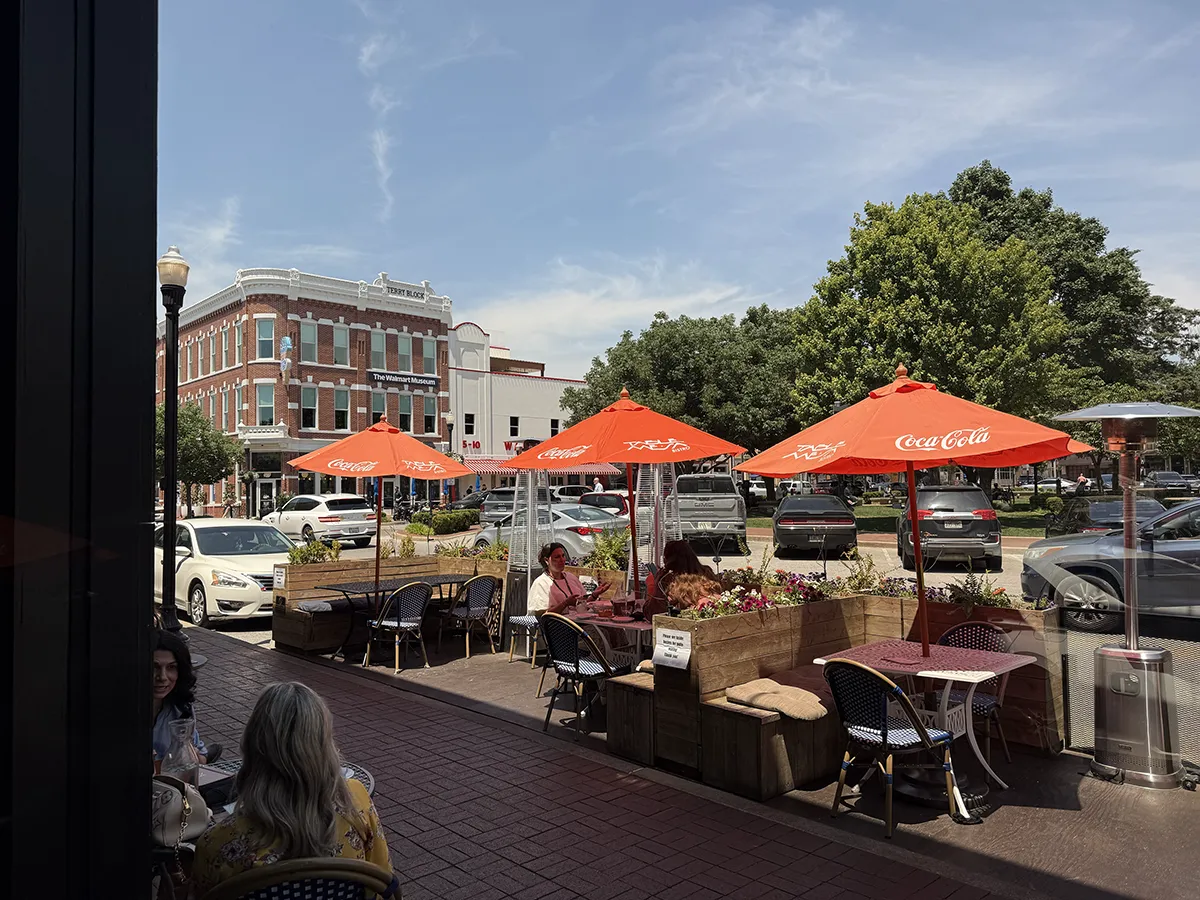
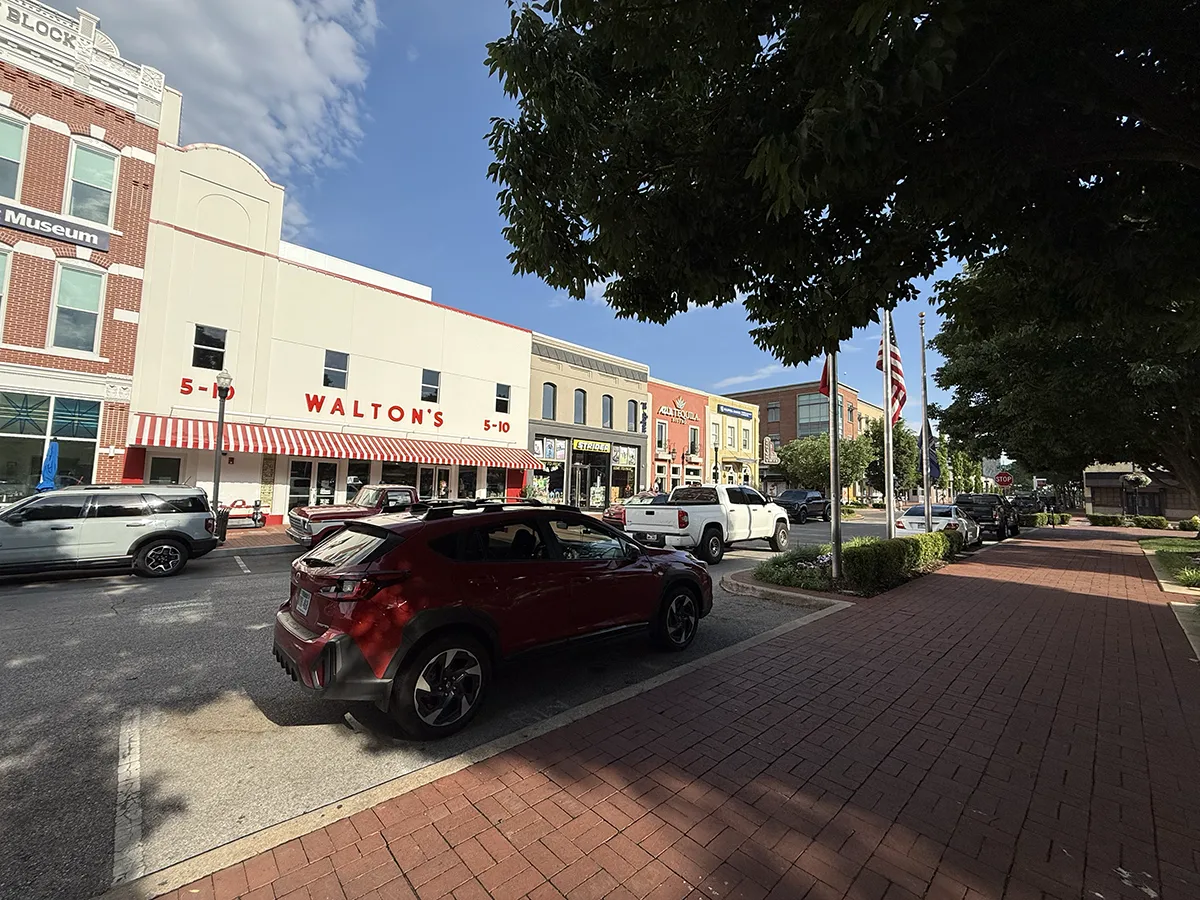
Bentonville’s City Square, with its restaurants, shops, grocery, hotels, Walmart museum, and historic courthouse, was a hub of shopping, dining and conversation.
Among the major themes of this CNU were climate change, affordable housing, and social infrastructure. Opening keynote speaker and Harvard professor Raj Chetty addressed the latter two topics in presenting his research on the economic benefits afforded to children raised in the Hope VI redevelopments designed by New Urbanist firms in the 1990s, as opposed to those raised in the prior housing projects Hope VI was conceived to replace. A climate awareness session featured Chicago-area mitigation initiatives, adaptation to flooding in South Florida, and agrarian urbanism and food self-sufficiency in Arkansas. Sociologist Eric Klinenberg of NYU, Gehl Managing Director Matt Lister and Bloomberg Public Innovation Fellow Carol Coletta, participated in sessions that stressed the importance of shared public third places, such as libraries, parks, and museums, where diverse individuals can intersect and interact, and how these spaces can be tactical and modest.
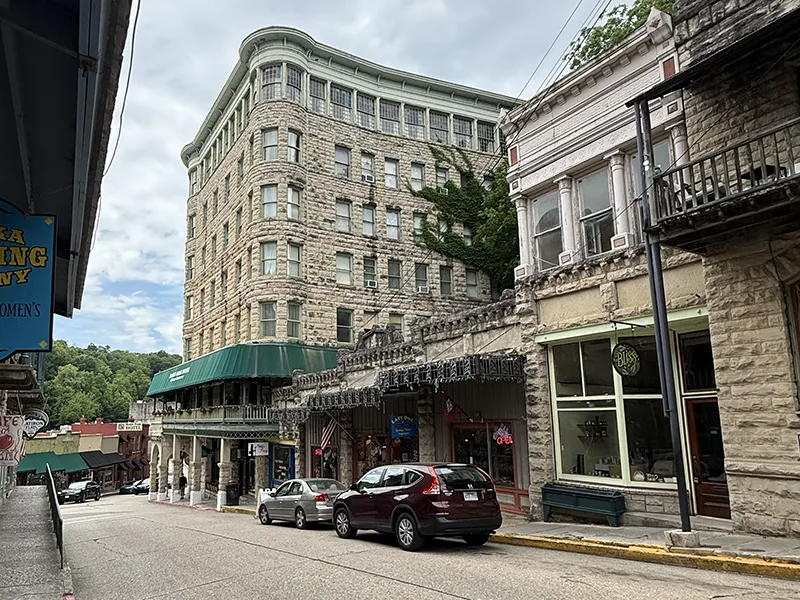
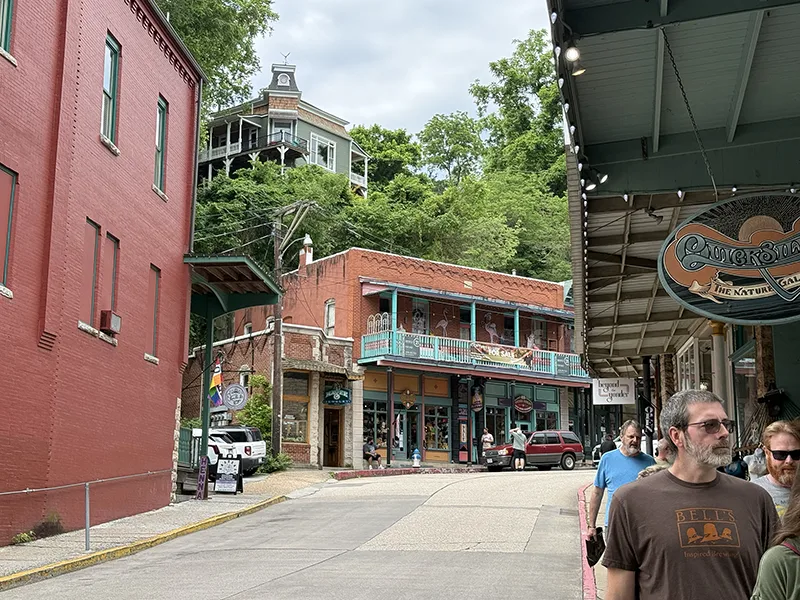
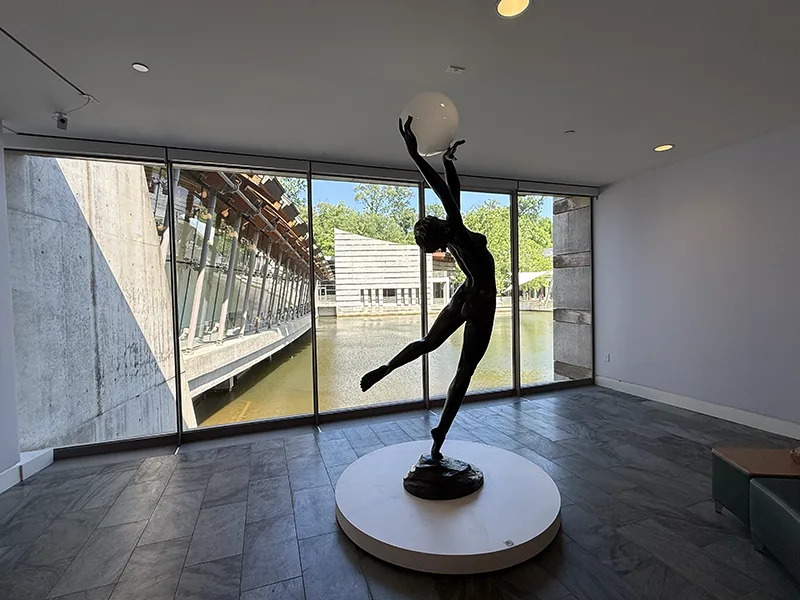
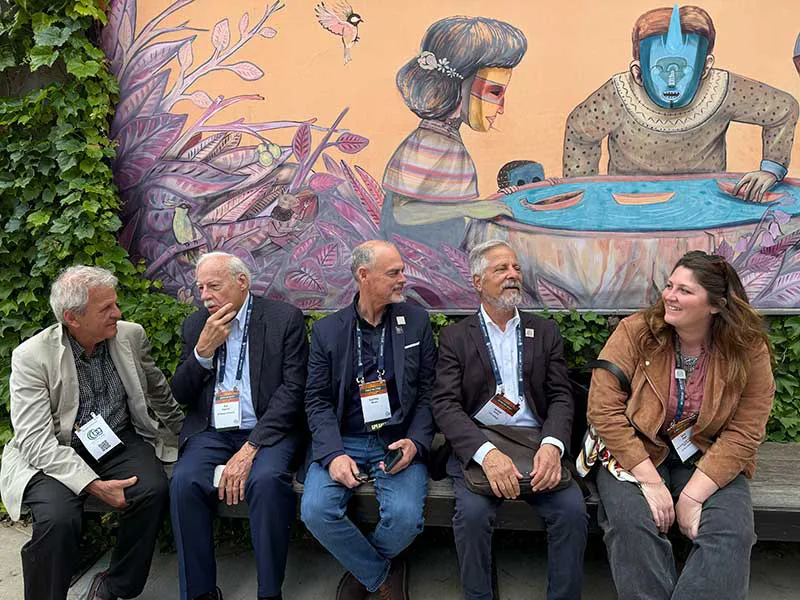
Eureka Springs is one of America’s best examples of hilltown urbanism (upper left and upper right). Bentonville’s Crystal Bridges Museum consists of eight interconnected pavilions encircling two ponds designed by architect Moshe Safdie (lower left). A group of CNUers take a break in between sessions in front of one of the many public art projects in Downtown Bentonville (lower right).
In between sessions, CNUers enjoyed the revitalized urbanism of NWA where outdoor dining and park benches welcomed chance encounters with other attendees. Many took side trips to visit urban gems like Eureka Springs and cultural amenities like the Crystal Bridges museum complex founded by Alice Walton. There were also lessons to be gleaned from the massive Walmart corporate campus and the 40-mile multi-use Razorback Greenway.
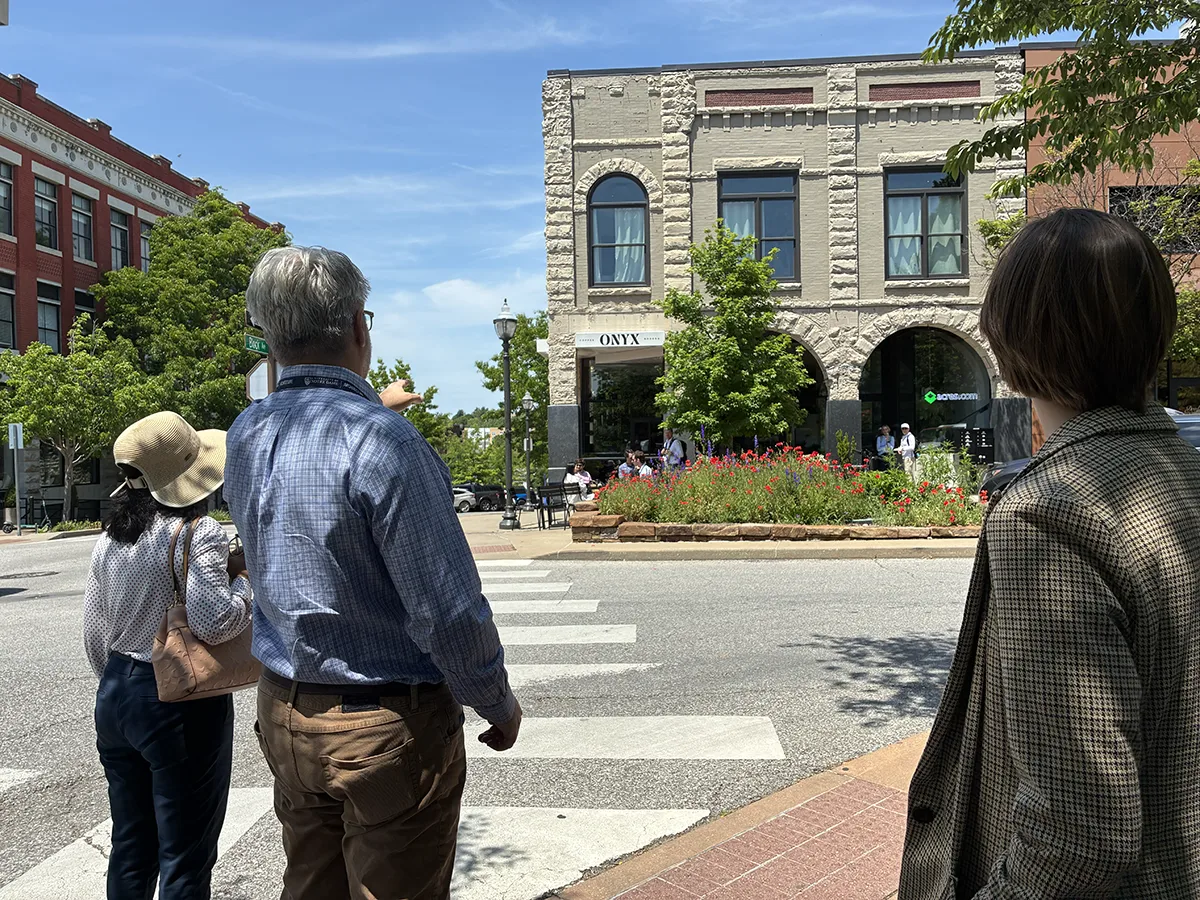
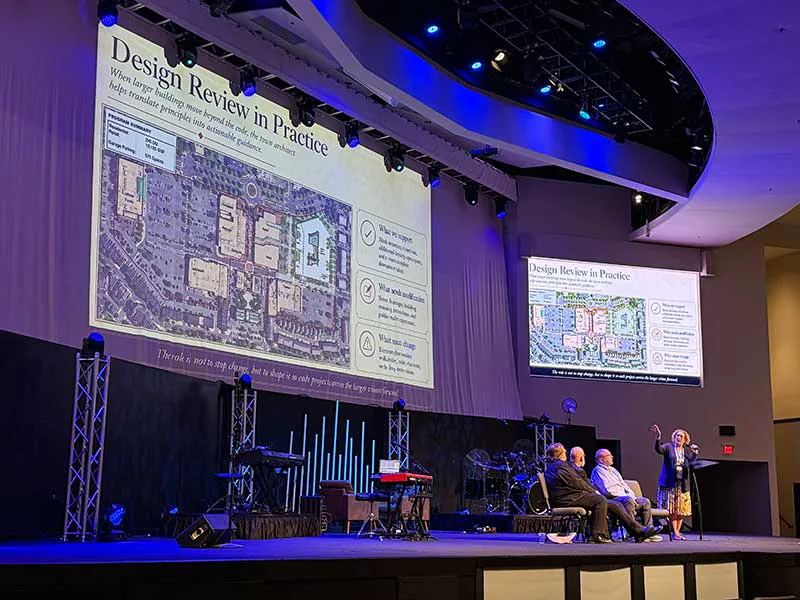
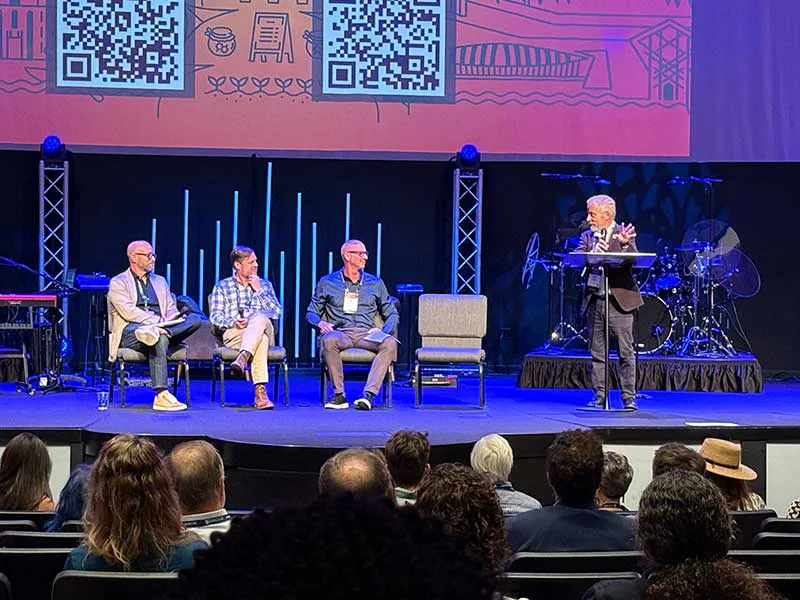
DPZ’s Ben Northtrup leads a group from his Commercial Main Street Architecture session through a tour of downtown Fayetteville (upper image). The Town Architects session was moderated by Marina Khoury (lower left). Andres led the developer/ architects discussion on Lessons Learned from Failure (lower right).
At the congress, DPZers were active in a number of sessions:
- Andres presented The Complete Story of the Rural-to-Urban Transect with Douglas Duany and The Lexicon of the New Urbanism. With Dhiru Thadani in Implementing Climate-Adaptive Urbanism, vernacular vs modern urban design, and building typologies were discussed through the lens of regulatory tools for today. He moderated the Invaluable Lessons of Failure session with developers and architects and engaged with UM’s Chuck Bohl in a series of Salons. He and Lizz then took part in a session with the other contributors of The Climate Action Handbook for Urbanists that CNU has just published.
- Lizz and Ashleigh Walton of UDA presented CNU-A Boot Camp to discuss the foundations of New Urbanism & urban theory. In the Hope VI Retrospective with Neal Payton of TGP and Megan O’Hara of UDA, Lizz helped discuss CNU’s pivotal role in shaping a program that has transformed public housing projects into complete, walkable neighborhoods.
- Galina Tachieva joined Todd Zimmerman and David Dixon in the Building a Promising Future for Suburbia session that explored how suburbs must adapt to major demographic shifts, economic transformation, and mobility innovation. They outlined a path toward more walkable, resilient, and community-rich suburban environments through new planning, policy, and design approaches.
- Marina Khoury moderated The Town Architect’s Craft and Design Review across Transects session to discuss the techniques that have helped Steve Mouzon, Mike Watkins, and Tim Busse guide the implementation of several DPZ projects. In Planning and Coding in a Time of Pre-emption she joined Susan Henderson, Lisa Wise, and Eliza Juliano to present the challenges posed by recent laws across the U.S. that are impacting local land use regulation.
- Along with Placemakers’ Susan Henderson and NWA Council’s Nelson Peacock, Matt Lambert gave a summary of The Northwest Arkansas Regional Growth Strategy, detailing the key recommendations that will help decision-makers in NW Arkansas as they contemplate a doubling of their population in the next 25 years. Matt gave another summary of this initiative on the final day of the congress. With transportation engineer DeWayne Carver, Matt discussed the application of the Florida DOT groundbreaking context-sensitive street classification in Transportation Context Classifications and the Local-Scale Transect.
- The 8 C’s of Sustainable, Resilient Communities was Senen Antonio’s richly illustrated and expanded update of Andres’ New Urbanism 101 lecture that summarizes DPZ’s comprehensive approach to development.
- Judith Bell participated in the session with Adam Bonosky that discussed Laying the Foundation for a Main Street Design Toolkit outlining the challenges to implementing good main streets. In a related session entitled Commercial Main Street Architecture, Ben Northrup presented a list of best practices for improving the urban pedestrian experience, and then led his session attendees on a walking tour through downtown Fayetteville to observe the practical application of these principles.
- Toward a Model Adaptation Legislation Guidebook brought together Camille Cortes, Korkut Onaran and Scott Bernstein to present the latest updates to their manual that aims to help localities strengthen resilience through land use, urban design and governance reform.
- Chris Ritter participated in the Art Room again this year with a session on the conceptual design of neighborhoods using 3D hand drawing and aerial photography as the tools.
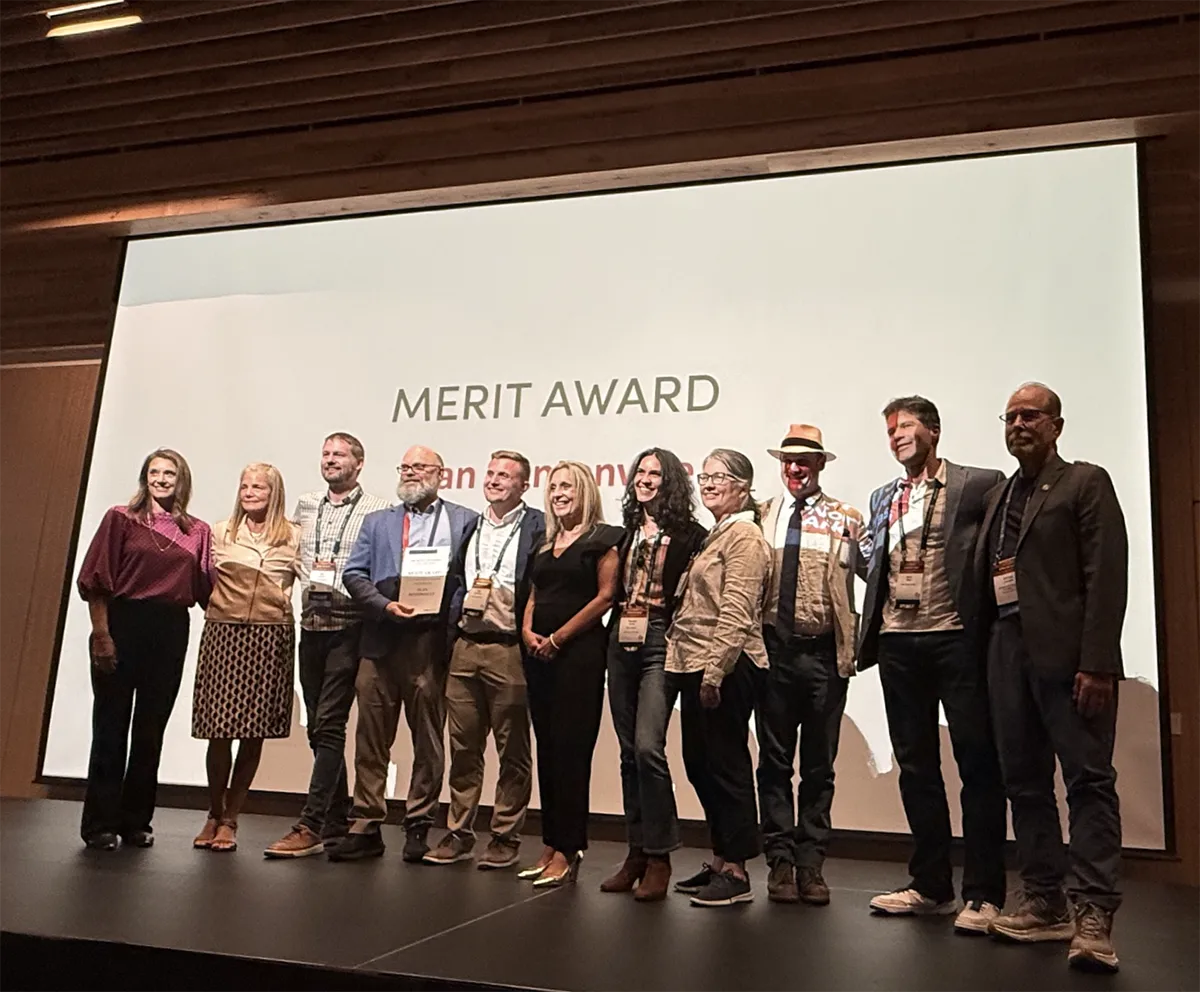
The DPZ Portland team and consultants accepting their Merit Award for Plan Bentonville with city staff and Mayor Stephanie Orman (center)
A highlight of CNU34 for DPZ was the Charter Awards ceremony held in the Crystal Bridges museum complex in Bentonville, where DPZ was honored with two Merit Awards.
Plan Bentonville is a tool for managing the city’s rapid growth while preserving its small-town character, expanding housing choice, and simplifying the delivery of complete neighborhoods. It equips the city with a framework that aligns land use, infrastructure investment, and concise development regulations around compact, walkable urbanism. Joining DPZ’s Portland office and consultant team in accepting the award was a very proud Mayor Stephanie Orman
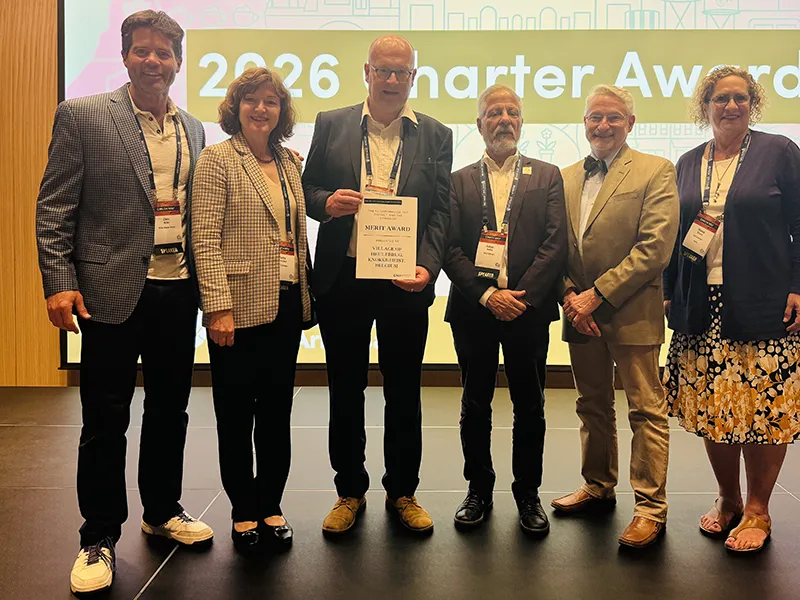
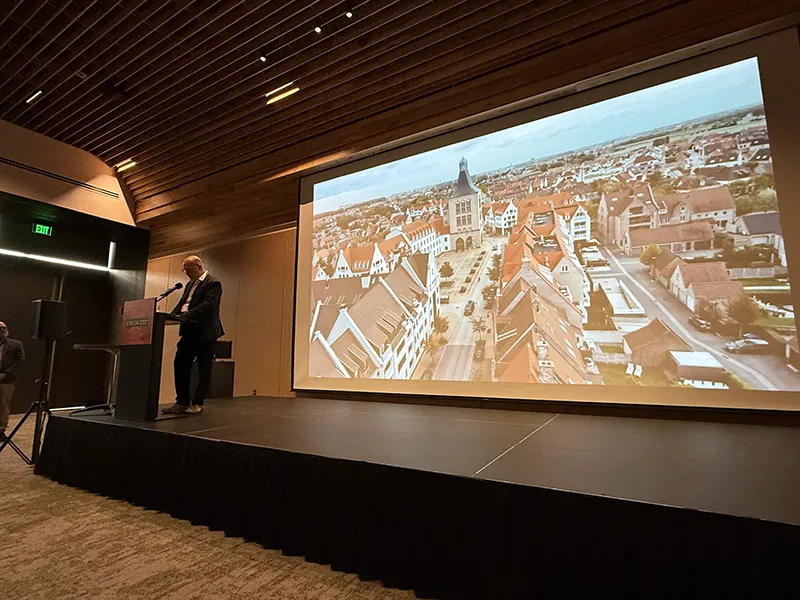
Original Heulebrug charrette team members, Andres and Xavier Iglesias, gather with Mathias Delrue of WVI, and other DPZers (left). Mathias accepts the Merit Award as Heulebrug images are projected behind him (right).
Coming all the way from Belgium to accept the honor for the Village of Heulebrug, Mathias Delrue of WVI (West-Flemish Intermunicipal Association) thanked DPZ, the late mayor of Knokke-Heist, Leopold Lippens, and the late master planner Léon Krier. Acknowledging the 25-year process that faced many odds, he concluded “Heulebrug shows that social and affordable housing –mixed with market rate housing– do not need to become anonymous or disconnected from culture and community. It can instead create dignity, belonging, and lasting beauty.”
Read more about the NWA Council’s take on CNU34 and their other efforts to promote the region here.
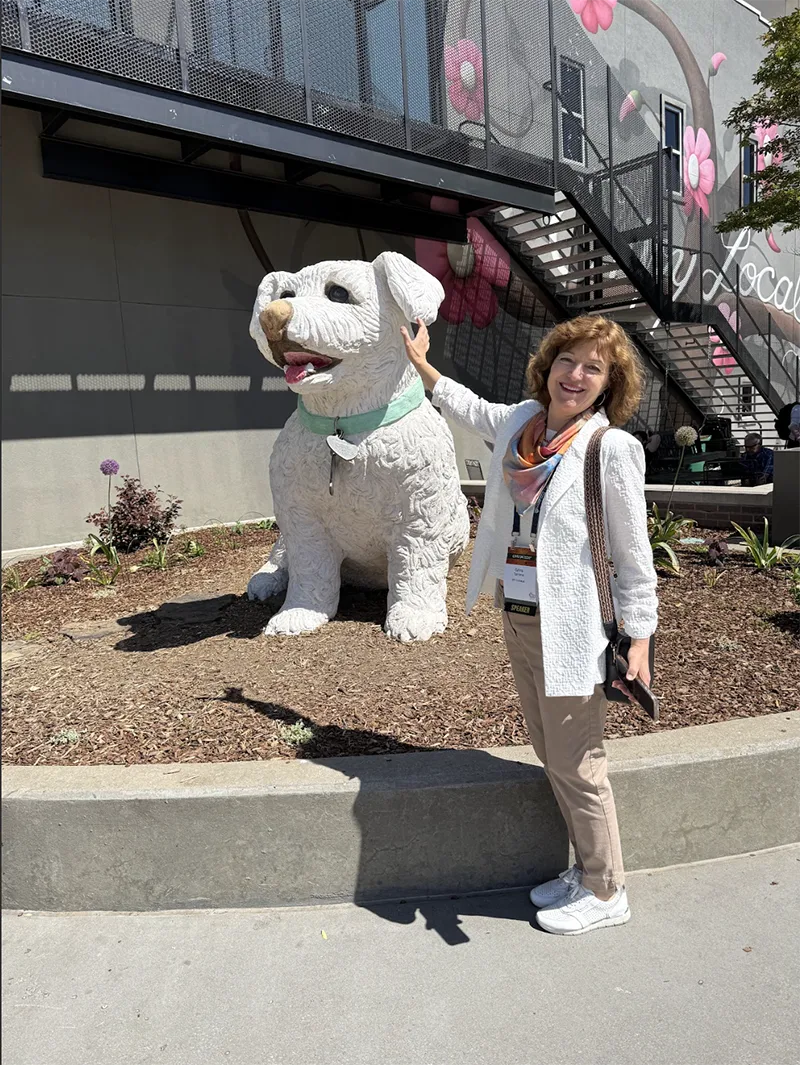
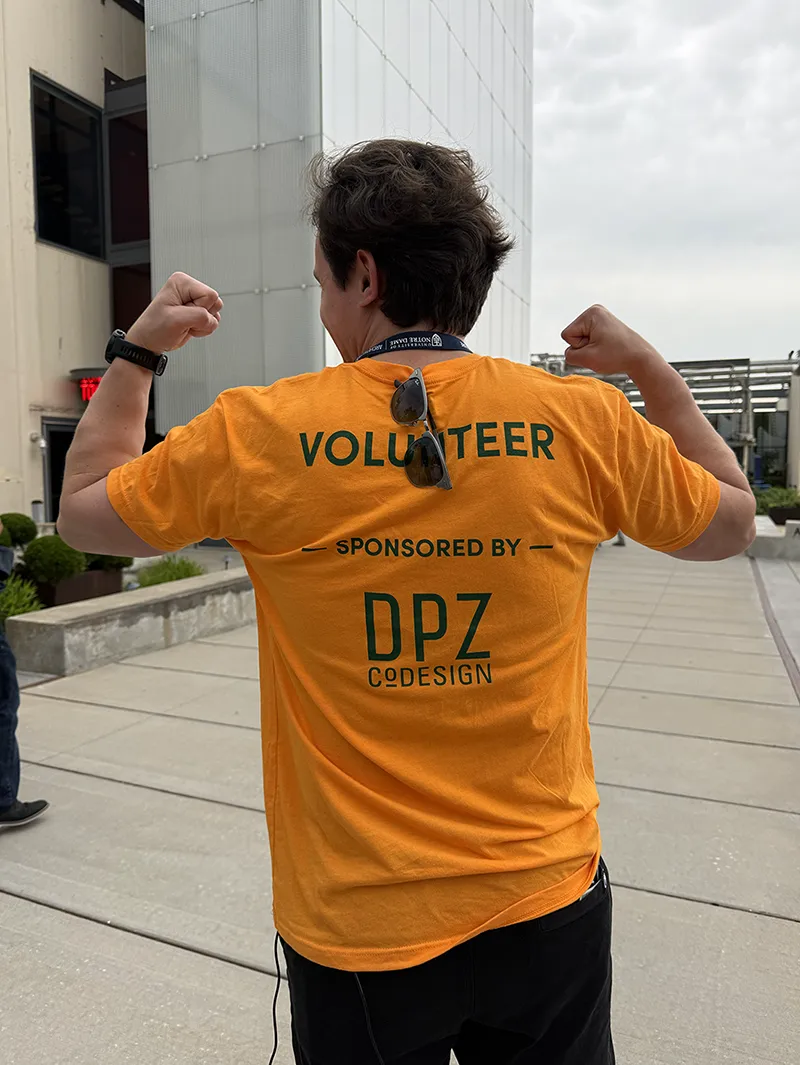
More public art was to be found in Fayetteville, reminding some DPZers of friends back home (left). Our “Sustainable” sponsorship this year meant the volunteer T-Shirts bore the DPZ logo, such as this one modeled by Crafton Tull planner, Isaac Sims (right).