


Utah City: Redefining Wellness in a Transit-oriented Downtown
On the eastern shore of Utah Lake, a new kind of city is taking shape—on land once occupied by the historic Geneva Steel plant.
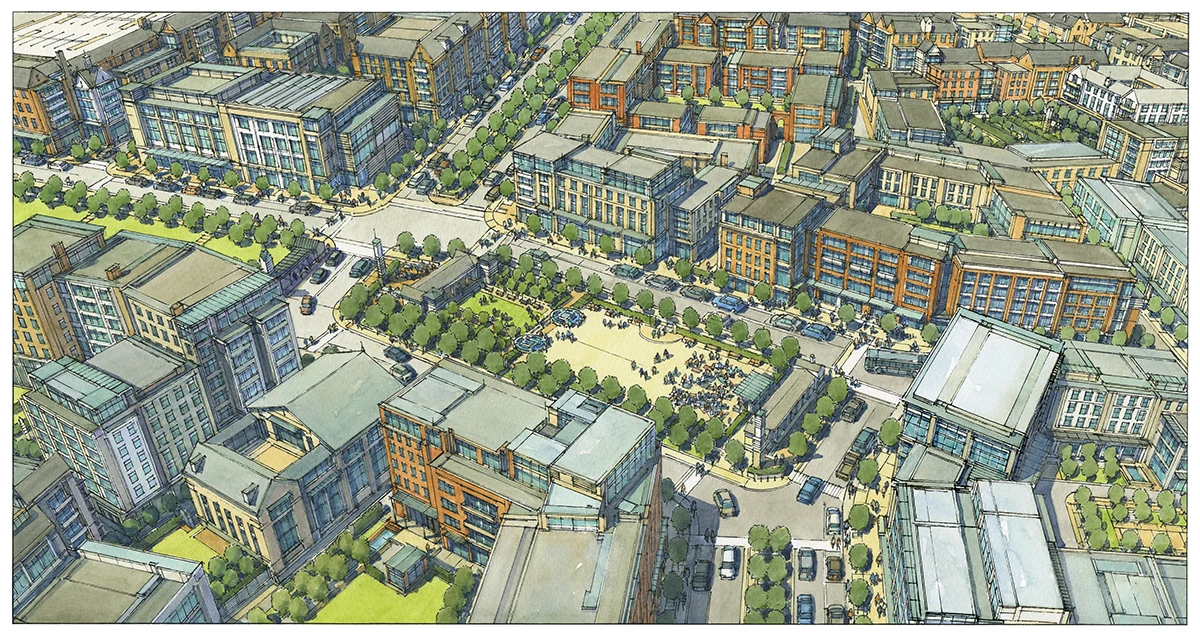
Utah City, a 700-acre mixed-use development in Vineyard, Utah, is transforming this former brownfield site into a walkable, transit-oriented district designed to serve as the new downtown for Vineyard. First envisioned in 2019 by DPZ CoDesign and Speck Dempsey (previously Jeff Speck & Associates), the plan centers on creating a complete community where residents can live, work, and gather within a short walk of the Vineyard FrontRunner Station, a future graduate campus of Utah Valley University, a lakefront promenade along Utah Lake, as well internal parks, public spaces, and everyday amenities.
Now, as construction accelerates and new amenities open, a recent partnership is pushing that vision even further: Utah City is becoming one of the first Peloton-powered communities, integrating fitness and wellness directly into residential life.
A New Model for Everyday Wellness
Unlike traditional developments where fitness is an afterthought, Utah City is embedding wellness into the structure of daily life.
Through its partnership with Peloton, each multifamily building will include dedicated “Peloton Spaces”—co-branded fitness areas equipped with bikes, rowing machines, and other connected workout technology. Residents will have access to both shared gyms and private workout areas, bringing high-quality fitness directly into their homes.
But the partnership extends beyond equipment.
Utah City has already begun hosting community fitness events, including large outdoor classes on its emerging green spaces—early examples of how physical activity is being woven into the public realm. These programs reinforce a broader goal: creating a community where health, movement, and social connection are part of everyday experience.
As Peloton’s leadership has noted, the collaboration represents a shift in how large-scale developments approach wellness—positioning it not as an amenity, but as core infrastructure.
A Walkable Downtown, Built Around Transit
The Peloton partnership builds on a strong urban framework established in the original plan.
Utah City is organized around the Vineyard FrontRunner Station, anchoring a transit-oriented downtown that prioritizes walkability over driving. A central promenade connects the station through a series of civic greens, extending to the lakefront and linking neighborhoods through a network of parks, plazas, and pedestrian- and bike-friendly streets.
The plan shapes approximately 9.5 million square feet of development into a compact, mixed-use environment, where daily needs—housing, retail, healthcare, and recreation—are all within easy reach.
Originally planned for around 5,000 residential units, the development has since scaled to accommodate up to 15,000 homes, reflecting rapid regional growth, demand for walkable urban living, and a state-supported focus on transit access. Importantly, this growth has been absorbed within the original framework, demonstrating the flexibility and resilience of the plan.
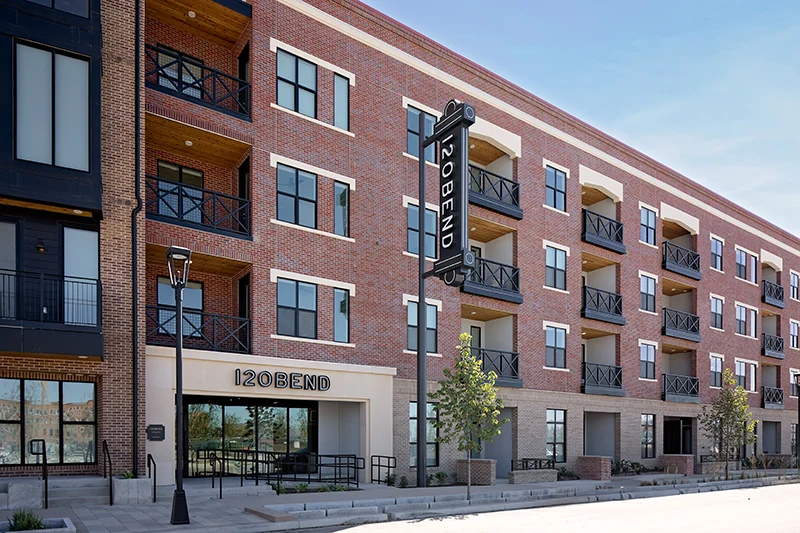
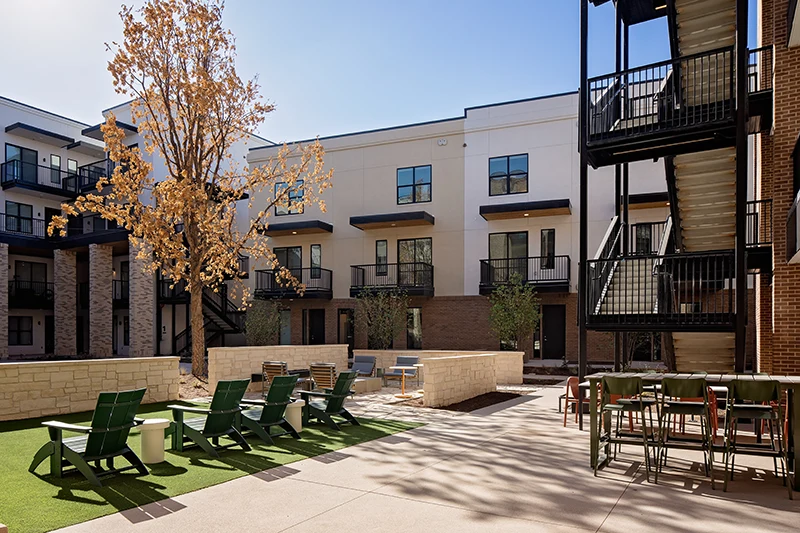
New residential units at 120 Bend – Photos Courtesy of Utah City
From Vision to Reality
While Utah City has long been a bold vision, it is now rapidly becoming tangible:
Housing construction is already well underway, with numerous sites featuring multifamily housing under construction, filling a needed regional market gap.
Public infrastructure—including parks, playgrounds, and bikeways—is also taking shape, helping define the character of the emerging neighborhoods.
Key civic and commercial anchors are coming online as well:
- Bella’s Market, a new 40,000-square-foot grocery store, recently opened to serve both new residents and the surrounding community, filling a long-standing gap in local access to fresh food.
- Huntsman Cancer Institute will bring research, care, and jobs to the heart of the development.
Together, these elements are establishing Utah City not just as a residential project, but as a fully functioning urban center.
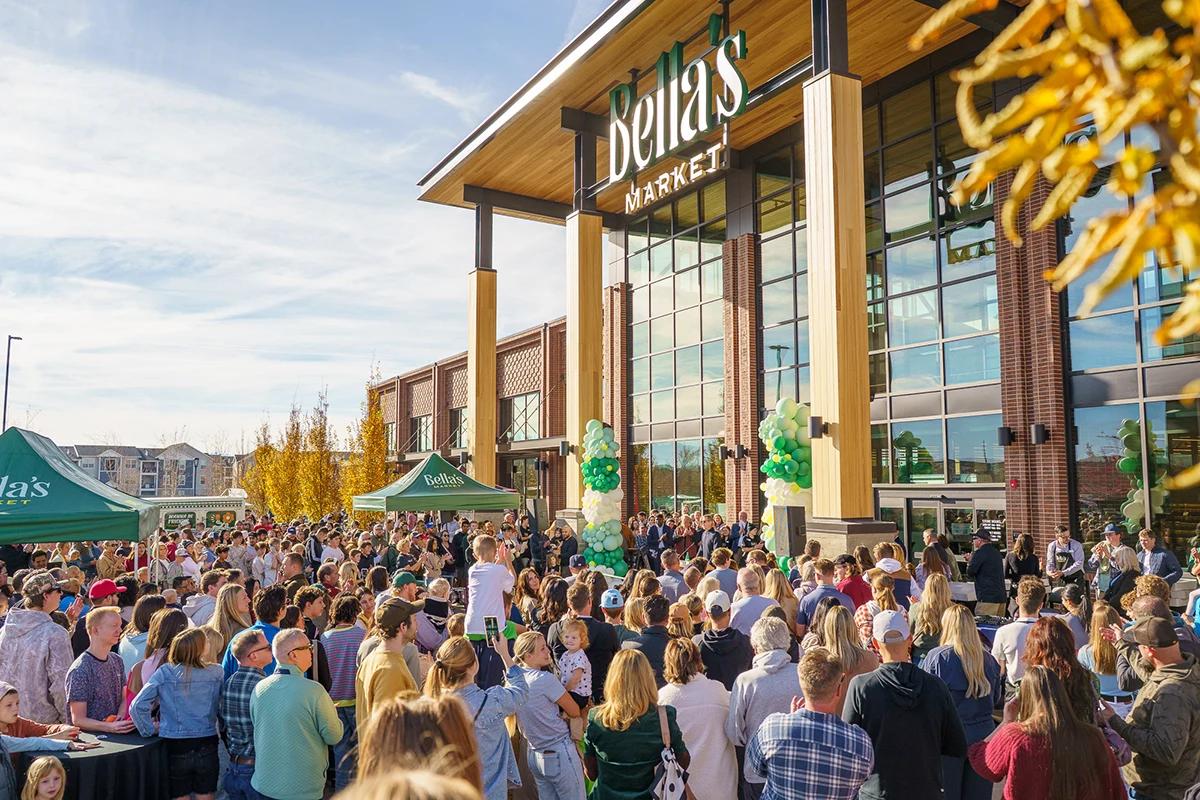
Bella’s Market, the new grocery store in Utah City, celebrated their grand opening this past November – Photo Courtesy of Utah City
A Community Designed for Connection
At its core, Utah City is designed around people.
The plan emphasizes human-scaled streets, public gathering spaces, and a fine-grained car-free network weaving throughout—including dedicated walking and biking routes, plazas, and greens—that create intimate, neighborhood-focused spaces for leisure and gathering.
The Peloton partnership amplifies this approach by activating both indoor and outdoor spaces with shared experiences, including group workouts, community events, and wellness programming that connect residents.
This combination of urban design and wellness infrastructure is what sets Utah City apart.

The first UC Sweat Class in collaboration with Peloton – Photo Courtesy of Utah City
Looking Ahead
Utah City is still under construction, but its trajectory is clear:
As more housing, retail, and public spaces come online, and as partnerships like Peloton continue to expand, the development is evolving into a model for a new kind of American community—one that prioritizes walkability, connectivity, and health in equal measure.
Continuing to follow the structure of the 2019 plan, walkable streets, parks, and plazas weave throughout the site and connect to a public waterfront promenade along Utah Lake with regional rapid transit, reinforcing the vision of a vibrant, mixed-use downtown for Vineyard.