


DPZ Fall Newsletter
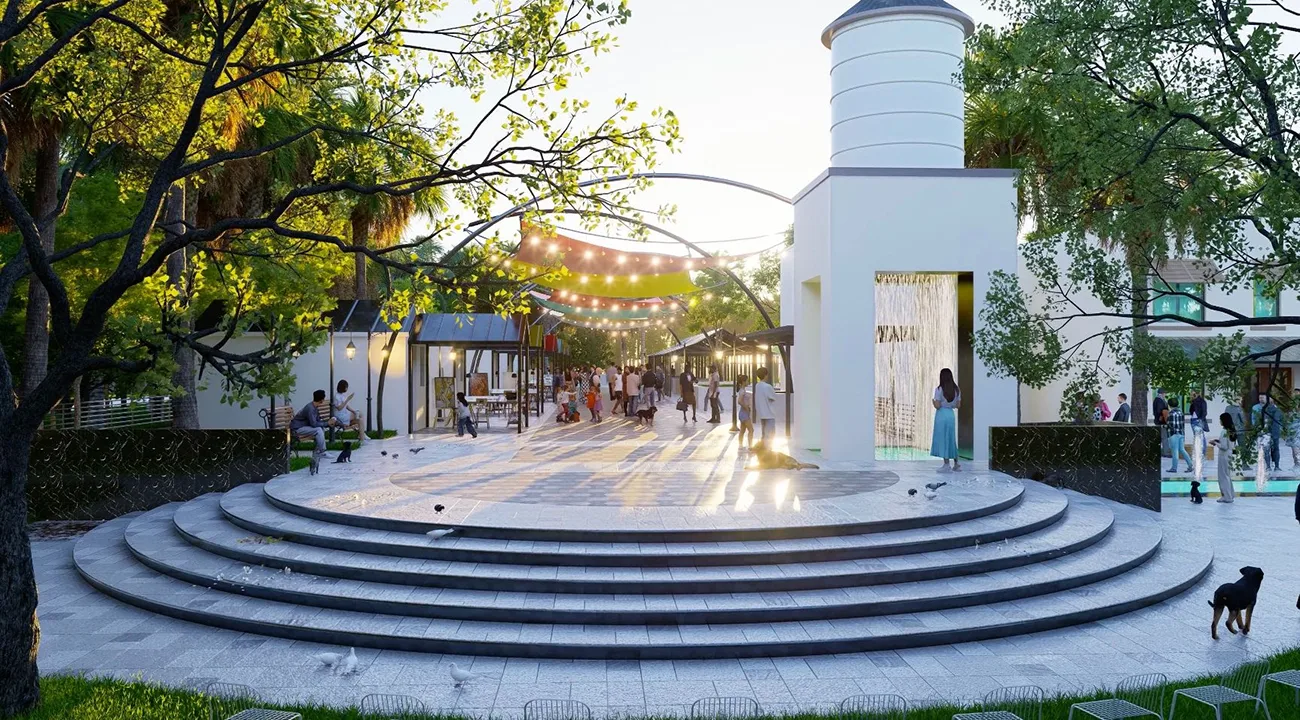
Liles Plaza Artists Village & Stage, Bonita Springs, FL
As the fall season winds down, DPZ is pleased to share some of the updates, events and news items from the last few months. Many of our projects continued their progress and marked important milestones, as new projects and initiatives emerged. Meanwhile, DPZers remained active in panel discussions, both in person and online.

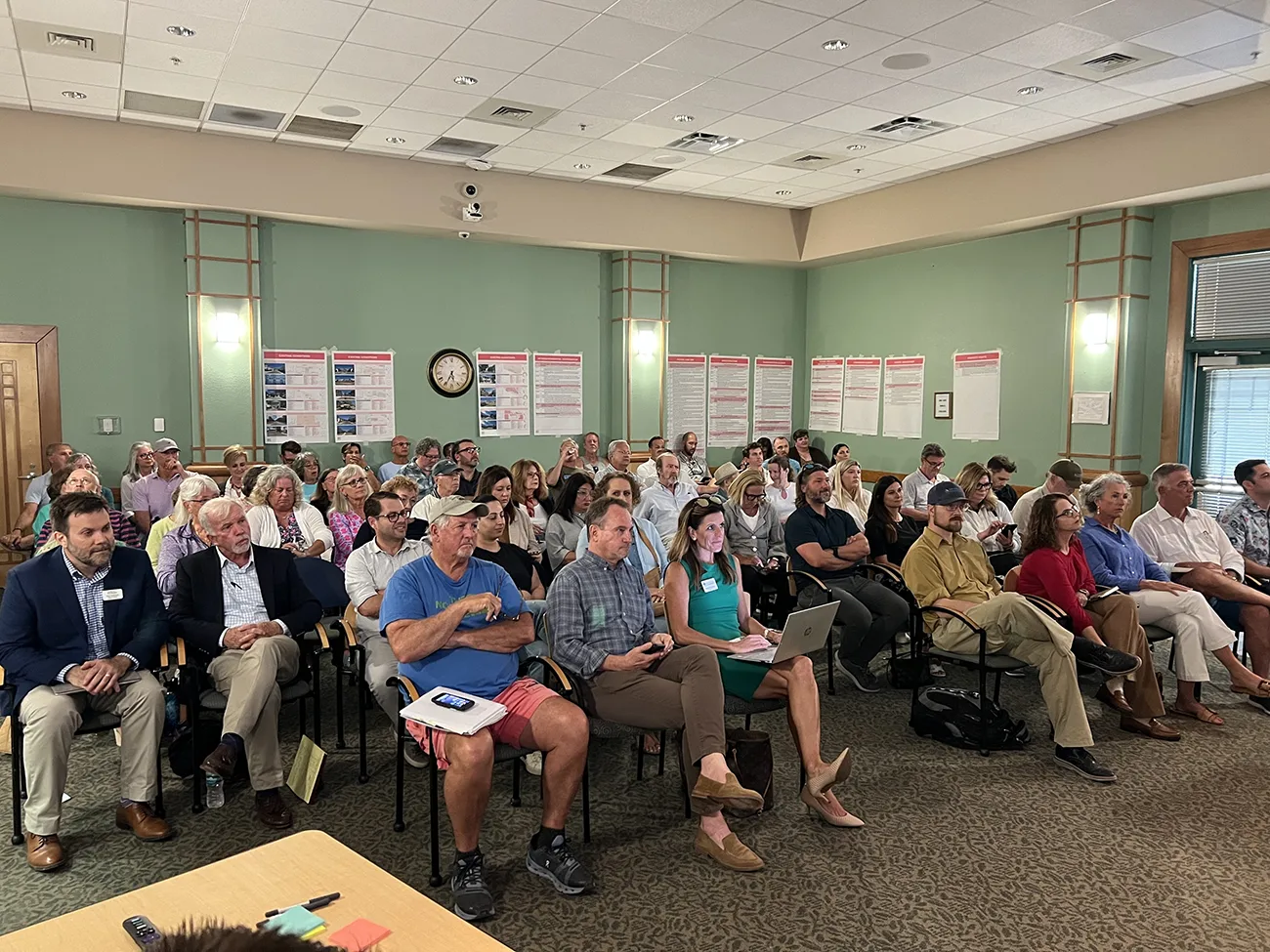
Walton County EAR Approved
DPZ is proud to announce that the Walton County (FL) Evaluation and Appraisal Report (EAR) was unanimously approved by the Board of County Commissioners in September.
Beginning in early 2024, the team conducted a full assessment of the Comprehensive Plan, including a weeklong visioning charrette in Seaside in May 2024, and completed the EAR recommendations in September 2025.
The effort was a true collaboration between County staff and a DPZ-led team that included Crabtree Group, Inc., Clark Parkington, GIT Consulting, Impact Campaign, Gridics, Jacobs, and Urban3.
A former land use counsel for the County praised the document as a significant step forward, noting its comprehensive and actionable set of recommendations. The work included a strong Community Engagement and Outreach component that gave residents a clear voice in shaping priorities.
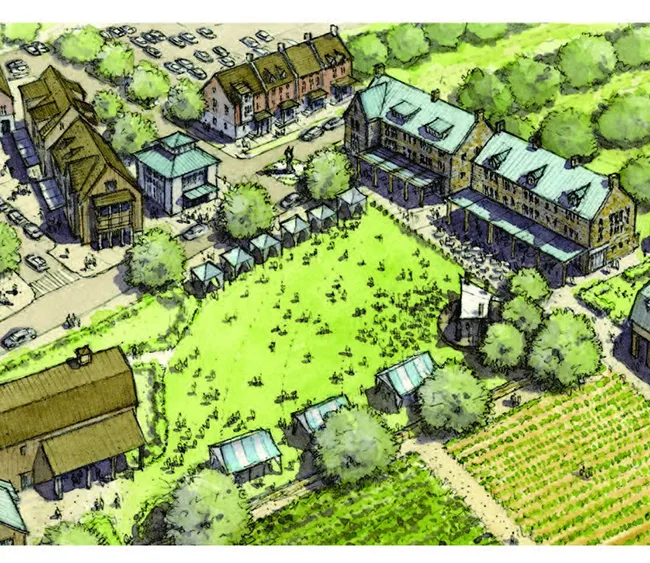
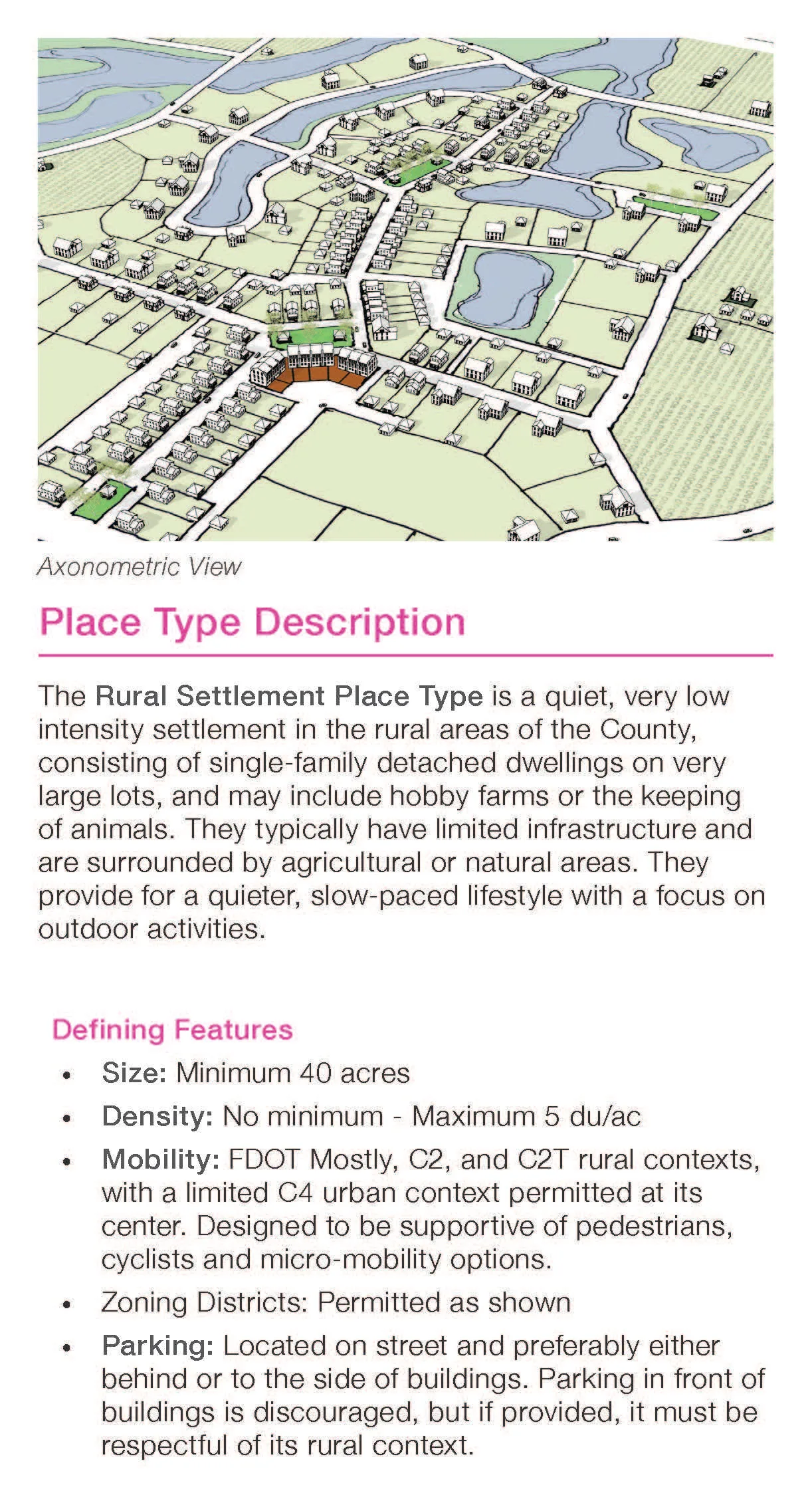
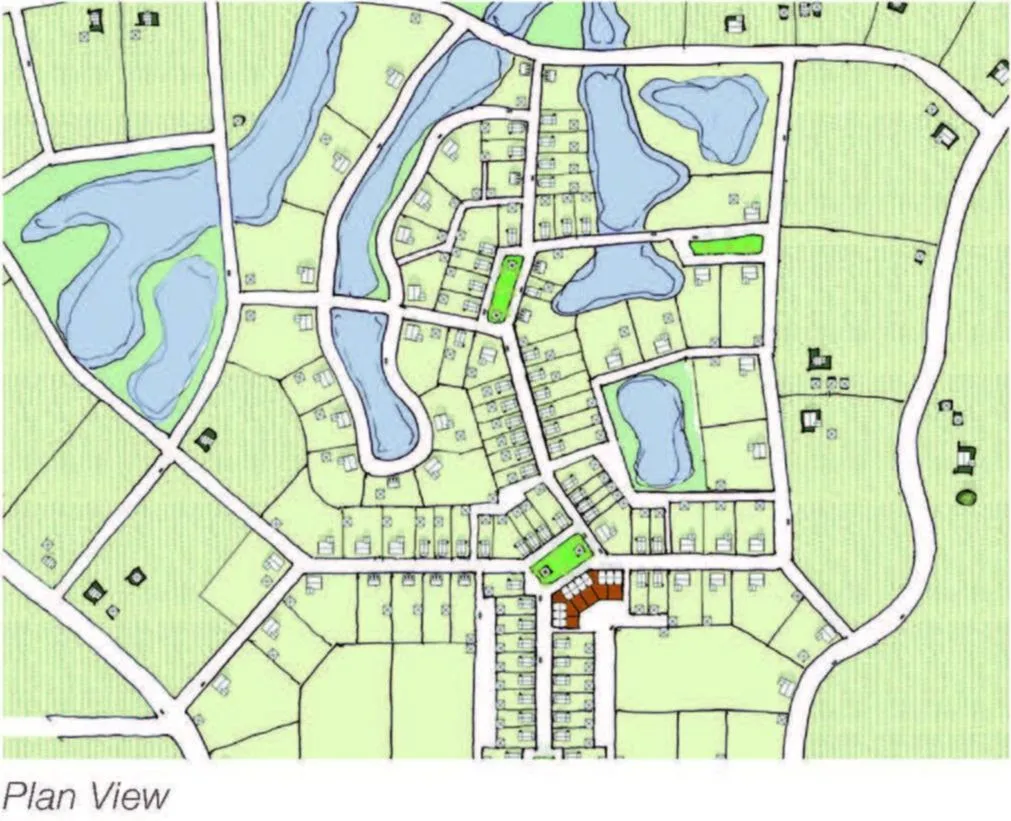
Among the key recommendations was the shift toward prioritizing complete communities, urban or rural place types, as appropriate, rather than defaulting to suburban forms, ensuring patterns that are better calibrated to local contexts and more supportive of sustainable development.
The Rural Settlement Place Type promotes the concentration of development and preservation of open space and natural habitats.
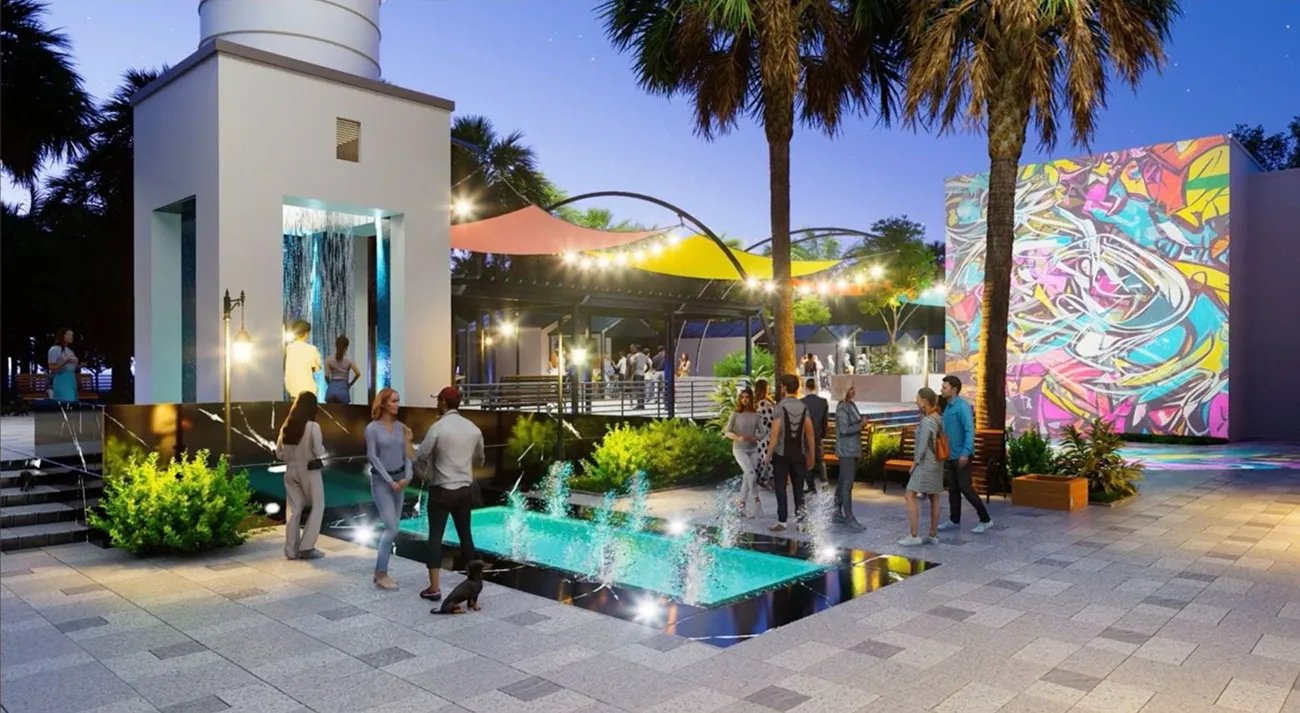
Liles Plaza Study Adopted as Master Plan
The DPZ Vision Study for the Liles Plaza in Bonita Springs, FL, was officially adopted as a master plan at the October 1st City Council meeting.
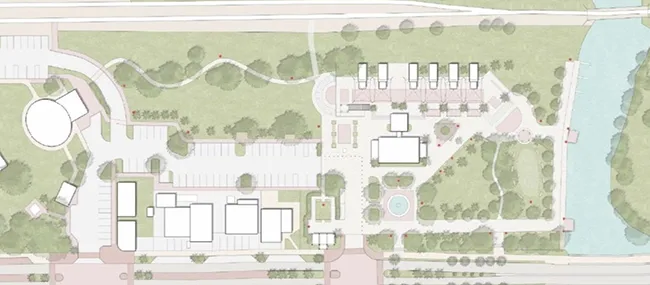
DPZ Associate Xavier Iglesias presented the study that reimagines the park space around the historic Liles Hotel, a town center landmark located on the town’s main street, Old Route 41.
The now-empty building and the green space that surrounds it are used as event spaces, but there is a disconnect between the hotel, the Artist Village row of cottages behind it, and a field that links these elements to the bandshell at the town square, Riverside Park.
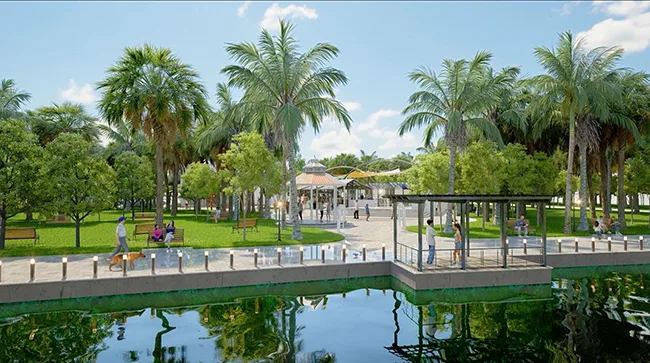
DPZ’s plan envisions a series of modest to ambitious interventions that unite and better define the collection of structures and spaces. Among the proposals is the reshaping of the entrance drive to the hotel into an actual plaza with an enhanced fountain, more cohesive paving, new landscaping, and a future community center. The artist village receives additional pavilions as well as a set of steps that double as a stage and connect to the open field and bandshell beyond. A new event space is carved out of the stand of trees to the north of the hotel and existing paths to the river receive a pair of waterfront gazebos.
Following the unanimous adoption of the vision plan as the park’s master plan, the City staff was directed to develop a strategy to implement the ideas.
Watch Council Presentation by Xavier Iglesias here (starting at 1:26:50).
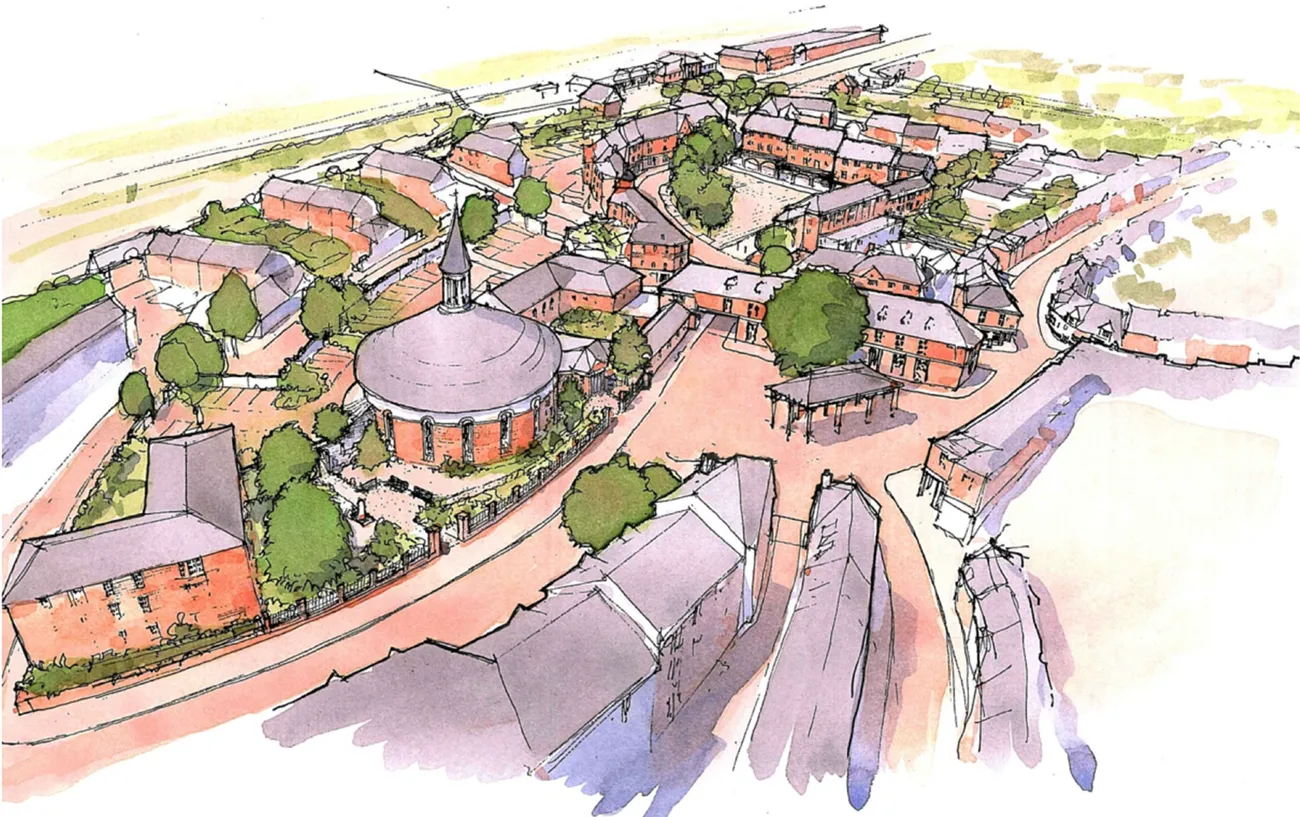
The restored vehicular connection between the reimagined Salisbury Square and the Broadway Market plaza.
Rendering: Max Von Trott
Third Photo Courtesy of Christy Milliken
Old Hatfield DPZ Proposal Underway in UK
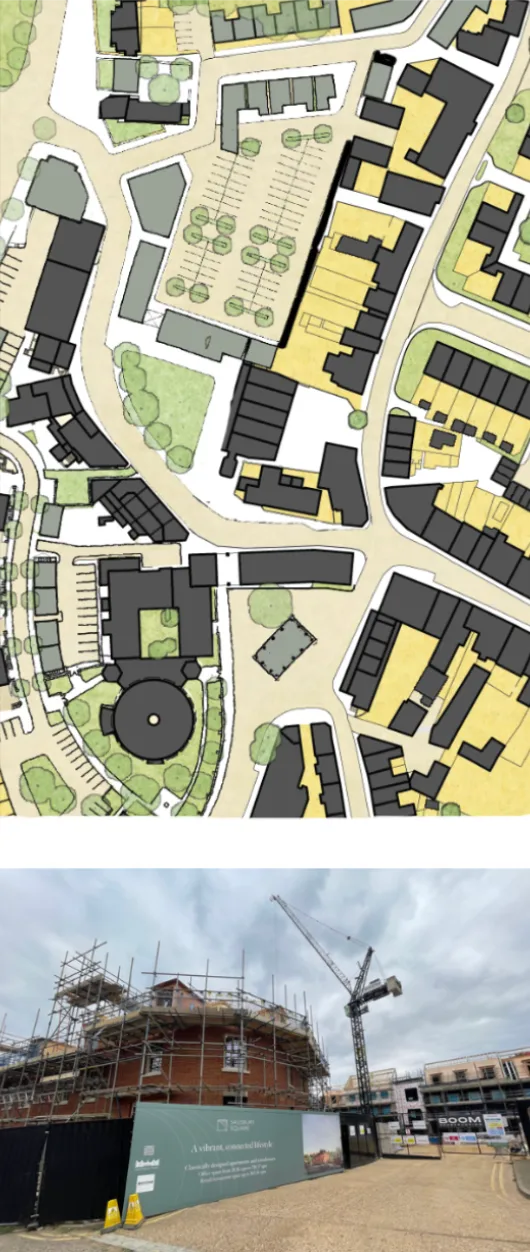
Conceived during a 2008 charrette, the redevelopment of Salisbury Square in Old Hatfield, United Kingdom, situated north of London, is currently in progress. This intervention was specifically proposed by DPZ as part of the Old Hatfield Master Plan.
Located at the heart of the Old Town and in proximity to the railroad station, Salisbury Square lacked a welcoming ambiance and a clear definition.
DPZ proposed the reinstatement of traffic flow to reconnect the Square with its surroundings, thereby enhancing the retail and visitor-friendly atmosphere upon arrival. A new car park was envisioned to be constructed behind the Square, while an existing car park would be transformed into a flexible space suitable for markets and seasonal events.
Windsor North Village Progress
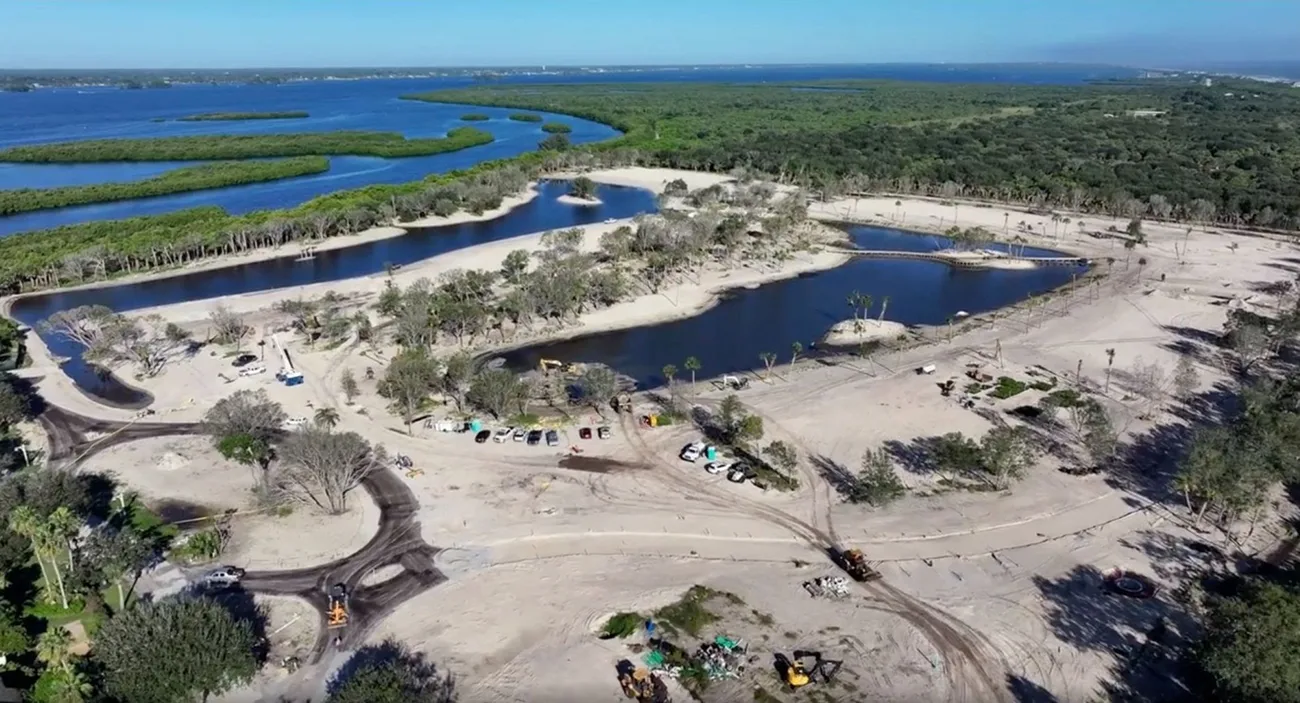
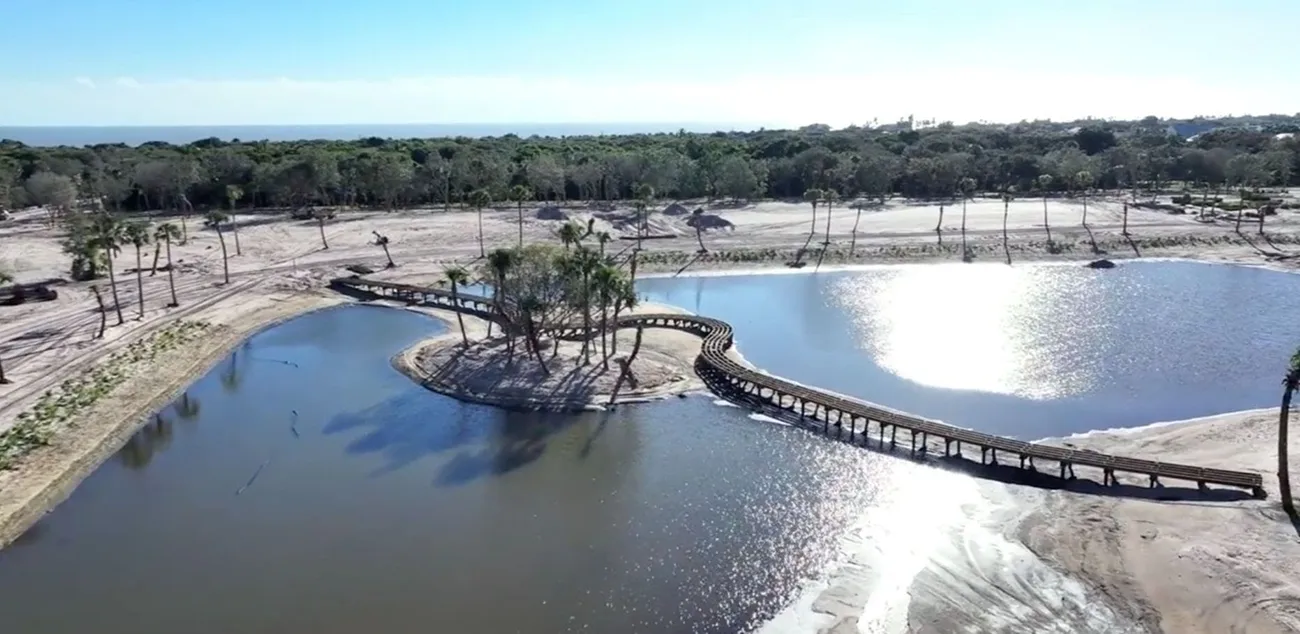
The Windsor team has been posting video updates showing the rapid progress at the North Village, north of Vero Beach, FL. The two new bodies of water — a freshwater lake and an estuary, as well as the weir connecting them — are in place. A boardwalk spanning the lake now sweeps around a new rookery island.
Enhancing the landscaping, a collection of mature trees previously cultivated on this site in preparation for the new village has been relocated to establish the central park. In addition, the reshaping of North Savannah Place to accommodate the new ellipse-shaped entry green has been paved.
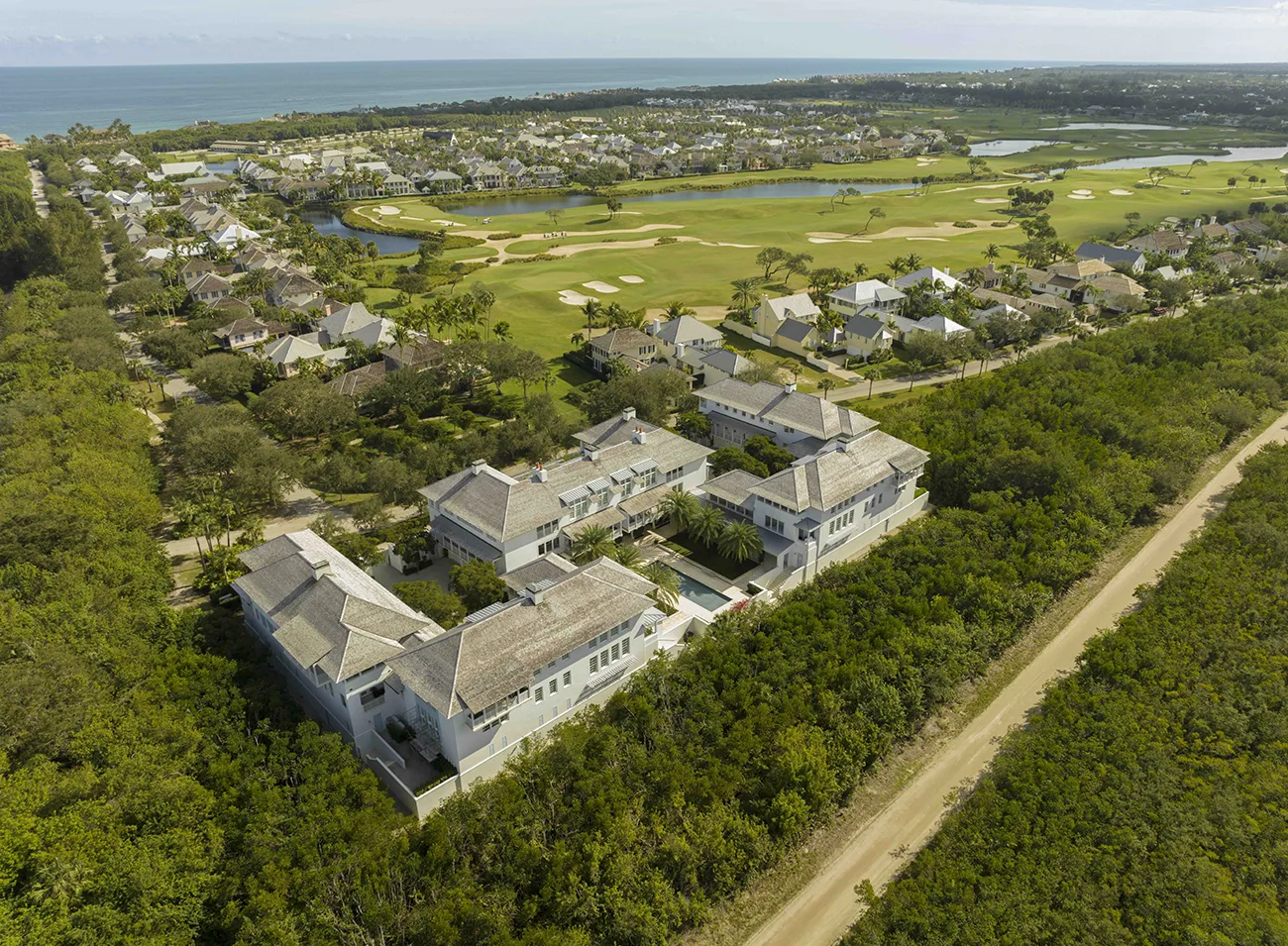
The Park Residences complex at the NW corner of Windsor is characterized by the community’s distinctive Anglo-Caribbean vocabulary that is to be maintained in the adjacent North Village with a more streamlined aesthetic.
Top Two Photos Courtesy of Windsor’s LinkedIn

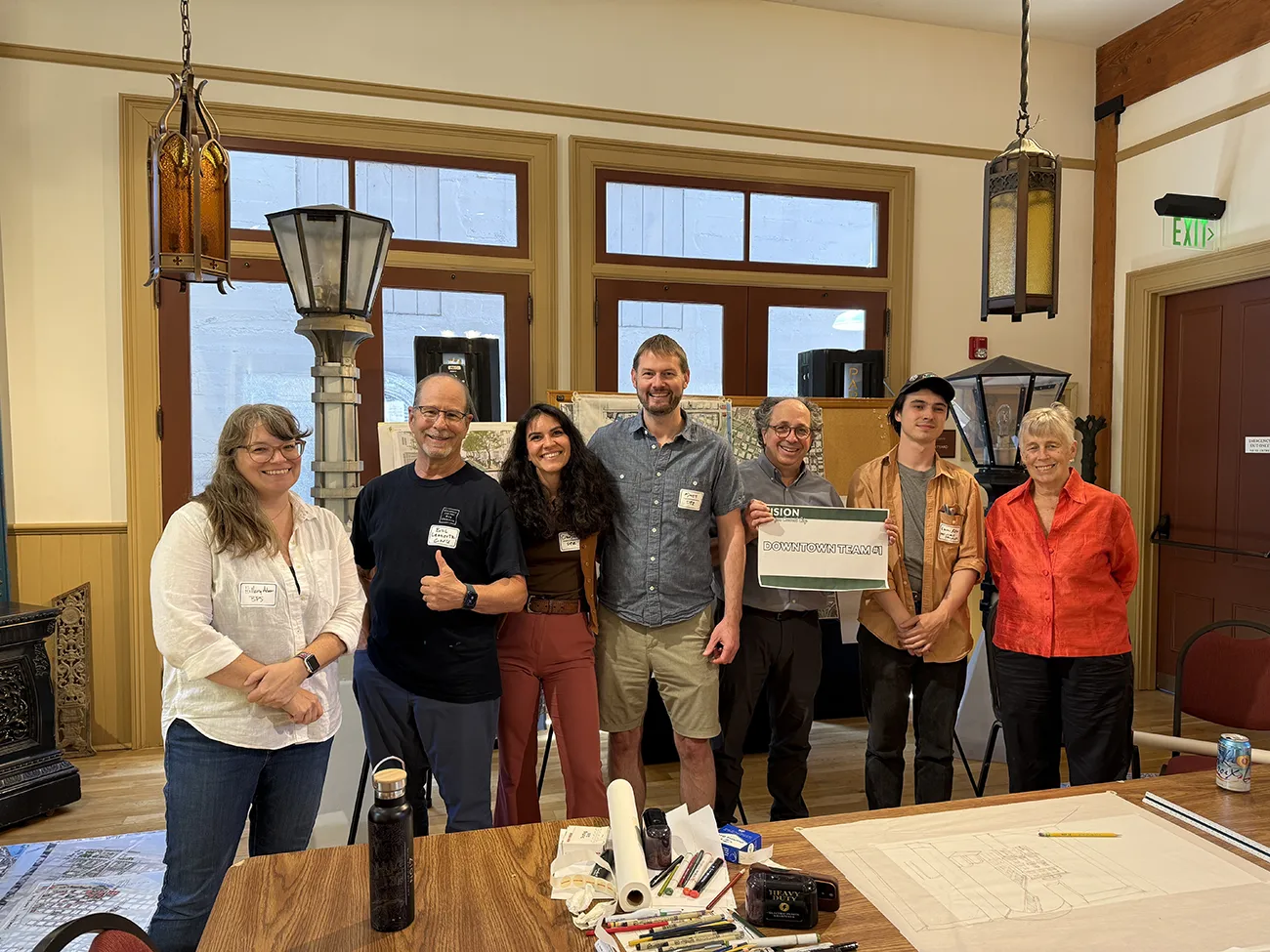
Left to Right: Hillary Adam, Bill Lennertz, Camille Cortes, Matt Lambert, Laurence Qamar, Lucas Ritter, and Susan Novak.
Portland Downtown Vision 2050
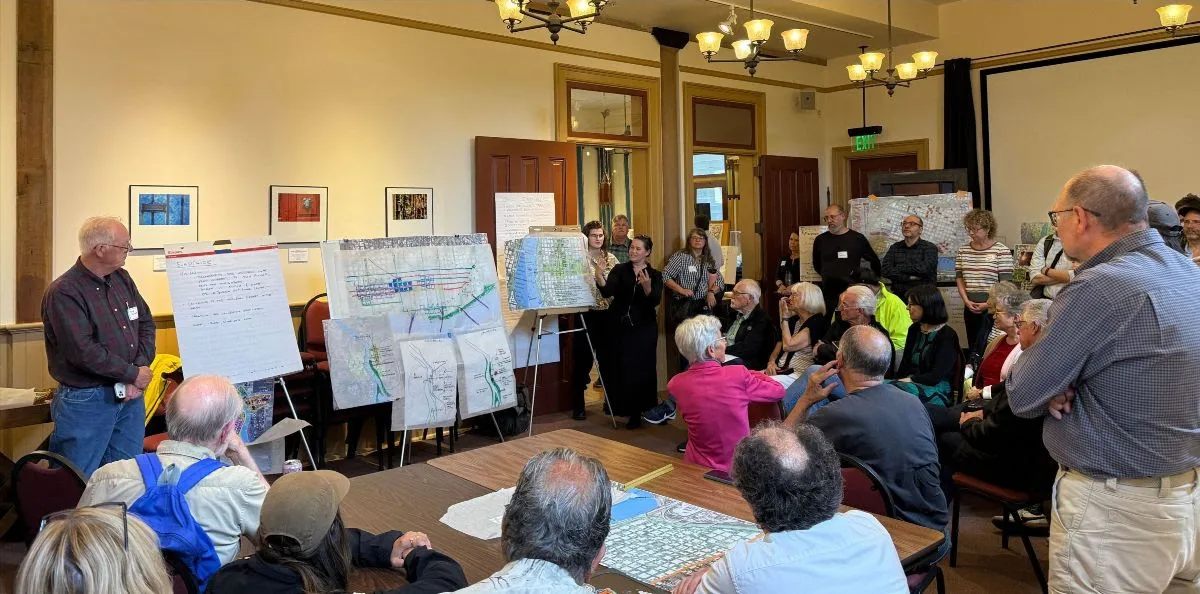
This fall, DPZ joined the Central City 2050 Design Charrette, an initiative led by the City Club of Portland, OR, in partnership with the Architectural Heritage Center.
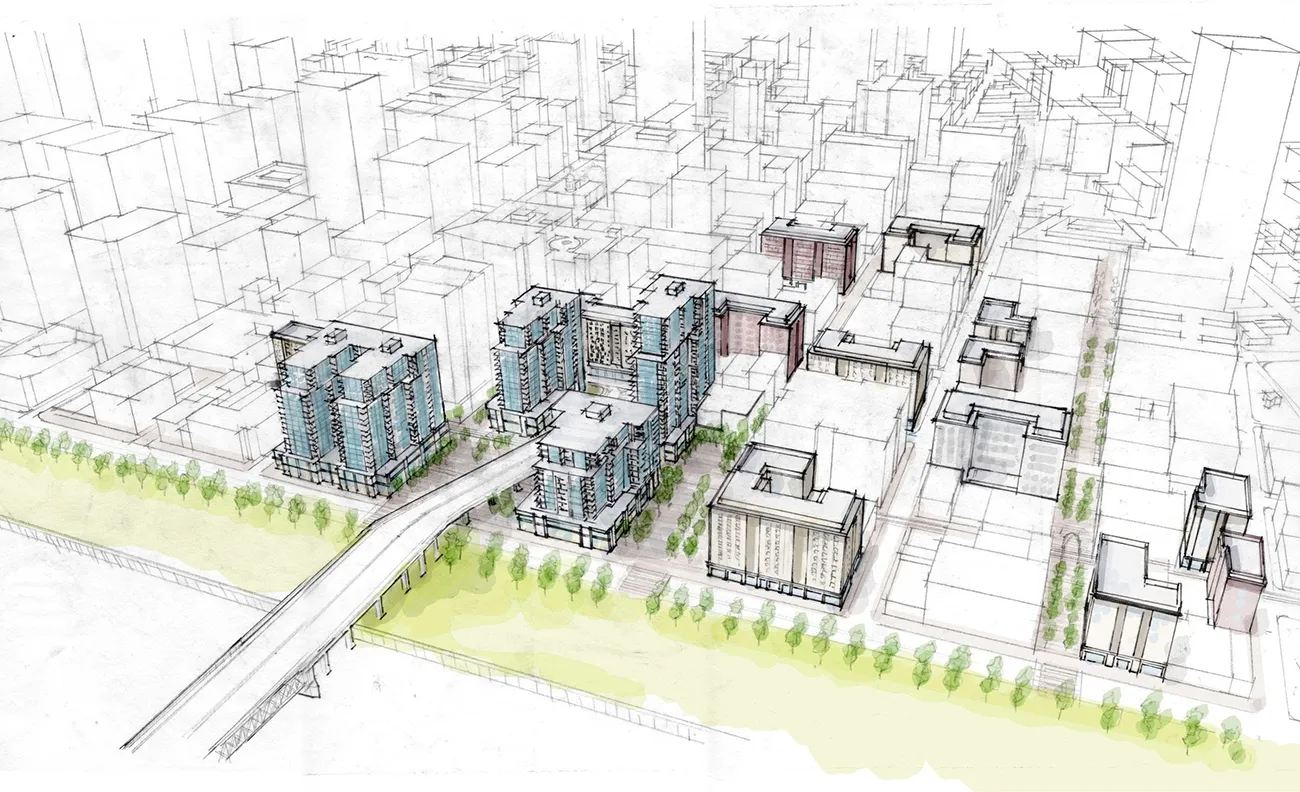
The effort was organized in part by DPZ’s Jonathan Konkol, a City Club Board member and Portland native, and brought together civic leaders, designers, and community members to shape a bold, implementable vision for Portland’s downtown.
DPZ was represented by Matt Lambert, Jonathan Konkol, and Camille Cortes alongside long-time DPZ Cascadia collaborators Bill Lennertz and Laurence Qamar.
The discussions centered on three organizing principles: celebrating the Willamette River as a place of connection, reimagining and transforming the transportation network, and creating residential urban villages with unique identities. Participants envisioned a vibrant Central City that celebrates its riverfront, prioritizes walking, biking, and transit, and fosters mixed-use neighborhoods capable of doubling downtown’s population.
With its emphasis on collaboration and long-term implementation, the Portland 2050 effort signals renewed momentum – reaffirming the Central City as the heart of Oregon’s economy, culture, and community life. Jonathan continues to collaborate on City Club’s efforts.
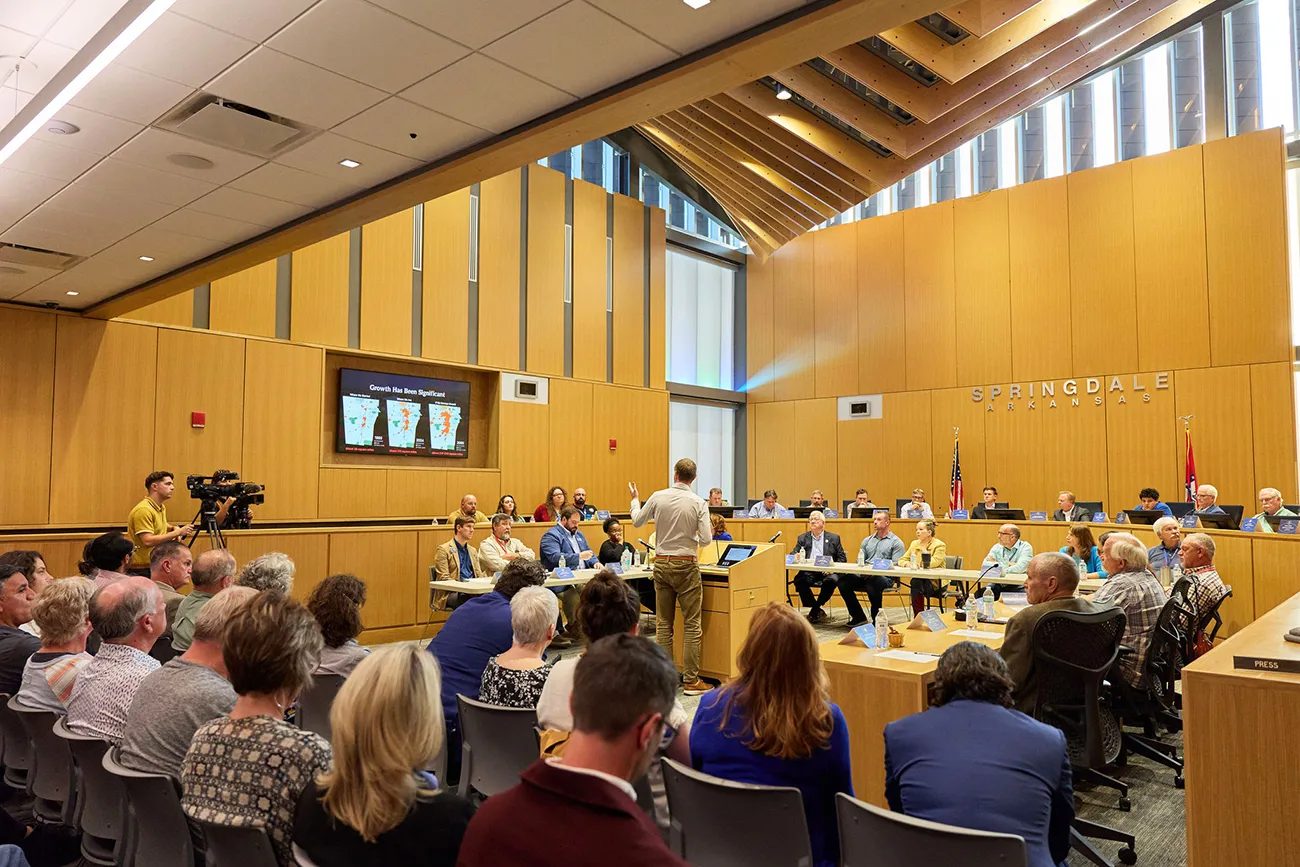
NWA Road Show
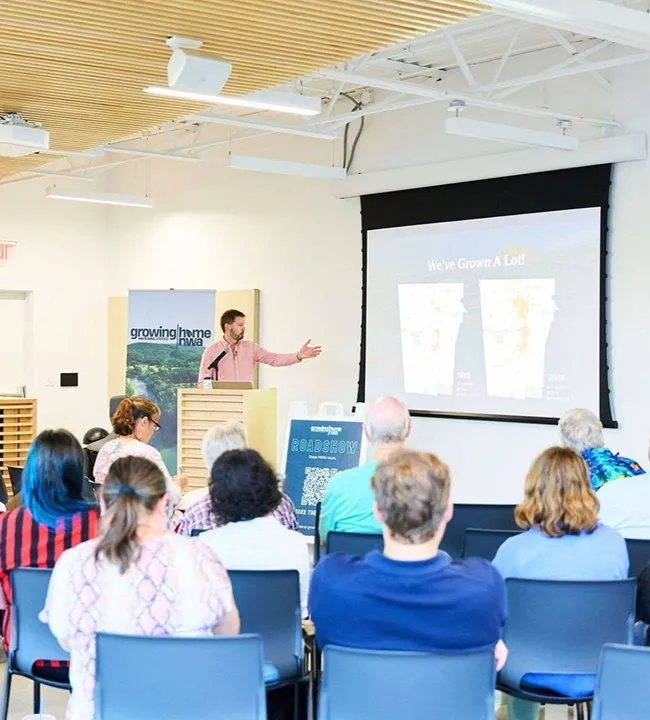
Organized by the Northwest Arkansas Council and facilitated by DPZ and Placemakers, the NWA Roadshow this September was a success.
The primary takeaways that will be factored into the final regional growth strategy this upcoming spring include concern about loss of regional community character, transportation, infrastructure, and housing.
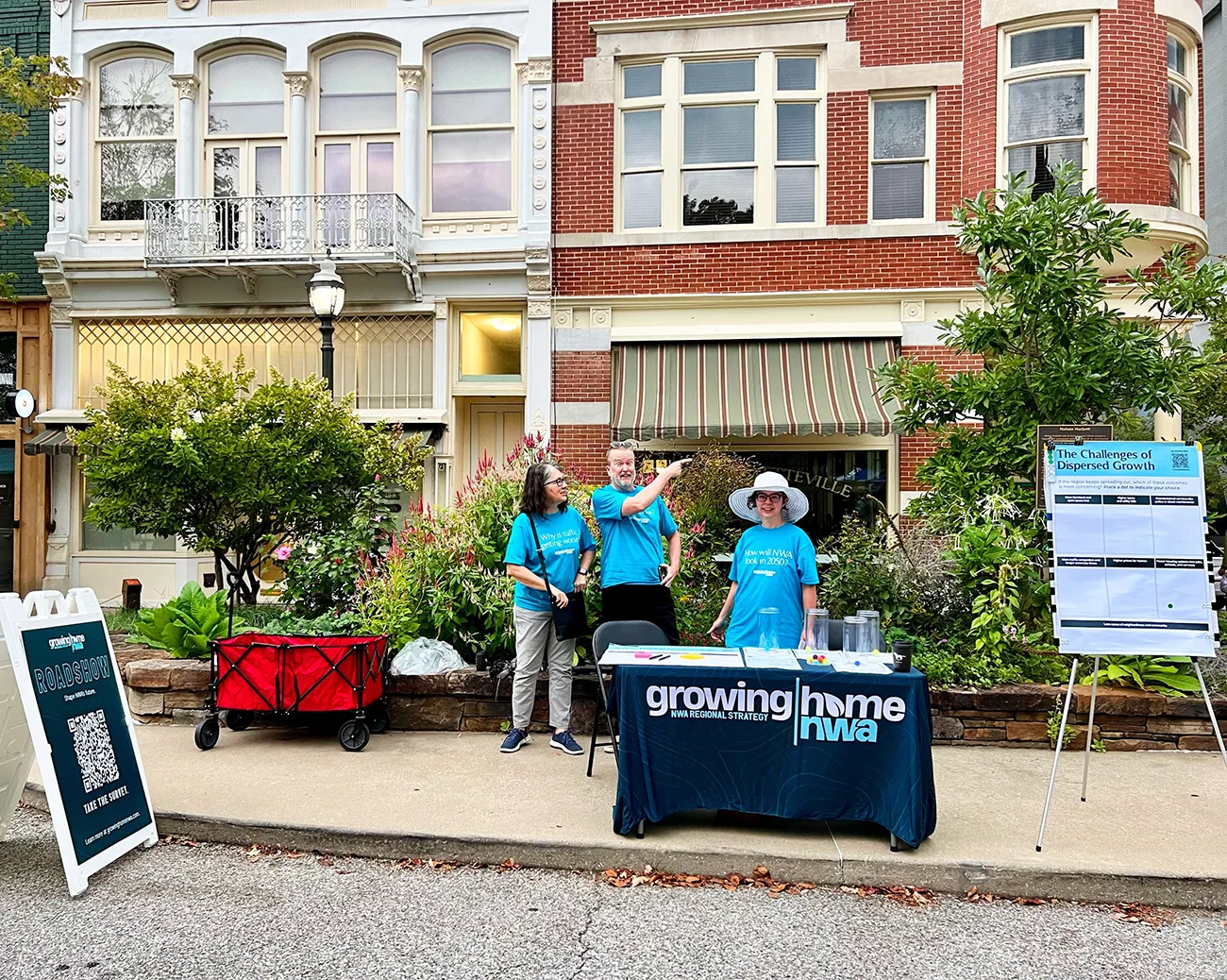
All together, the NWA Roadshow featured 17 different presentations and meetings over the span of the eight-day series. Attendees included residents, mayors, and members of the chambers of commerce.
Read more about the mission in Northwest Arkansas here.
DPZ on the CNU Park Bench

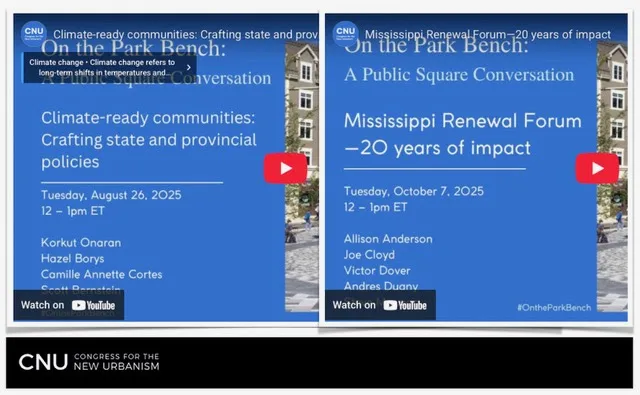
This fall, Andrés Duany and Camille Cortes each participated in an episode of CNU’s webinar series, On the Park Bench. Camille’s session, Climate Ready Communities: Crafting State and Provincial Policies, focused on state-level policy innovations aimed at boosting urban resilience.
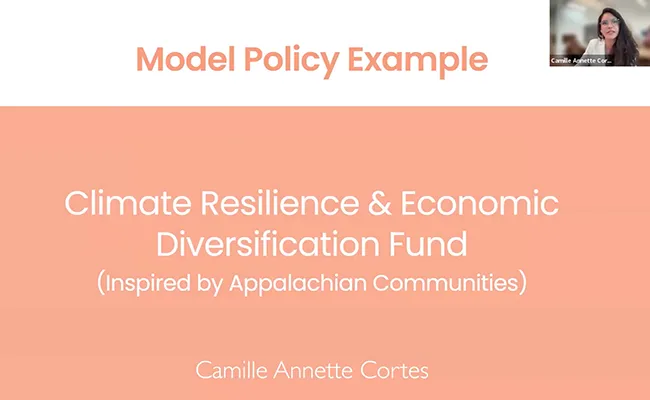
Alongside Korkut Onaran, Hazel Borys, and Scott Bernstein, Camille discussed state-level policy innovations aimed at boosting urban resilience. Camille’s example was the Climate Resilience & Economic Diversification Fund.
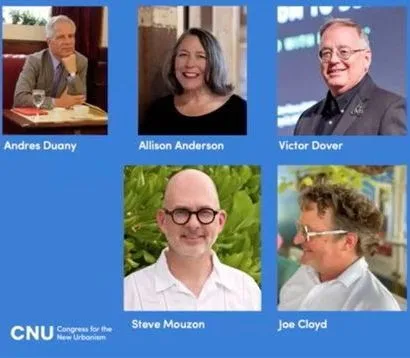
On October 7th, Andrés joined Allison Anderson, Victor Dover, Joe Cloyd, and Steve Mouzon to discuss the historic Mississippi Renewal Forum—20 Years of Impact. The session commemorated the anniversary of the epic design charrette that addressed the rebuilding of 11 Gulf Coast cities devastated by Hurricane Katrina.
The speakers had all taken part in the charrette that DPZ helped coordinate. Each described their design contributions as well as some of the built results.
Watch Camille’s Climate Ready Communities session here.
Watch Andrés’ Mississippi Renewal Forum session here.
COMPLAN 2025 Conference in Brazil
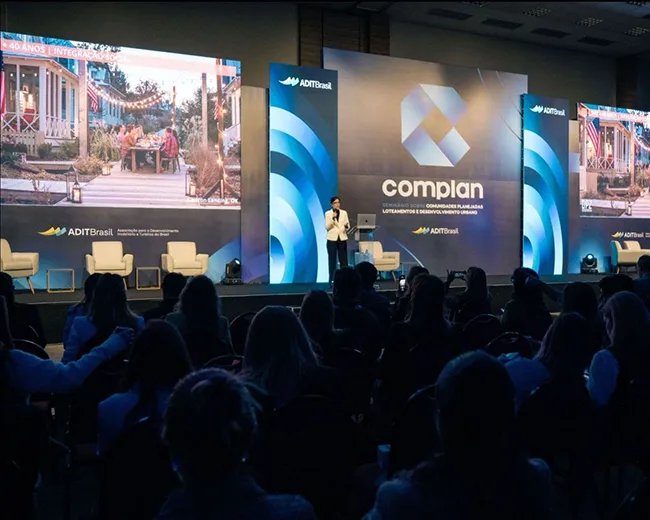
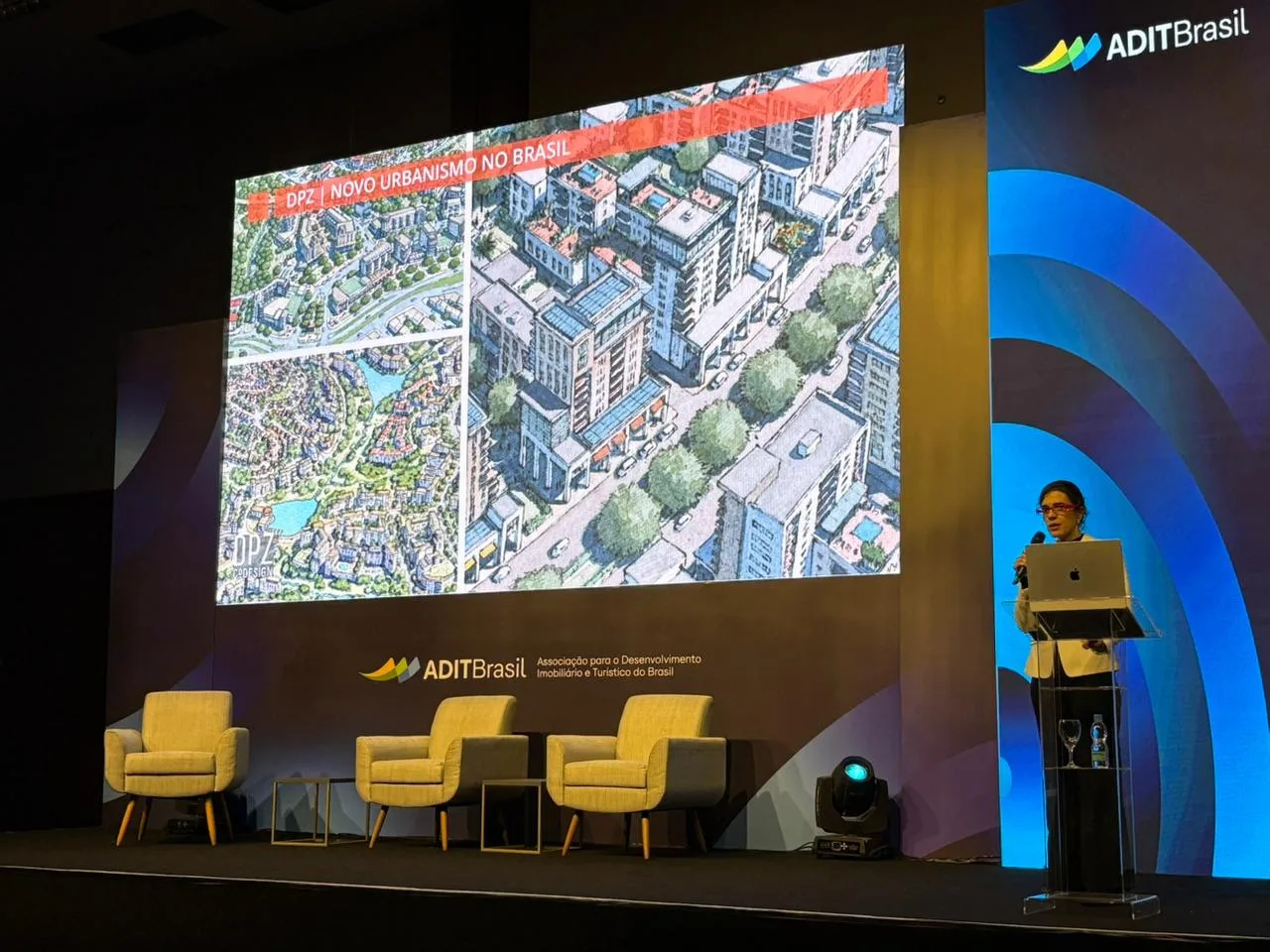
In late September, DPZ designer Milena Bingre delivered a keynote speech at COMPLAN 2025 in Atibaia. The conference, Brazil’s premier forum for planned communities and urban design, convened leading experts to explore novel development trajectories for Brazil.
In her presentation titled “Urbanism Without Barriers: Constructing Open, Human, and Safe Environments,” Bingre shared insights on urban design strategies that not only enhance safety but also foster a human-centric and inclusive urban fabric.
“Participating in this significant conference in Brazil and connecting with professionals committed to the creation of better cities was both inspiring and gratifying. DPZ’s contributions to Brazil have been substantial, and it was particularly encouraging to witness initiatives that are advancing urban design practices within the country,” expressed Bingre. The speech elicited thoughtful engagement, as noted by the media, which prompted reflection on the roles of architects, planners, and investors in shaping cities that truly serve their inhabitants.
Read more about COMPLAN 2025 in a local online journal here.
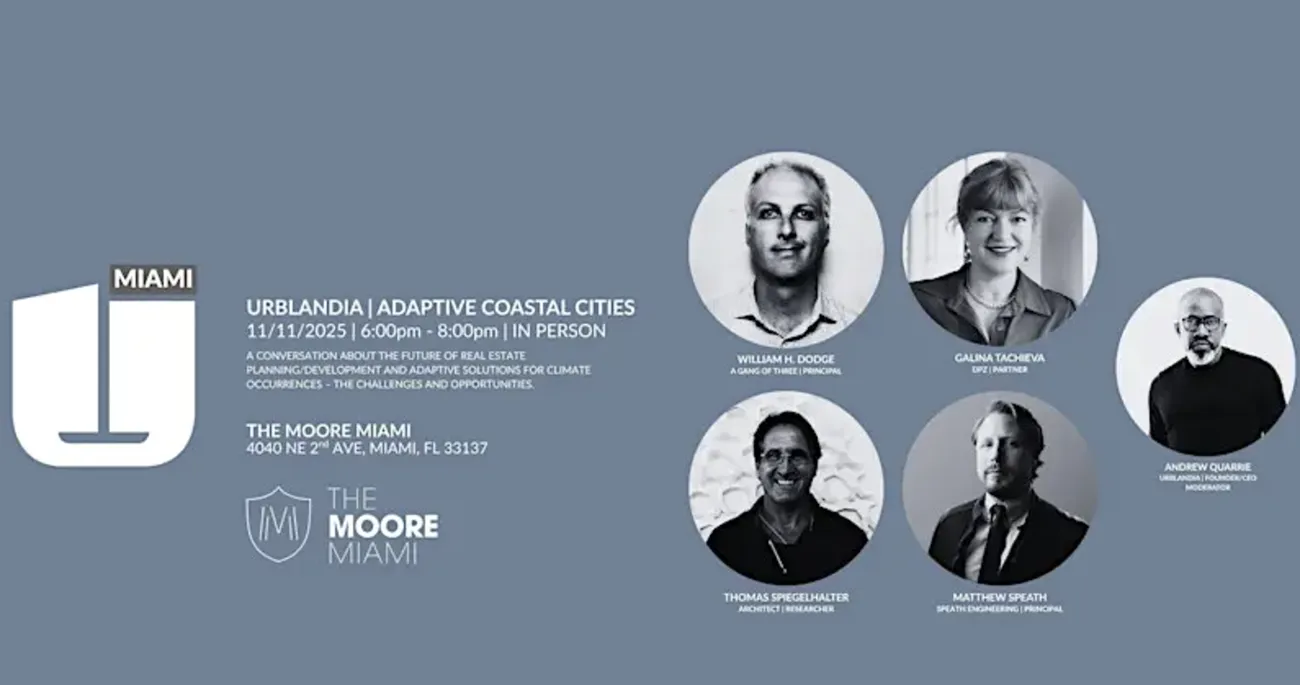
Urblandia Adaptive Coastal Cities Event
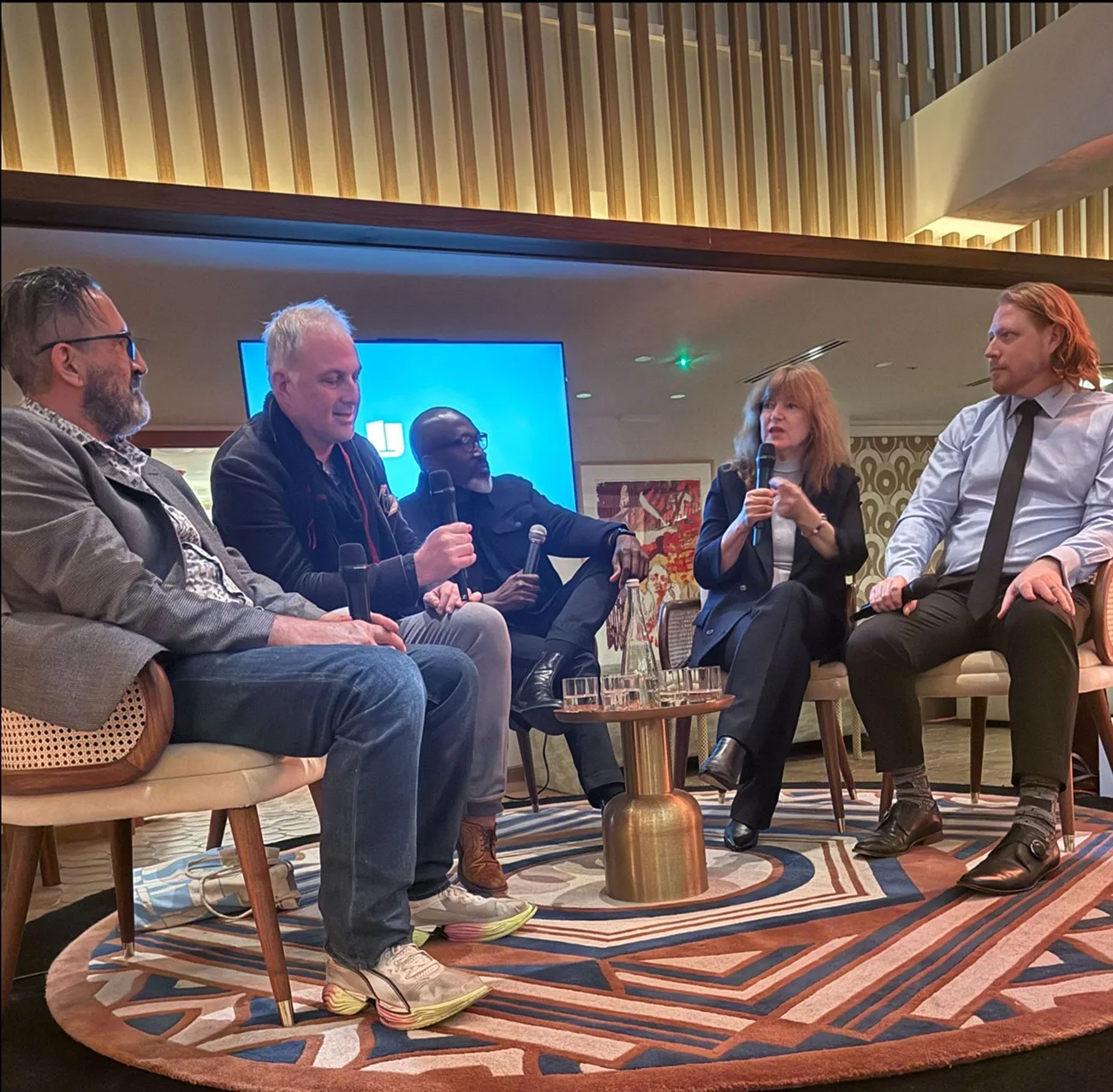
On November 11th in Miami, FL, Urblandia held the Adaptive Coastal Cities event, featuring conversations about the future of real estate planning and development as well as adaptive solutions for climate crises. The event was organized and moderated by Andrew Quarrie. The panel featured William Dodge, Matthew Speath, Thomas Spiegelhalter, and Galina Tachieva.
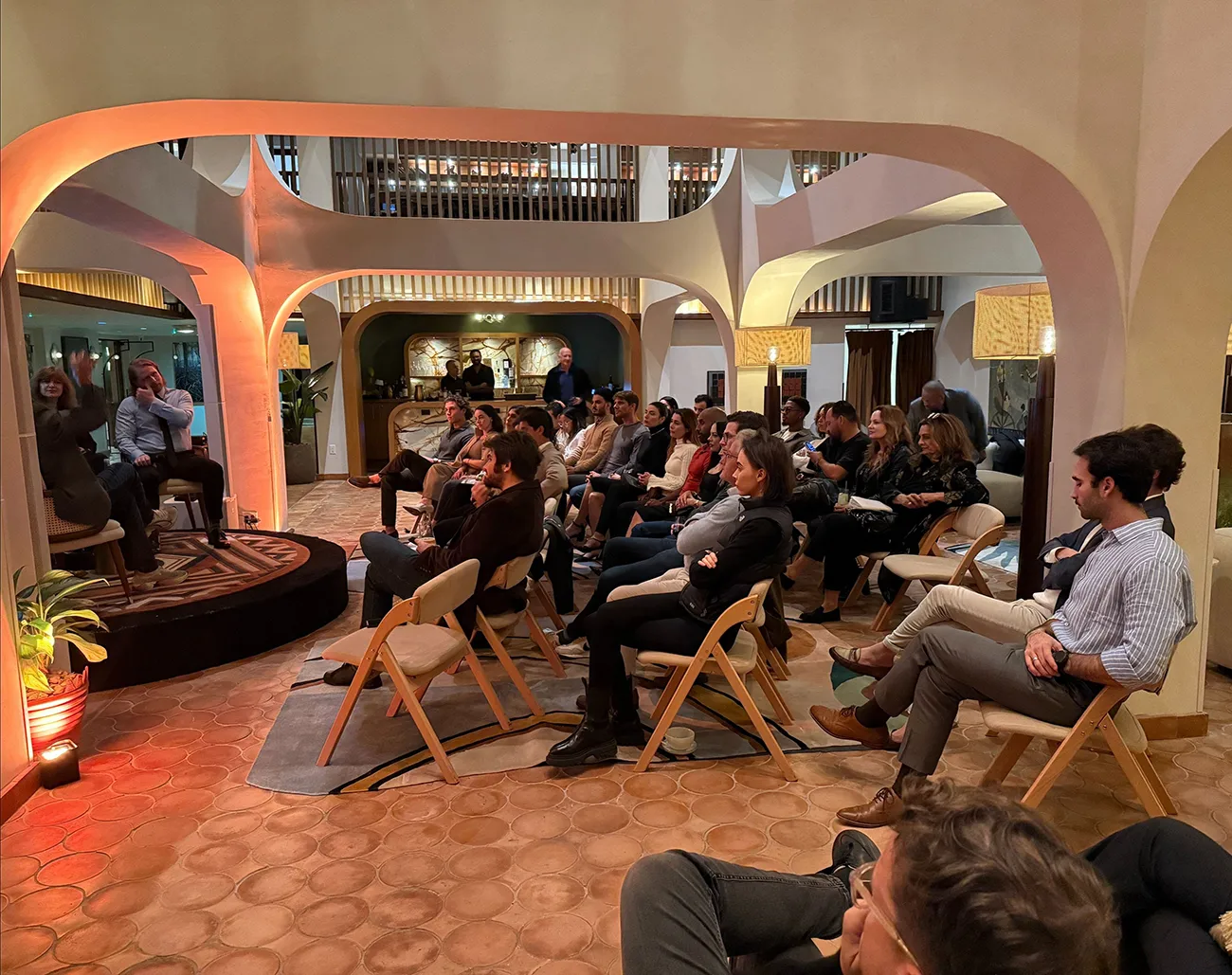
Galina shared her and DPZ’s recent focus on the challenges facing vulnerable coastal communities, spearheading designs and tools to help these places adapt and even thrive under quickly intensifying climate conditions.
Learn more about the event here.
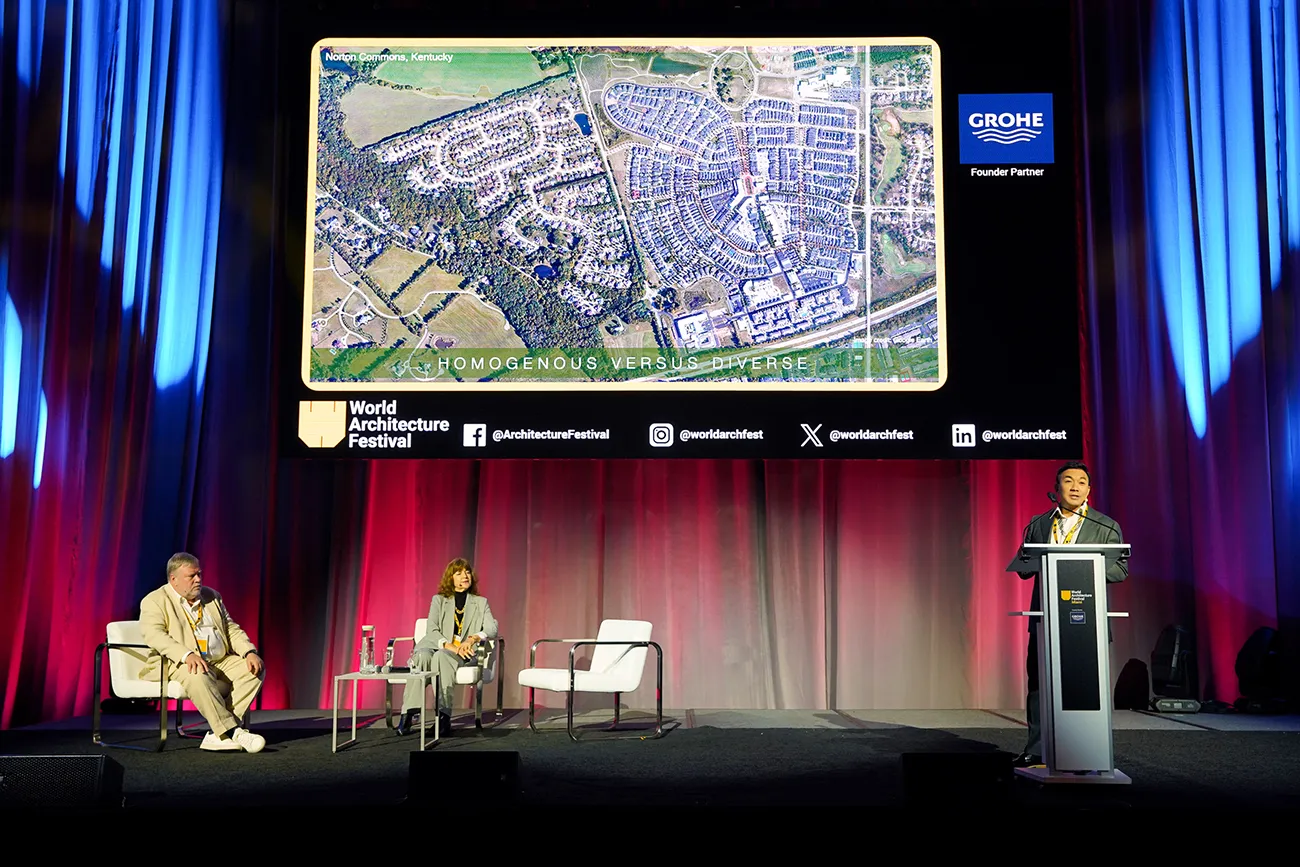
World Architecture Festival (WAF)
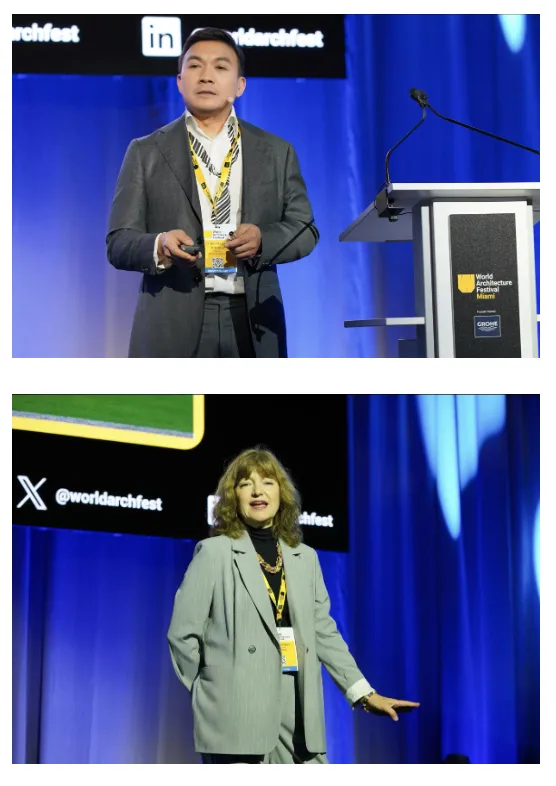
At the World Architecture Festival (WAF) 2025 in Miami Beach, DPZ Partners Galina Tachieva and Senen Antonio headlined with “Making Cities: The 8 Cs of Resilient Communities,” presenting DPZ’s holistic framework for places that are Compact, Complex, Complete, Connected, Convivial, Conserving, Cost-Effective, and Co-Designed to an audience of architects and designers gathered at the Miami Beach Convention Center for three days of live crits, talks, and awards from 12 – 14 November.
Their session translated decades of DPZ practice into a fast-moving, actionable checklist for cities grappling with climate risk, affordability, and social cohesion — showing how the 8 Cs can move resilience from slogan to street, block, and neighborhood.
Explore the festival highlights here.
Photos Courtesy of the World Architecture Festival.

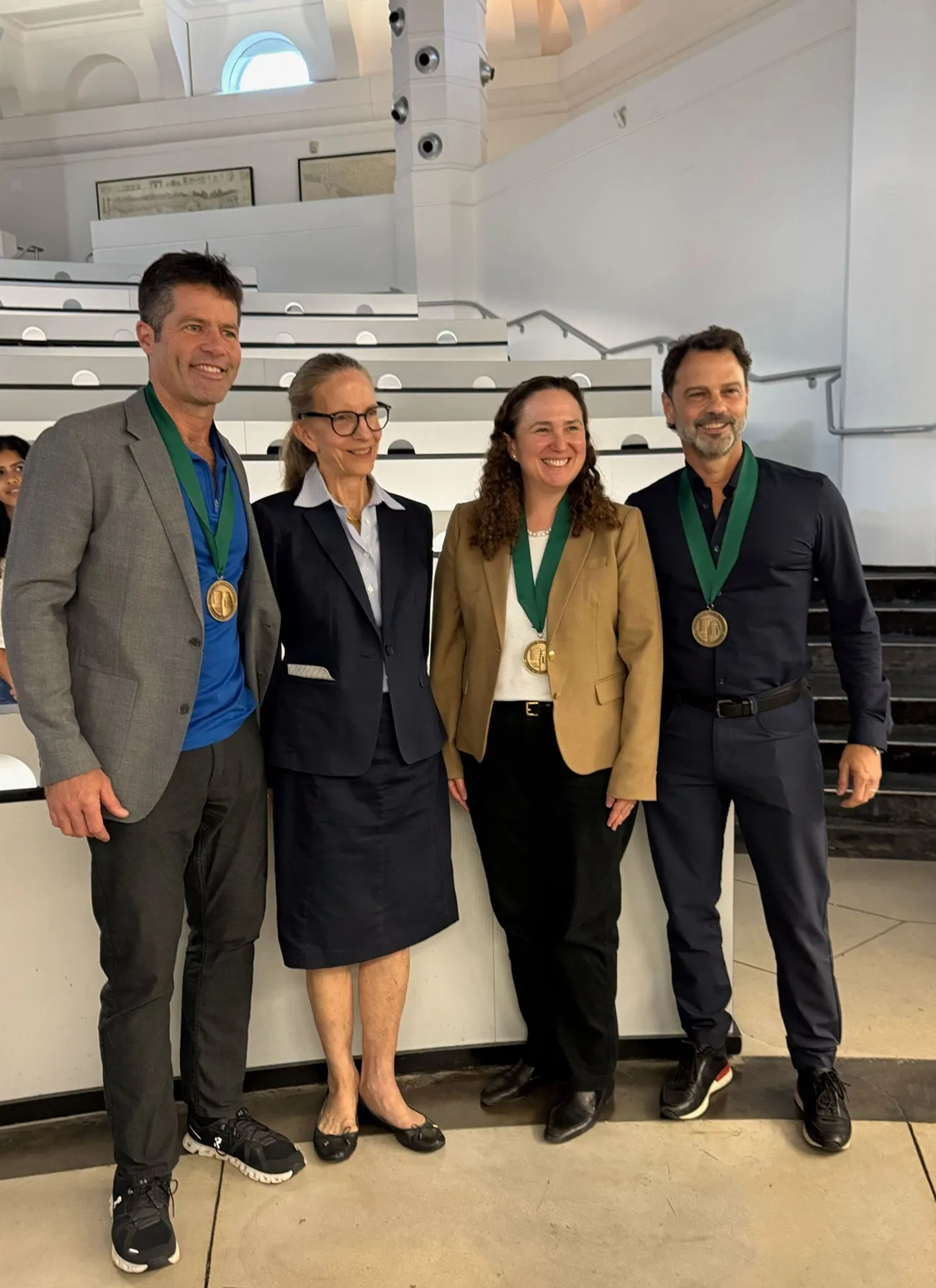
UM Centennial Alumni Medal
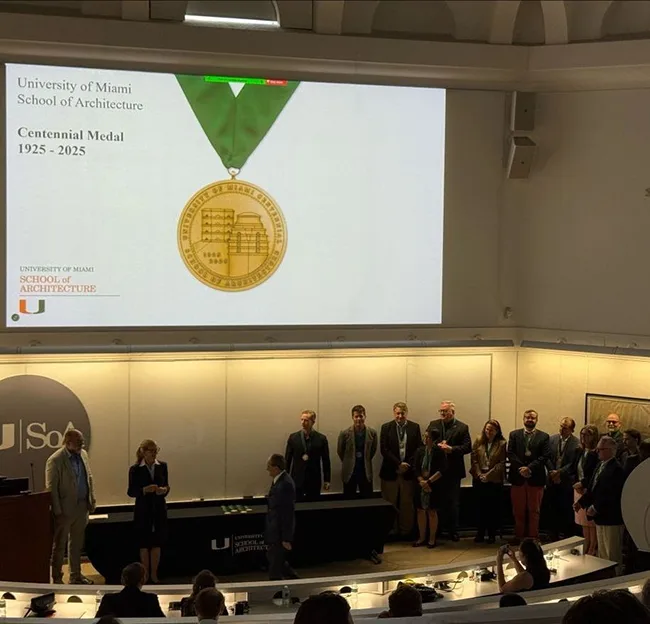
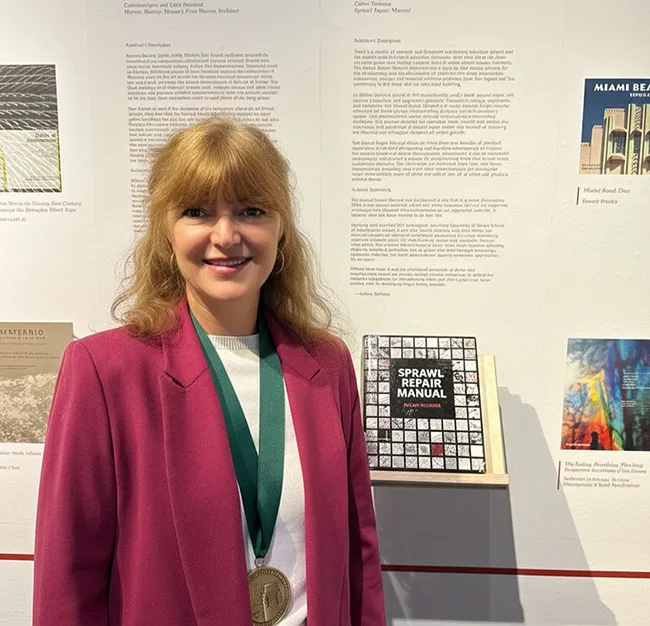
As part of this year’s university centennial celebration, several schools at the University of Miami recognized distinguished alumni for their achievements and contributions to their respective fields. DPZ congratulates all the recipients, but in particular our current and former employees. An exhibit on the publications by alumni also saw works by current and past DPZers represented.
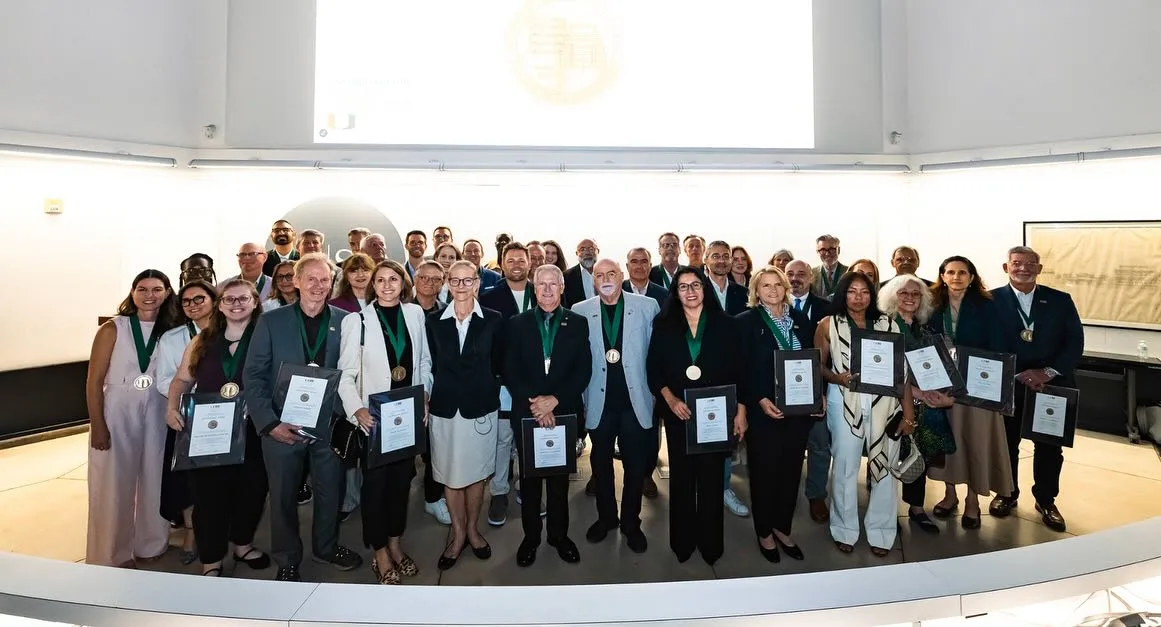
Second Photo Courtesy of UM School of Architecture
CNU Florida Summit Awards
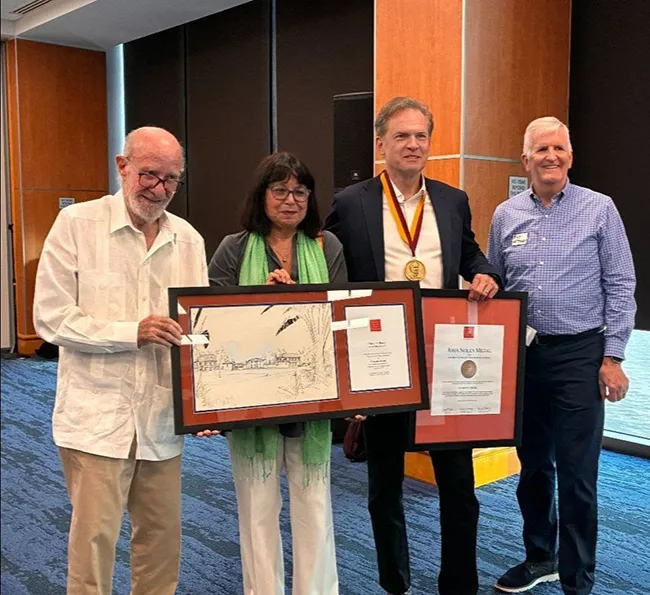
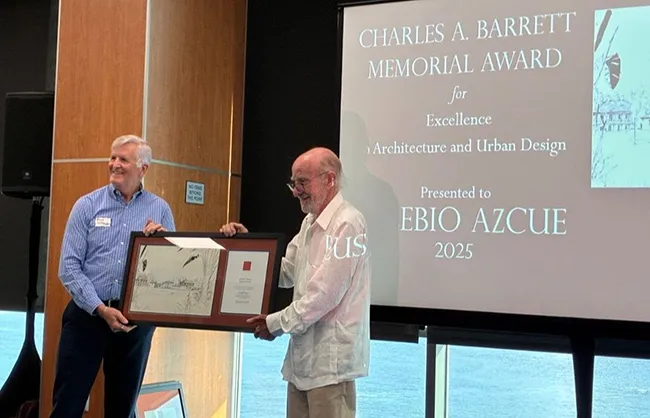
Veteran DPZ designer and master watercolorist, Eusebio Azcué, was honored by the CNU-FL chapter in September with a well-deserved Barrett Memorial Award for his contributions to architecture and urban design via illustration.
Held this year in Tampa, the CNU-FL summit also bestowed UM professor Chuck Bohl with the John Nolen Medal for his contributions to advancing the principles of New Urbanism via education. We congratulate them both.
Presenting the awards was Billy Hattaway, PE, Senior Advisor at England-Thims & Miller and board chair of CNU Florida.
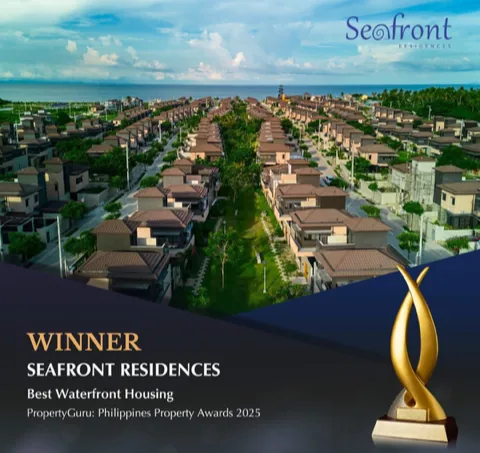
Seafront Residences Property Awards
Seafront Residences, our new town on the shores of San Juan, Batangas, continued expanding its sizable trophy collection with recognition from the Philippines Property Awards in the category of Best Waterfront Housing.

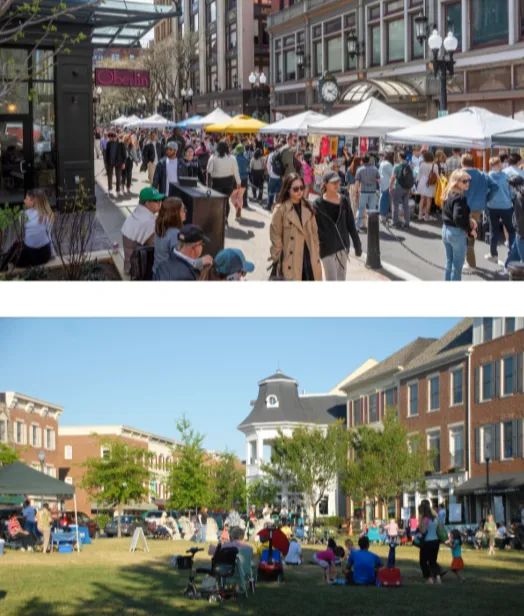
CNU 33 Density Panel
Earlier this autumn, the CNU Public Square blog published a concise summary of a well-received CNU33 session on the topic of density, featuring a discussion with DPZ’s Marina Khoury, market researcher Todd Zimmerman (standing in for Laurie Volk) of ZVA, and David Dixon of Stantec. The panel examined the definition and role of density in urban revitalization.
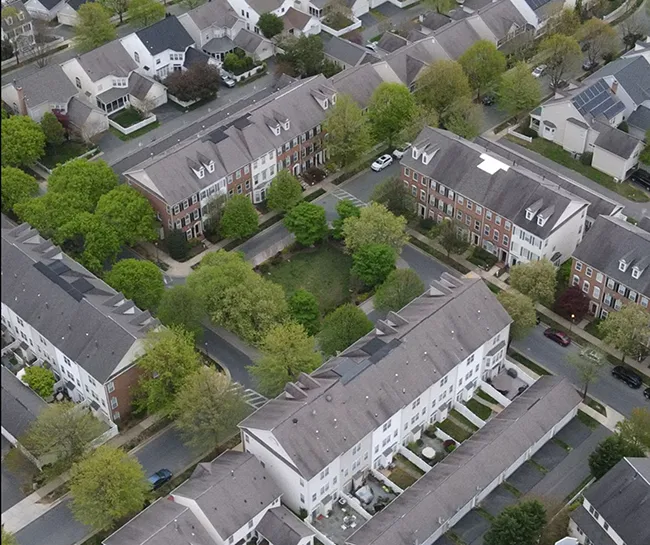
Marina emphasized the significance of valuing placemaking attributes over metrics such as population density or dwelling density. She underscored that life is not solely defined by statistics, as there are numerous examples of cherished, high-value places that are statistically dense.
However, she also acknowledged that this is typically the consequence of a delicate equilibrium between competing interests. Developers, lenders, retailers, municipalities, and residents all establish their priorities differently. Planners must comprehend and calibrate these frequently conflicting criteria to design successful neighborhoods.
Read more at CNU’s Public Square here.
First Photo (Courtesy of Cornish Associates): Downtown Providence, RI
Second Photo: Kentlands, MD, Town Center Green
Third Photo: Lakelands, MD, “Pin-Wheel” Townhouse Square
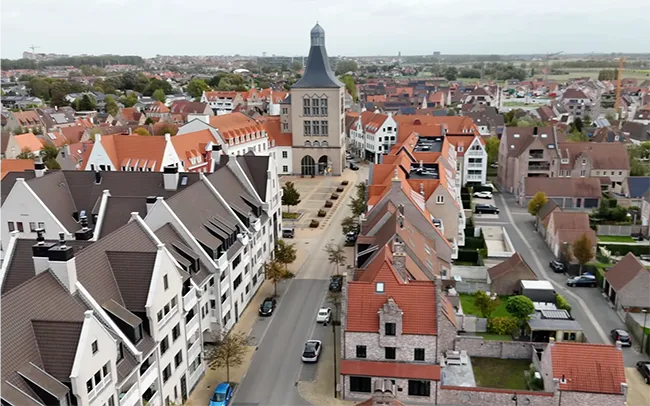
Heulebrug, Belgium
A recent video by Aesthetic City, a YouTube channel dedicated to promoting traditional urbanism and architecture, featured the Belgian village of Heulebrug.
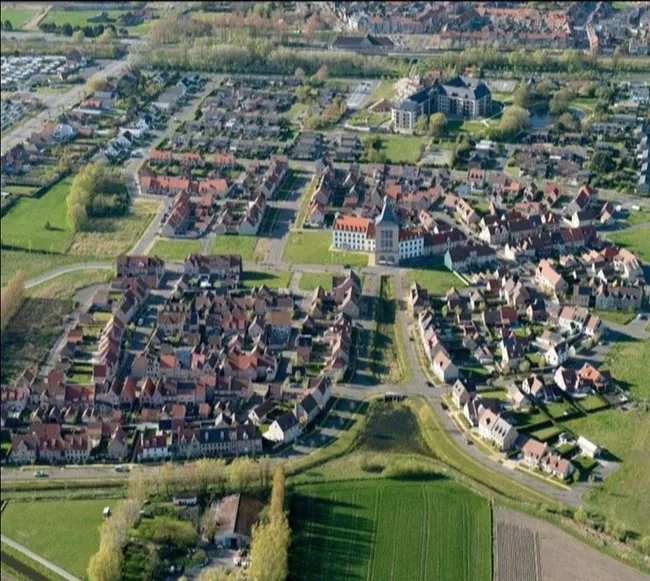
Originally conceptualized by Leon Krier, in collaboration with DPZ, at a charrette in 1998, the project was envisioned by the then-mayor, Leopold Lippens, who sought to establish a social housing community imbued with a sense of place, a connection to its surroundings, and a traditional character.
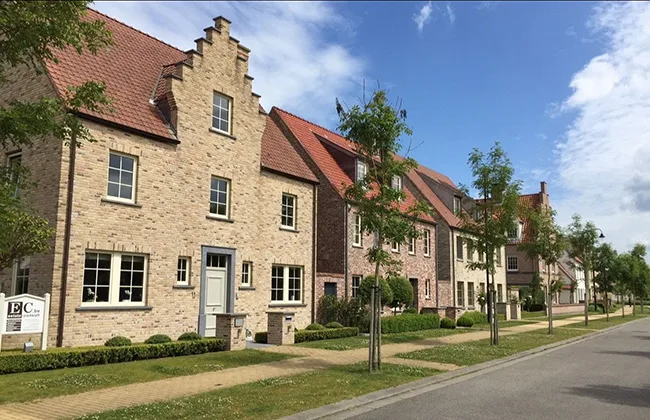
Using photos, video interviews, and the original DPZ charrette drawings, the video highlights the village’s key design elements and the pivotal role played by the town architect who managed the construction process and enforced DPZ’s regulations.
See the video from The Aesthetic City here.
Read more about Heulebrug in the CNU Public Square Journal here.
First Photo Courtesy of The Aesthetic City
Second Photo Courtesy of WVI
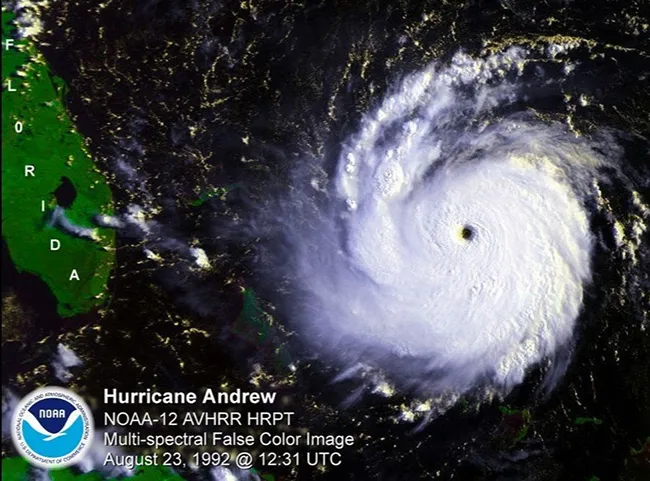
Hurricane Andrew’s 33rd Anniversary
As hurricane season concludes, we present an article by WUSF/NPR on the enduring legacy of Hurricane Andrew and lessons learned by the South Florida community in 1992.
These lessons have profoundly reshaped hurricane preparedness in the region. DPZ’s Lizz Plater-Zyberk shares her thoughts on the post-Hurricane Andrew response by the local design and construction industry. She noted that the investigation following Andrew led to a “sea change” in how structures were built after the storm, with new construction standards in the Florida Building Code of 2002 that today make buildings more fortified.
She also commented on the We Will Rebuild charrette. This volunteer effort that she helped lead was convened by the University of Miami School of Architecture, Florida International University, and other local organizations. The 100+ volunteers studied the effects of the hurricane and identified ways to rebuild better, both in terms of more resilient structures and with regard to urban design strategies that could help mitigate the effects of future storm events.
Read the full article on the lesson’s learned and Lizz’s thoughts here.

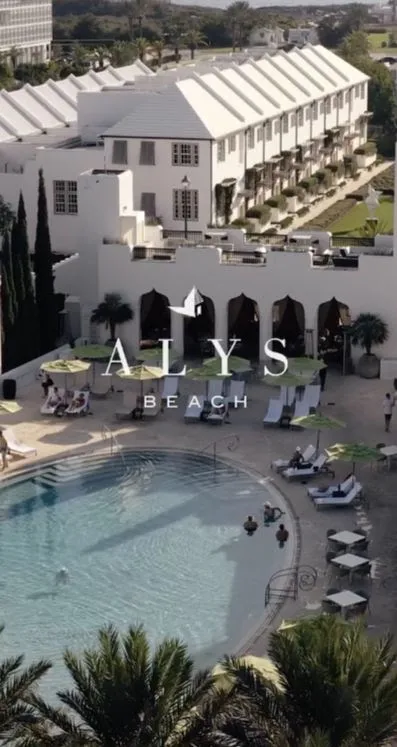
Thoughts on Alys Beach
A recent post from the Alys Beach Facebook page presents Andrés’ perspective on what distinguishes this DPZ community from other projects within the DPZ portfolio. This video is an excerpt worth revisiting from an interview conducted last year for the 20th Anniversary Film. 2024 had marked a pivotal juncture in Alys’s two-decade trajectory, enabling its creators to objectively assess the key achievements that were now manifested in tangible built results and public acclaim.
Watch the complete film here.
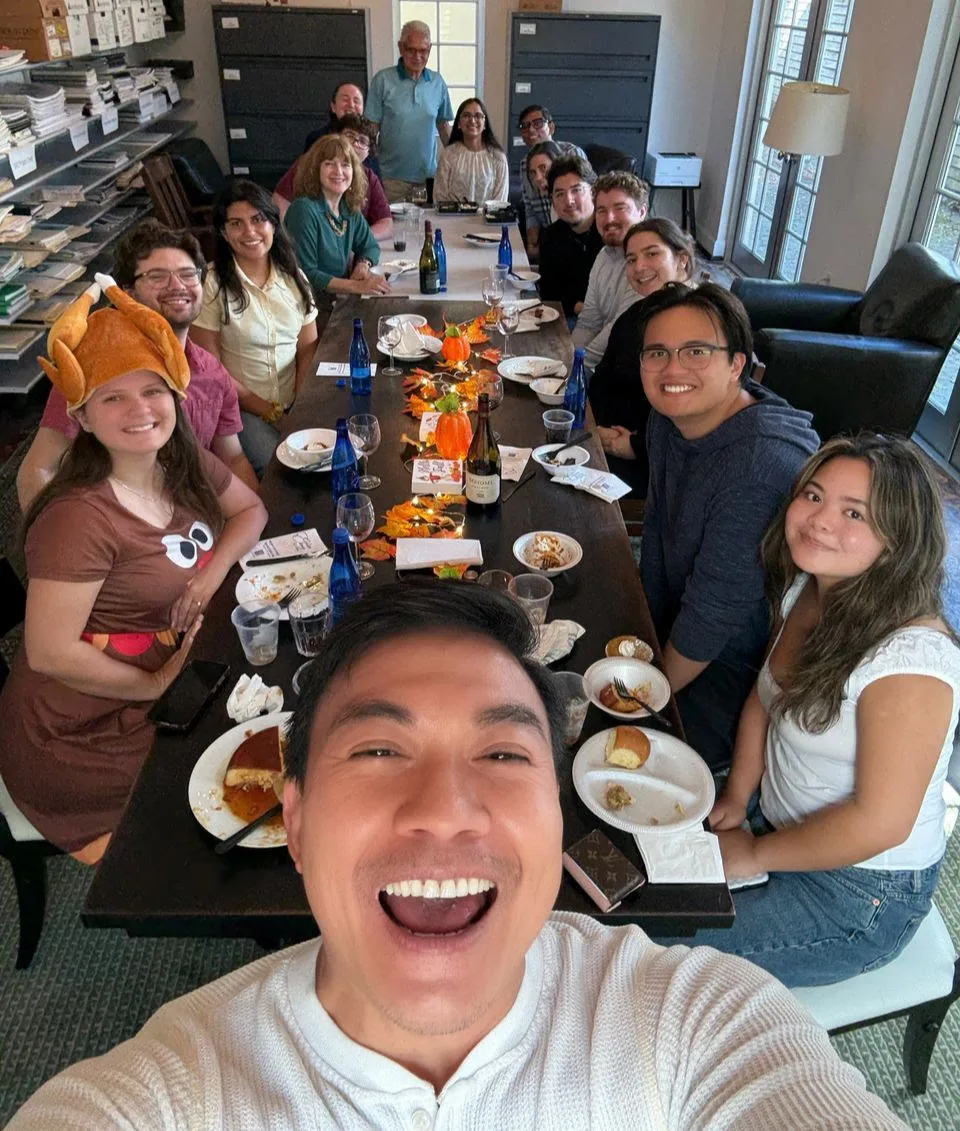
Happy Thanksgiving!
The DPZ Team wants to wish you and your loved ones much warmth and gratitude this week.