


Downtown Naples, Florida: A 30-Year Story in Placemaking
Downtown Naples, Florida: A 30-Year Story in Placemaking
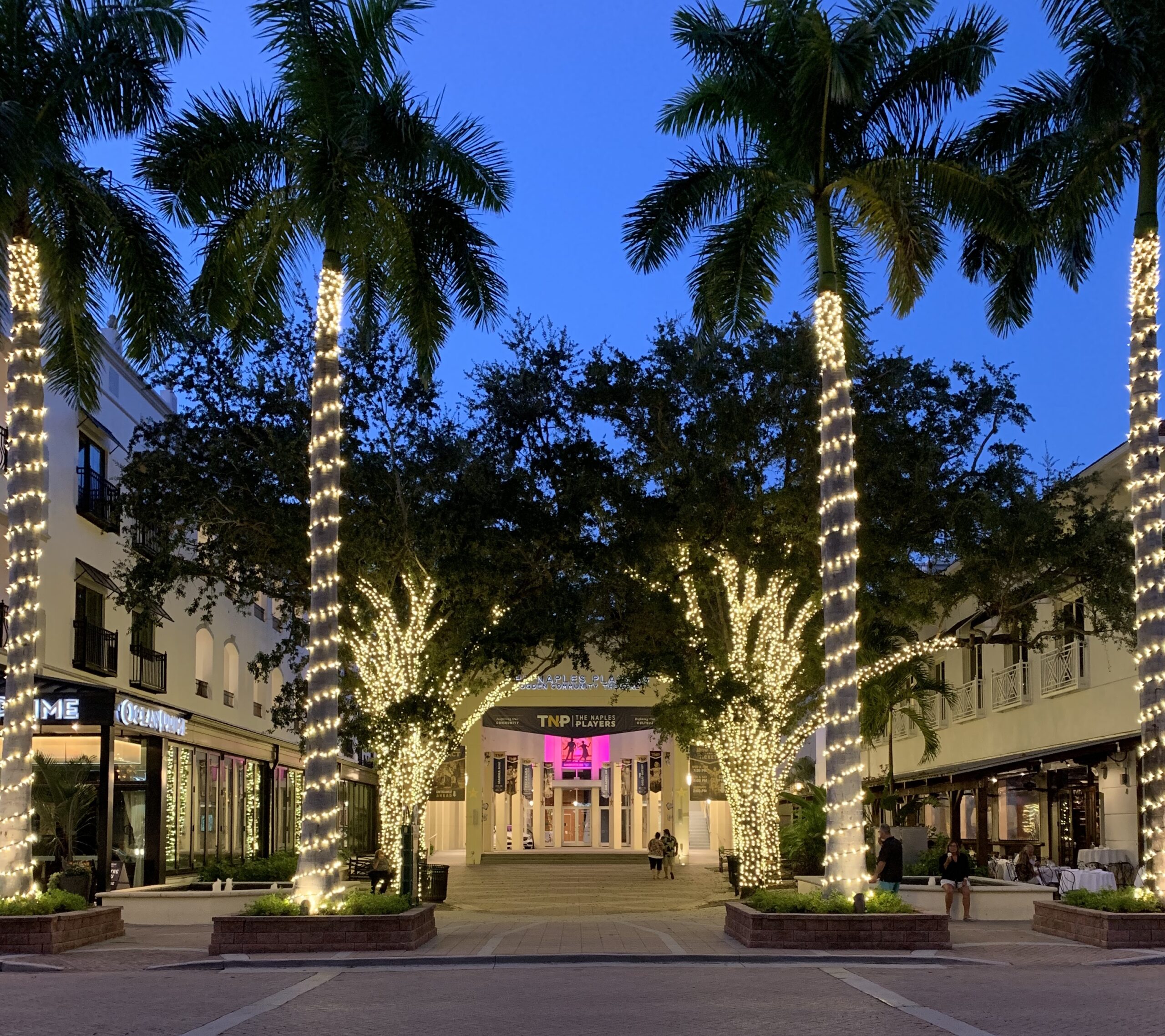
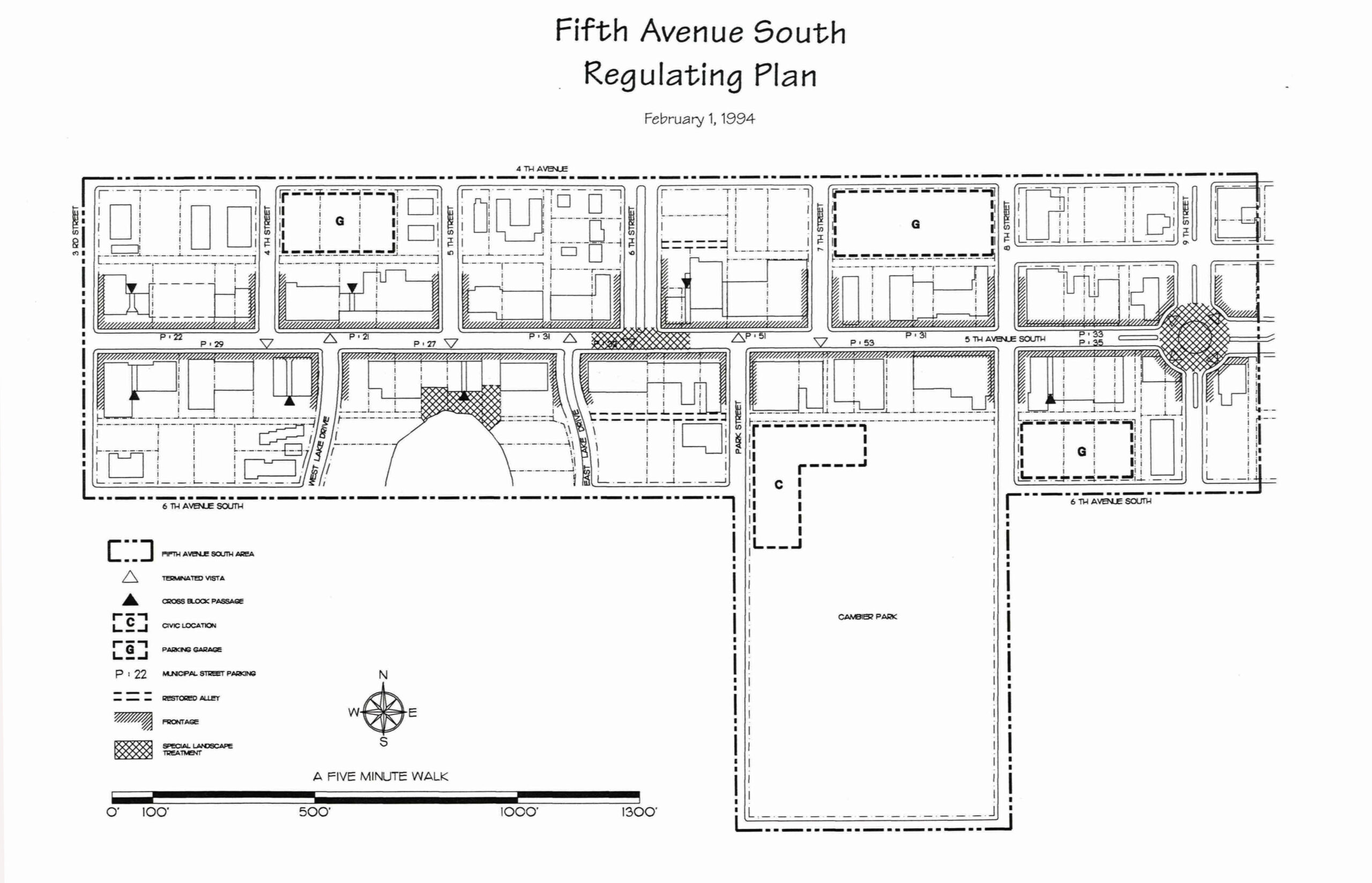
DPZ has returned to Naples in 2022, nearly three decades after the charrette and code that transformed 5th Avenue South into a signature main street, the hub of a region, and a national destination. The assignment this past year was to address the Naples Design District, an eclectic, historic area in need of a clearer identity and a plan to help define it.
In 1993 the mission was to equip 5th Ave South with the tools to compete with the sprawling, commercial centers of US41. The charge for the Design District, also known as the 41-10 area, was to generate new ideas for the place to thrive, but without changing those qualities that already make it a beloved neighborhood.
Facilitating both efforts has been a rare and indispensable combination of supporters. Informed elected officials and city staff, complemented by an engaged business and resident community, has consistently contributed to a robust discussion.
Read more about the Naples Design District Master Plan effort here.
Creating the Place
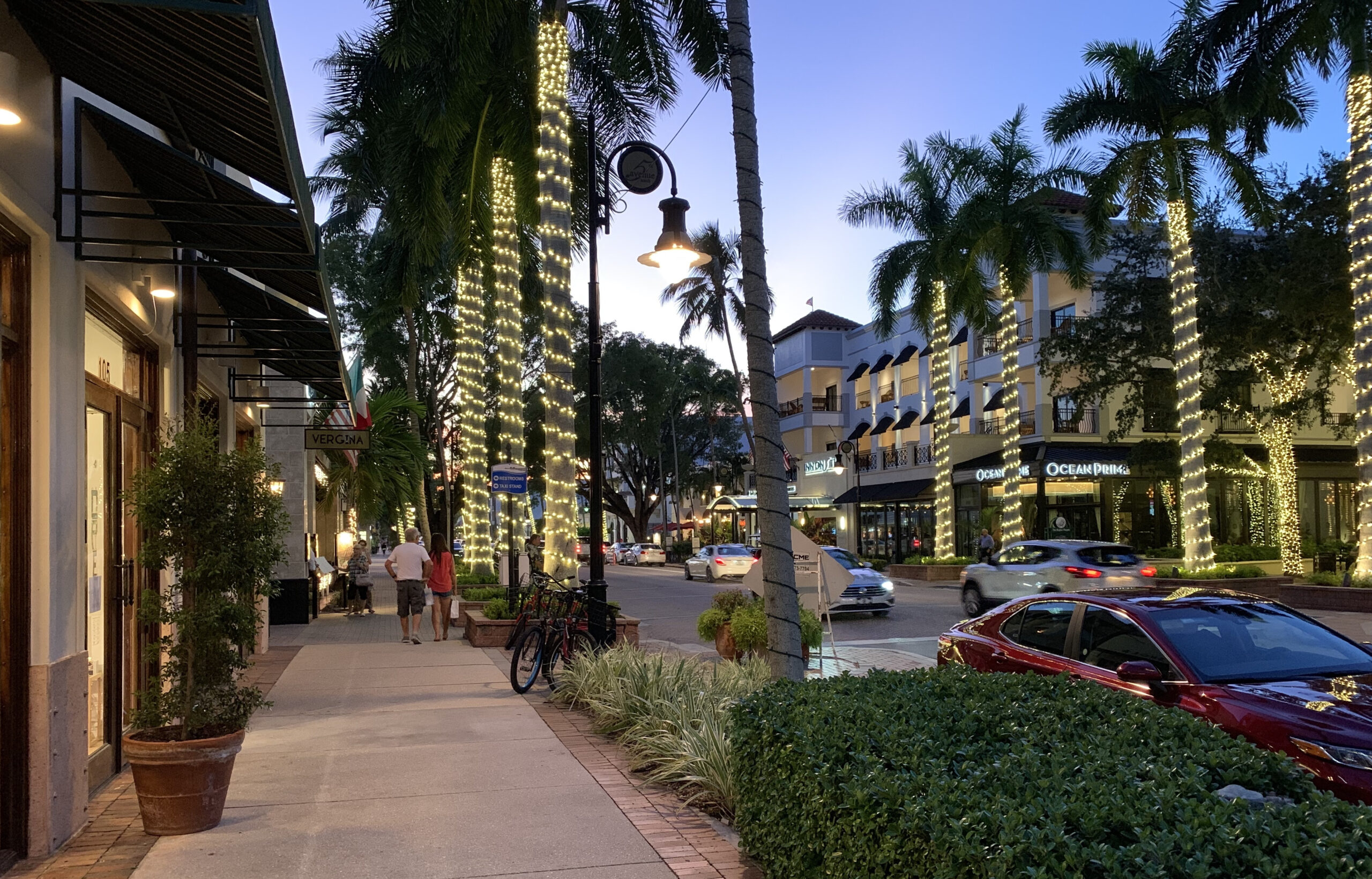
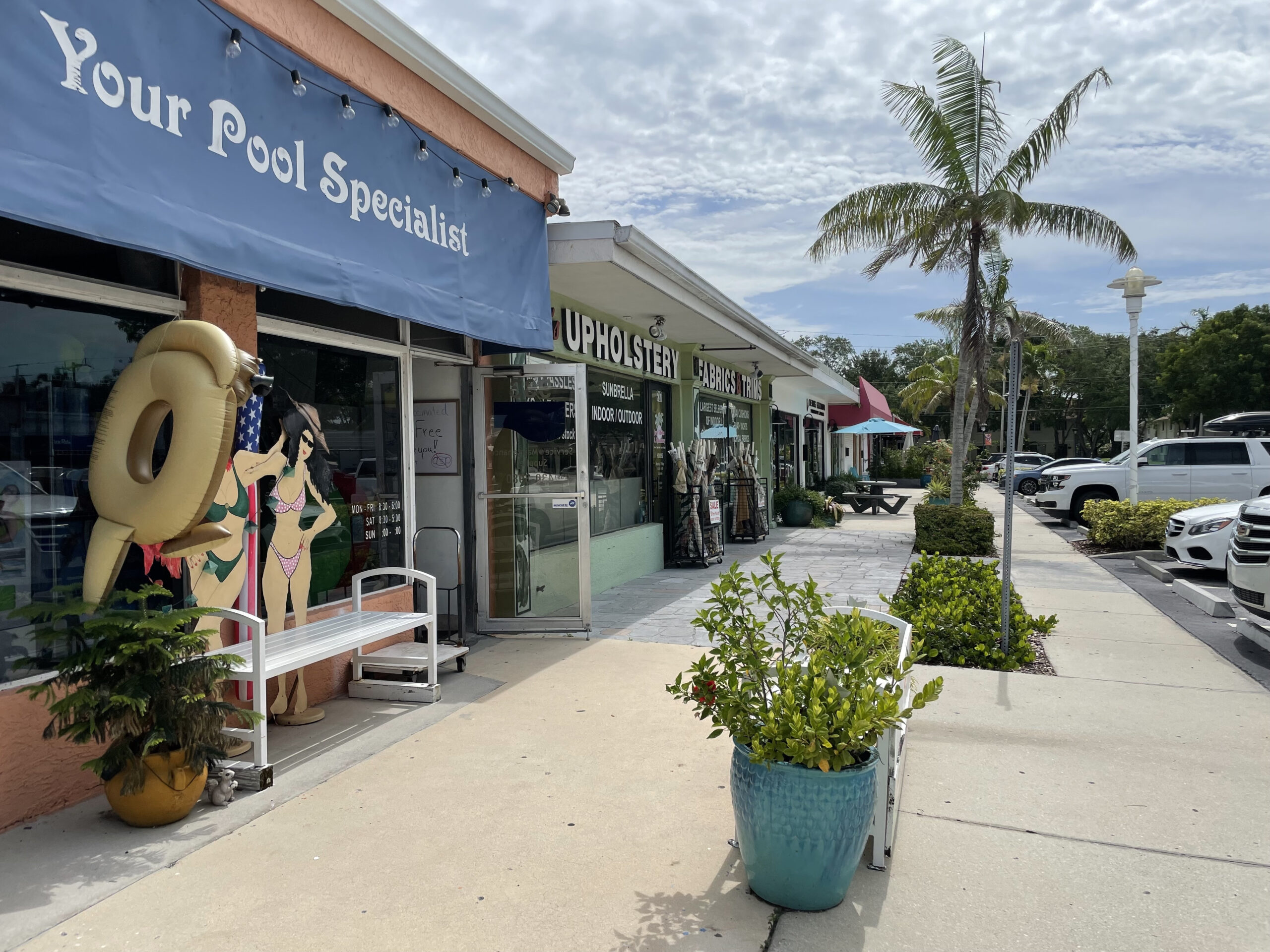
Authentic, memorable places convey an understanding of what makes them special and worth visiting. 5th Avenue South offers a blend of retail, entertainment, and civic venues as well as residential structures. In turn, the Design District offers a quirky, art-infused and very broad mix of businesses, housing, and industrial uses.
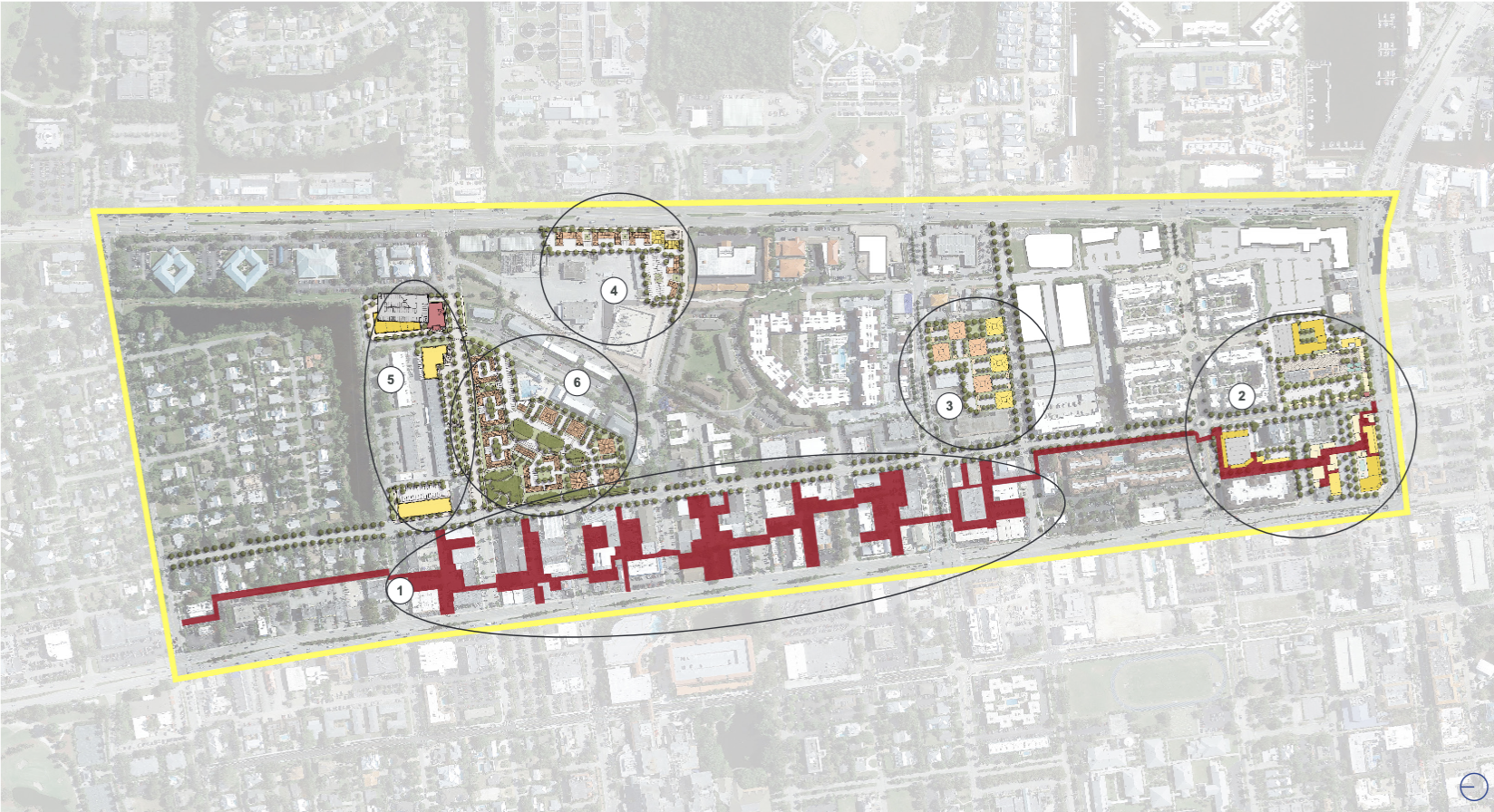
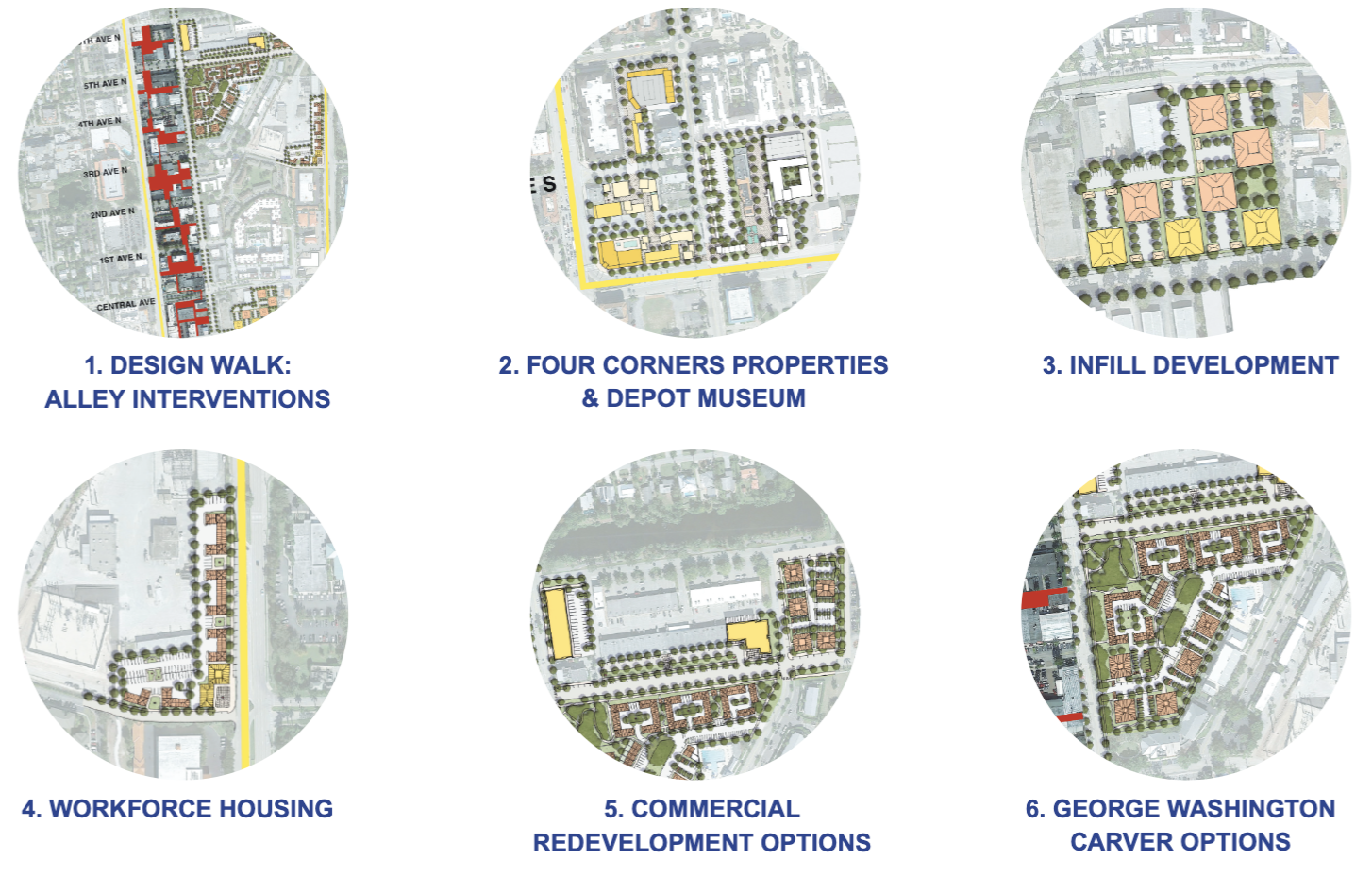
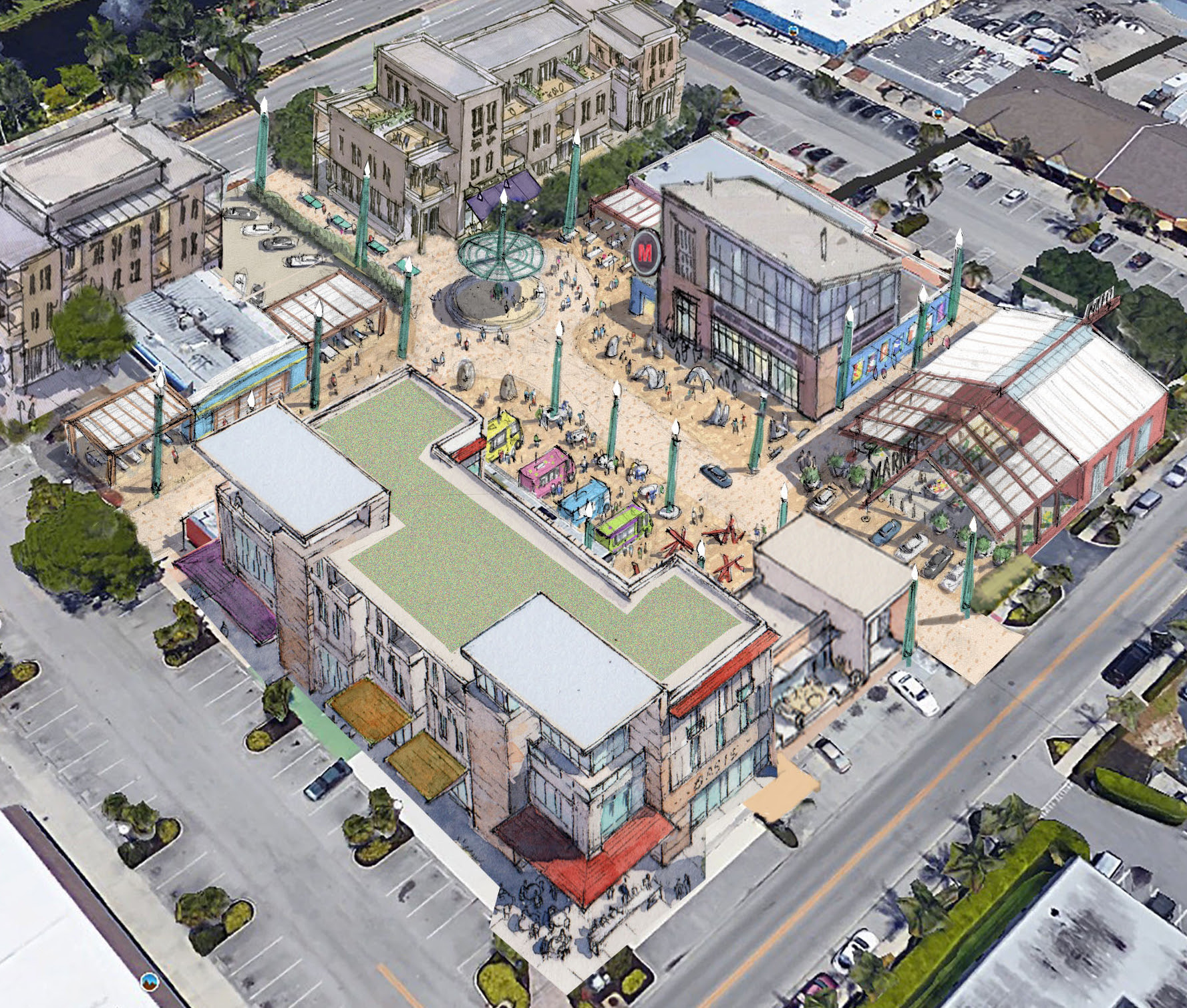
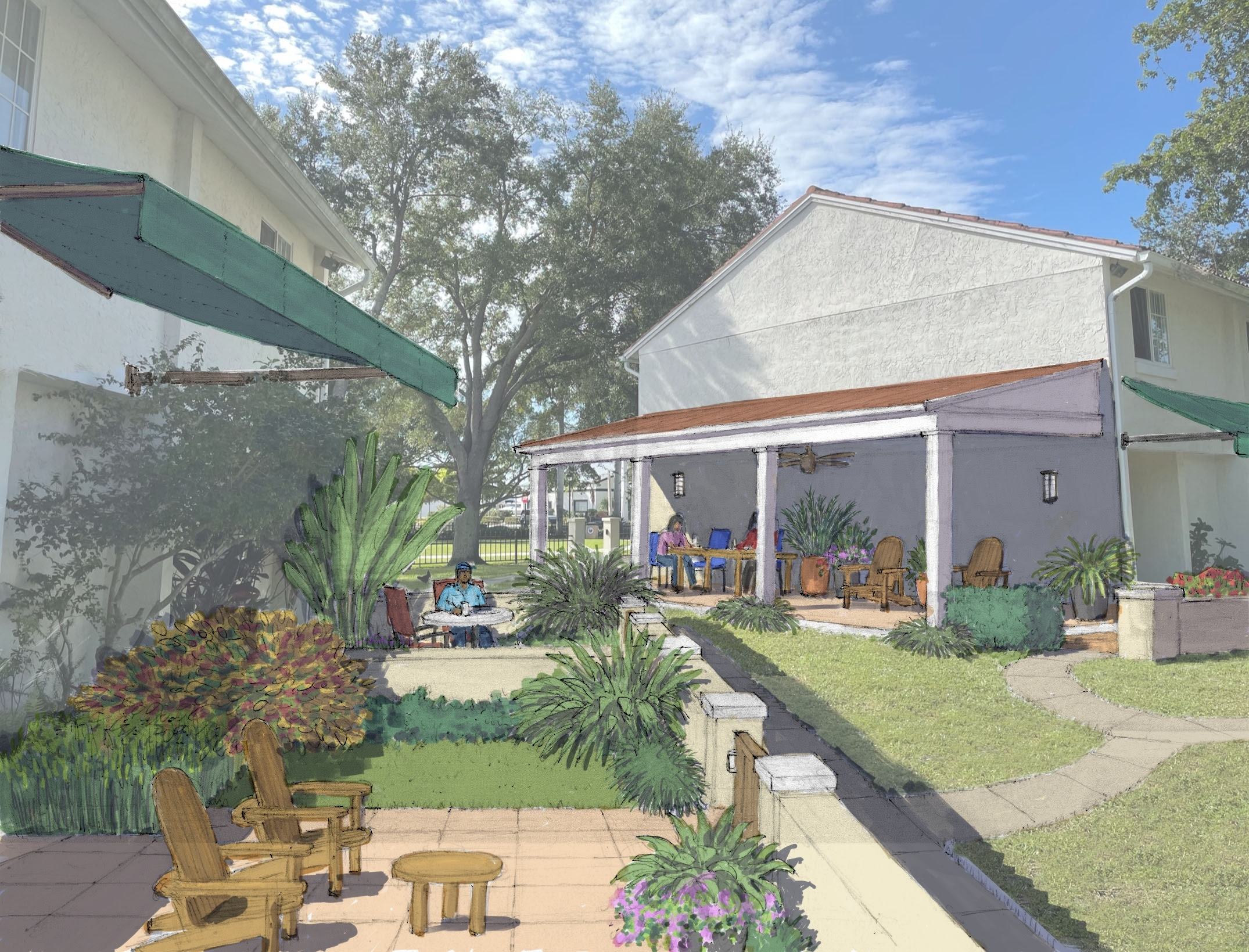
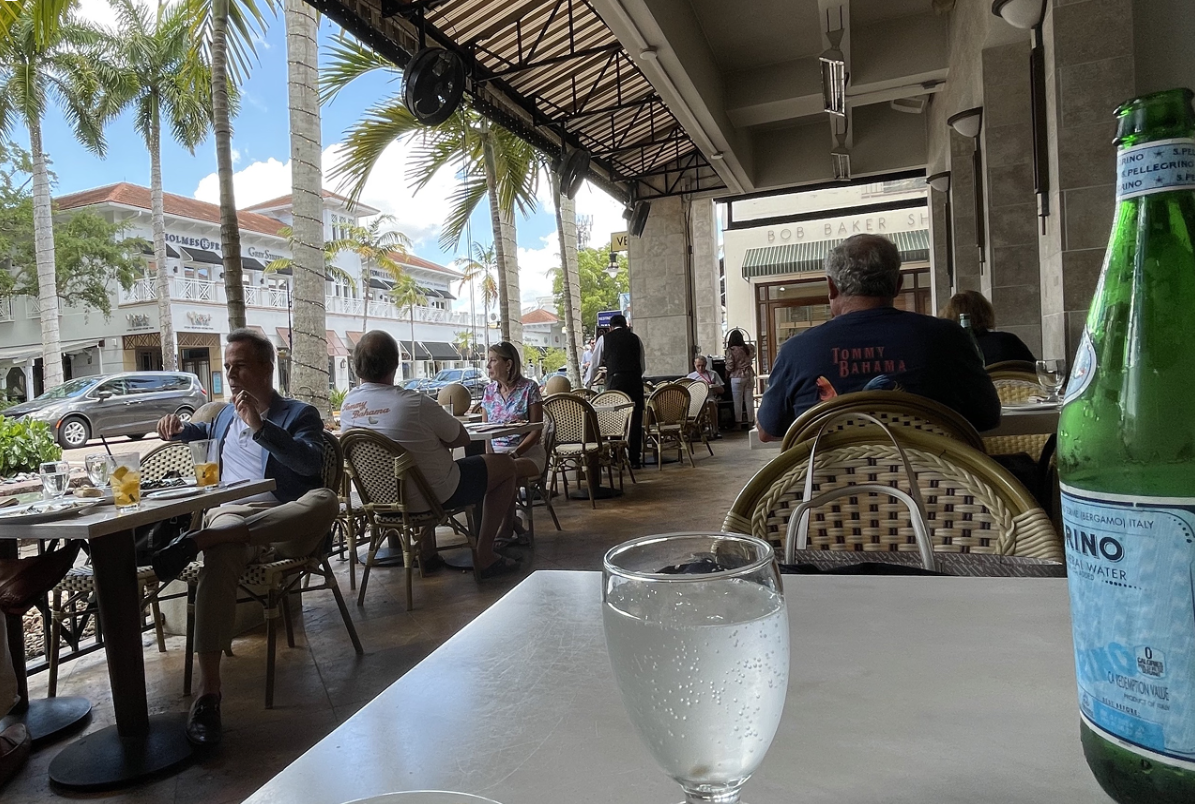
The Design District also possesses a walkable urban fabric with east-west avenues wide enough for head-in parking and ample sidewalks. In between them is an untapped asset that some restaurateurs are already starting to explore: the district’s mid-block alleys that inspired the master plan’s Design Walk. This new pedestrian network weaves from alley to alley filled with exciting themes, open air dining, and event programming in a celebration of art, design, and the unique history of the neighborhood.
Connecting the district, 10th Street is the principal north-south spine and it too is a potential canvas for public art in the form of traffic-calming painted crosswalks, wall murals, and sculptural installations to draw passers-by into the Design Walk.
Enhancing the Walk
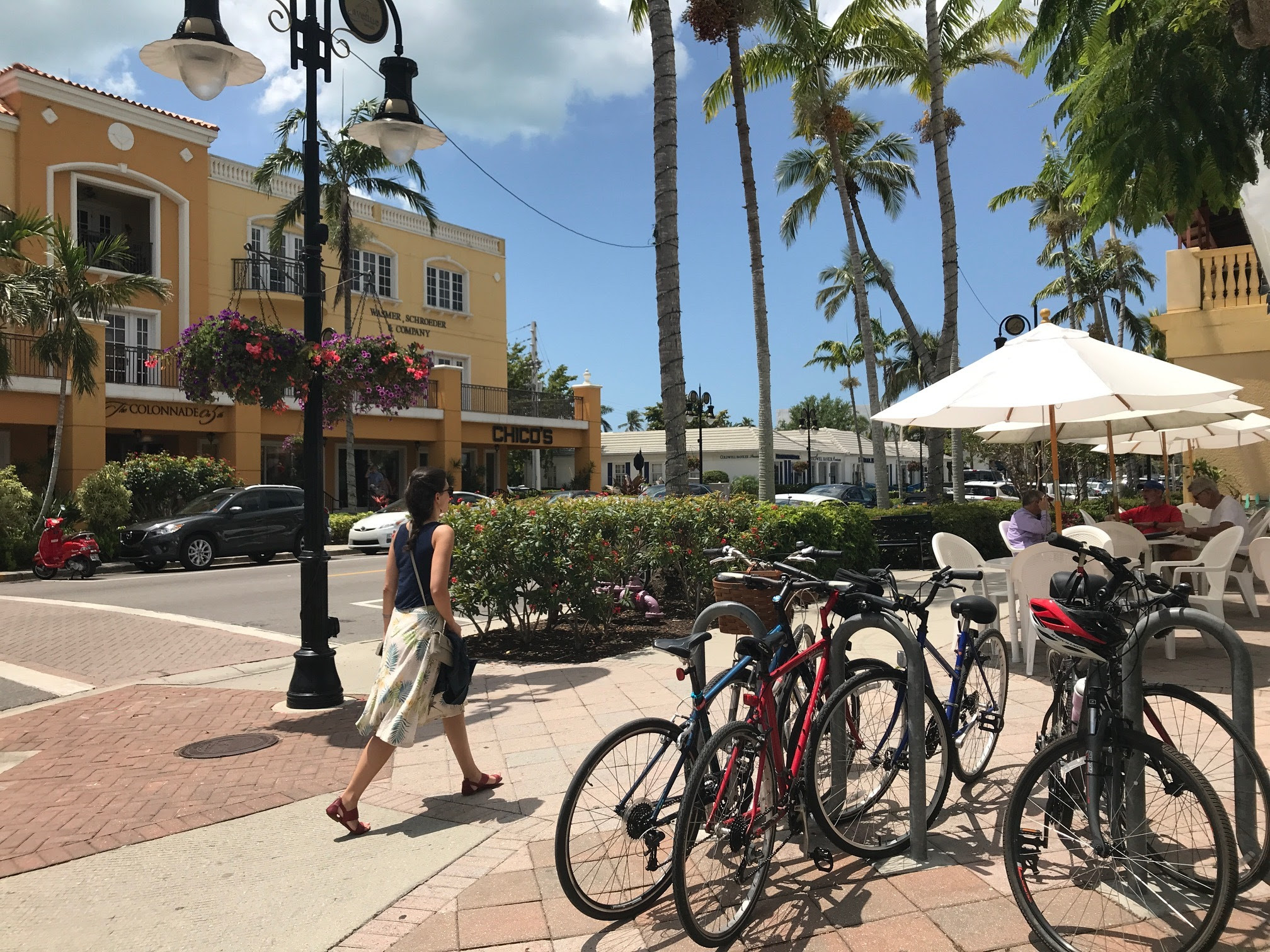
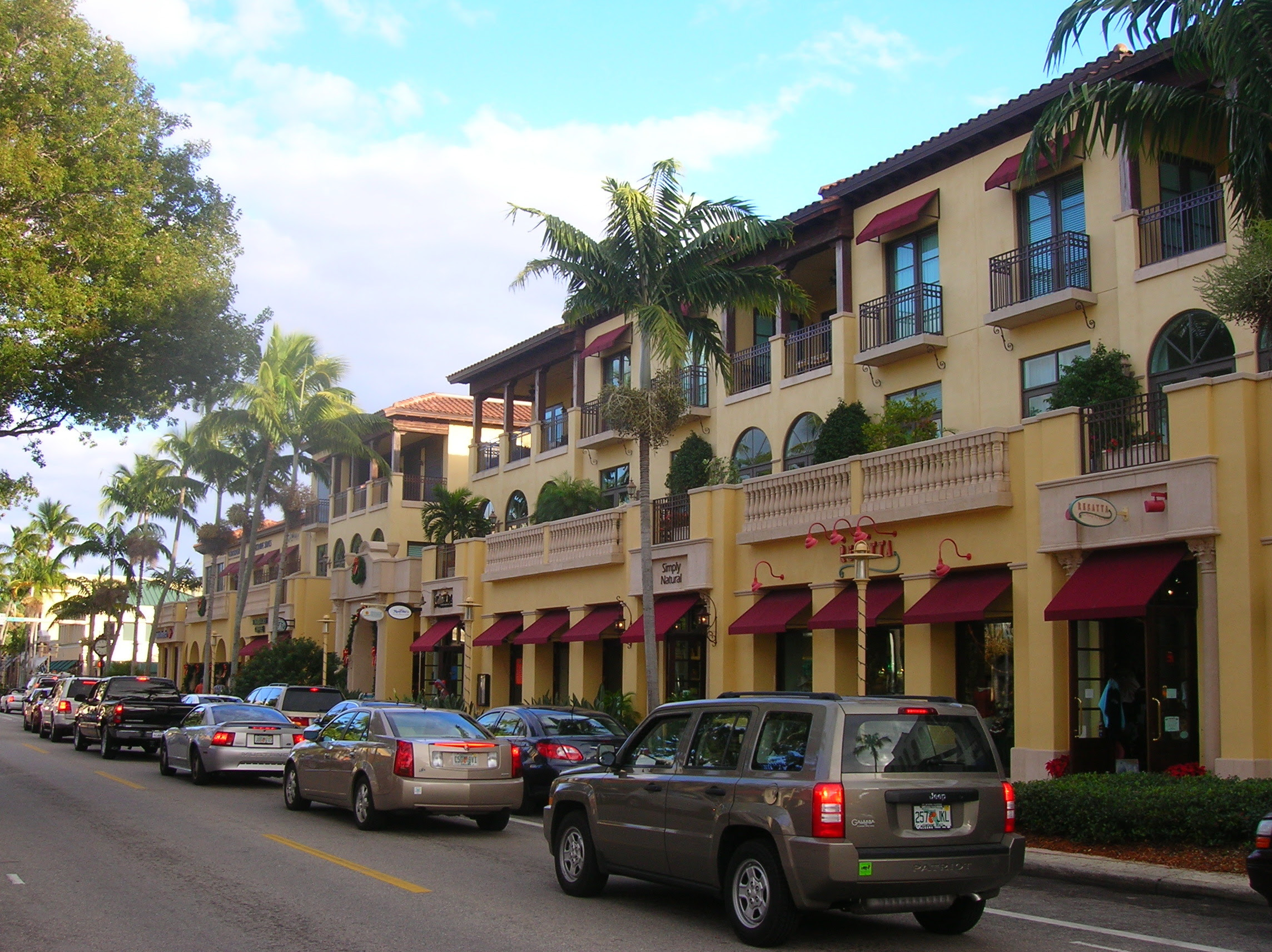
5th Avenue South’s most visible transformation came in the form of an exciting, rewarding pedestrian experience with a lively sequence of shopfronts and cafes made more welcoming with awnings, arcades, and landscaping.
Fortunately, the Design District already has a pedestrian-friendly scale where residents can access services and meet many daily needs within walking distance of their homes. The goal of the DPZ master plan is to make this walk safer, more interesting, and more comfortable. The new Design Walk and the refreshed 10th Street will solidify a greater sense of connectivity and character, and improve access to the 100+ businesses in the district.
Strengthening the Mix
Successful downtowns are almost by definition 24/7 environments that mix uses and balance the needs of daytime businesses, nighttime establishments, and the residents and visitors who will patronize both. The 5th Avenue South Master Plan accomplished this with multi-level living above the shops and cafes.
DPZ’s plan for the Design District aims to underscore this variety further. In a state that often sees gentrification erase affordability, this part of Naples’ Downtown features a notable inventory of affordable housing apartments sitting adjacent to recently built high-end condos, and the ever-appreciating single-family neighborhood to the north. The DPZ plan identifies strategies and incorporates backed research to maintain this mix and enrich the variety of housing options and building types.
Keeping it Local
Earlier this year The Wall Street Journal named Naples as the #1 ranked housing market in the US. The revenue and activity brought about by 5th Avenue South’s success as a draw for upscale tourists has been undeniably beneficial. However, the national appeal of 5th Ave has left local area residents craving a special area of their own.
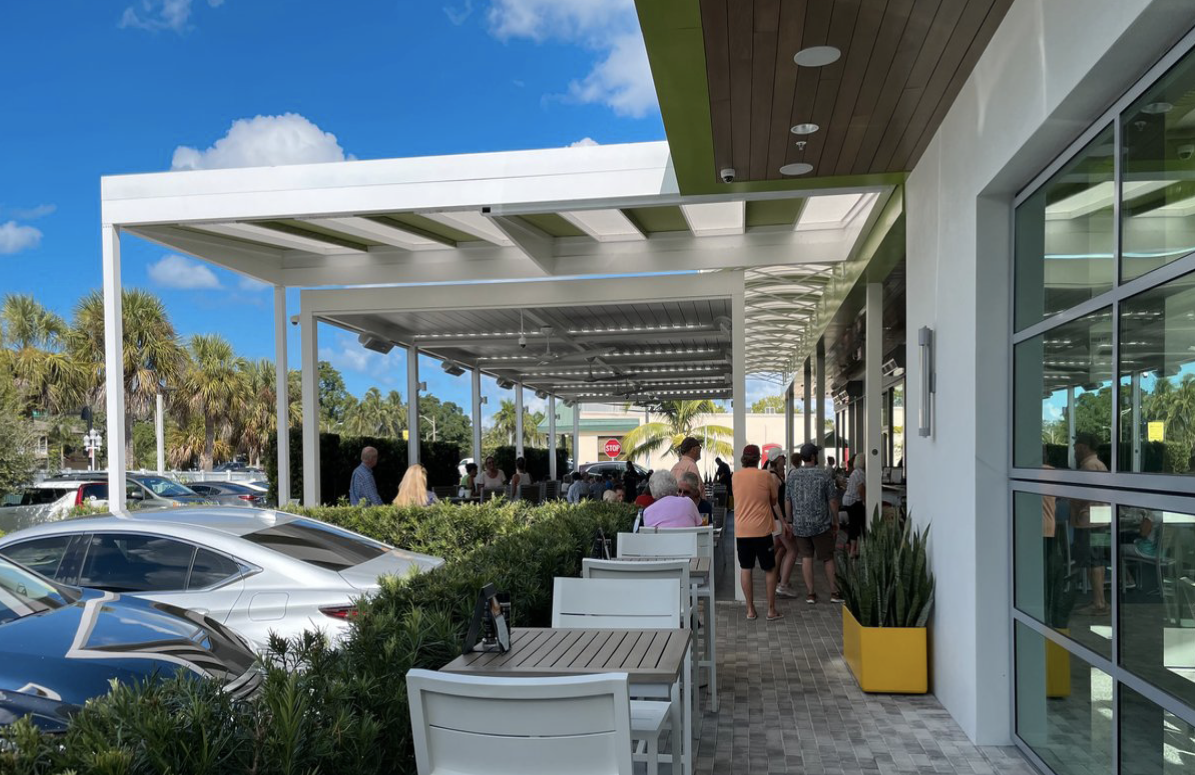
The Design District can be that place for locals as long as there is support for the existing small scale and mix of eclectic small businesses. New infill needs to respect this and avoid large footprint structures. While the retail study identified the viability of national retailers and large format stores, this is not what the Master Plan recommends.
Reinforcing the Continuity
Understanding that the city-building process does not end with the drafting of a plan or the adoption of a code, the local leadership in Naples has grasped that good civic stewardship requires ongoing attention, assessment, and adjustment. Naples’ willingness to seek DPZ’s counsel over the decades has lent considerable continuity to the evolution of their downtown.
For 5th Avenue South, the creation of a Business Improvement District has provided an extra level of marketing and support to area merchants. The DPZ master plan recommends a similar BID entity for the Design District to assist the unique mix of retailers, restaurateurs, service providers, and other entrepreneurs.
Building Consensus
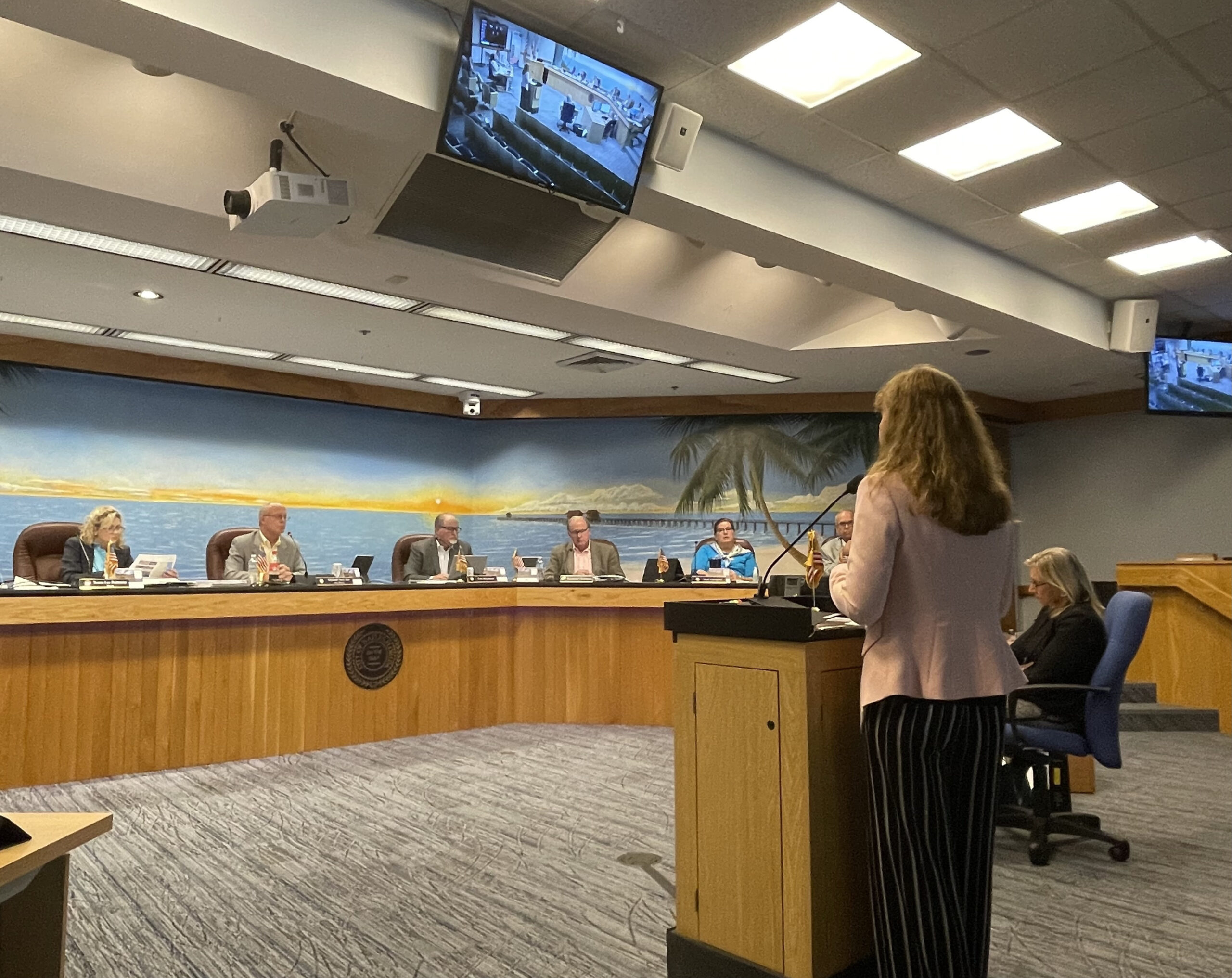
On June 9th, DPZ’s Design District Master Plan was unanimously accepted by the City of Naples CRA Board. It was in no small part a reflection of the strong community support for the project.
The process now moves into implementation with the writing of code language to enable the master plan. The result will hopefully be another great neighborhood in Naples, but one with a local focus and a commitment to inclusivity and creativity. The once-seasonal community is now a more year-round one, and it is increasingly a place for both the young and the young-at-heart.
Takeaways from the Builders’ Show with Andres Duany and NanaWall
Takeaways from the Builders’ Show with Andres Duany and NanaWall
Post-Pandemic Design with Andrés Duany, presented by NanaWall
Always interesting to listen to, Andrés Duany, celebrated architect and city planner, sits down with the folks at NanaWall to tell us what he sees as the future of post-pandemic housing. If you’re familiar with New Urbanist strictures and stylings, you’ll see much has changed. Always looking ahead, Duany sets a new direction for the movement.”
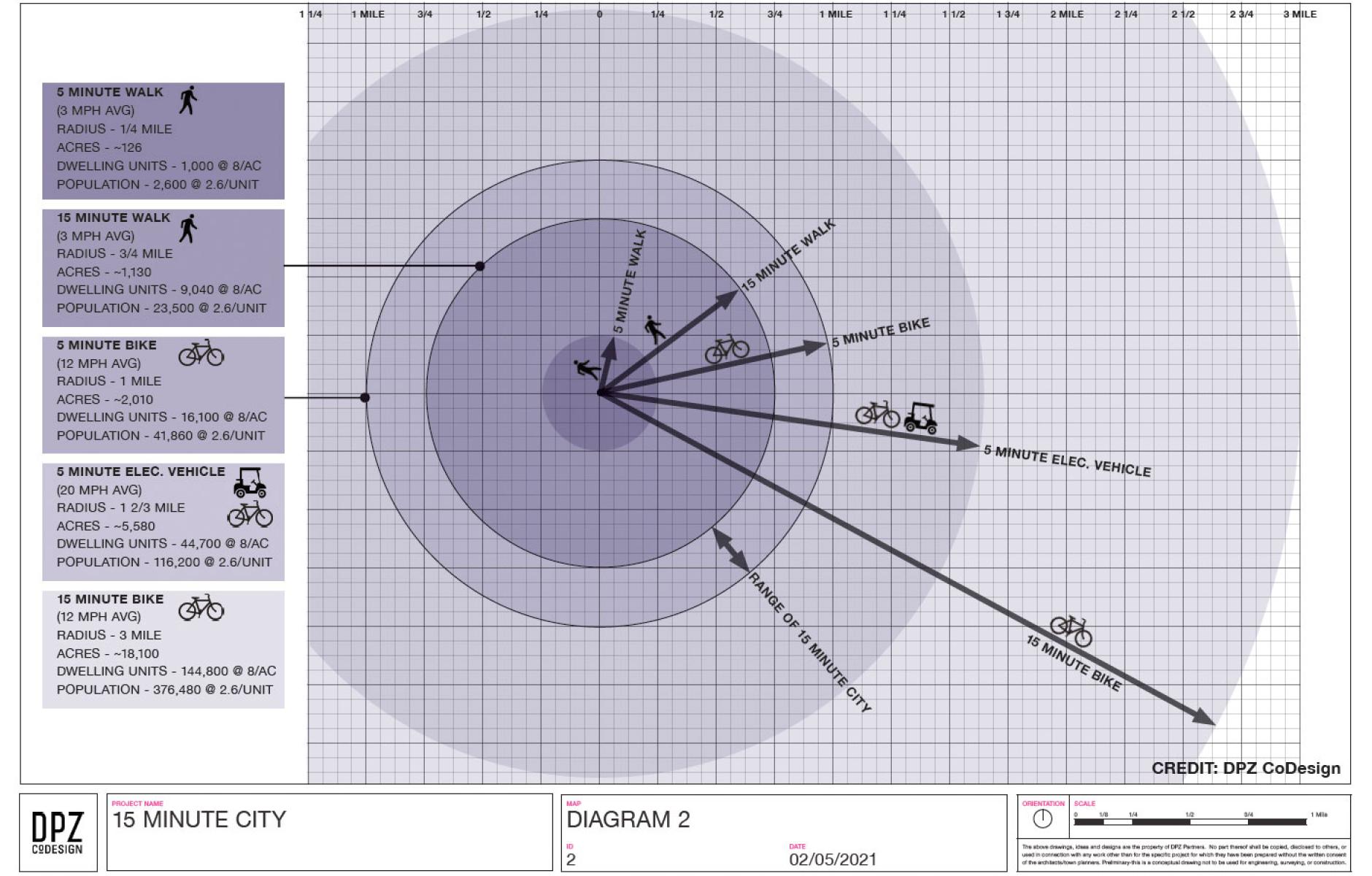
Defining The 15-minute City
Defining The 15-minute City
Transect Urbanism: Readings in Human Ecology
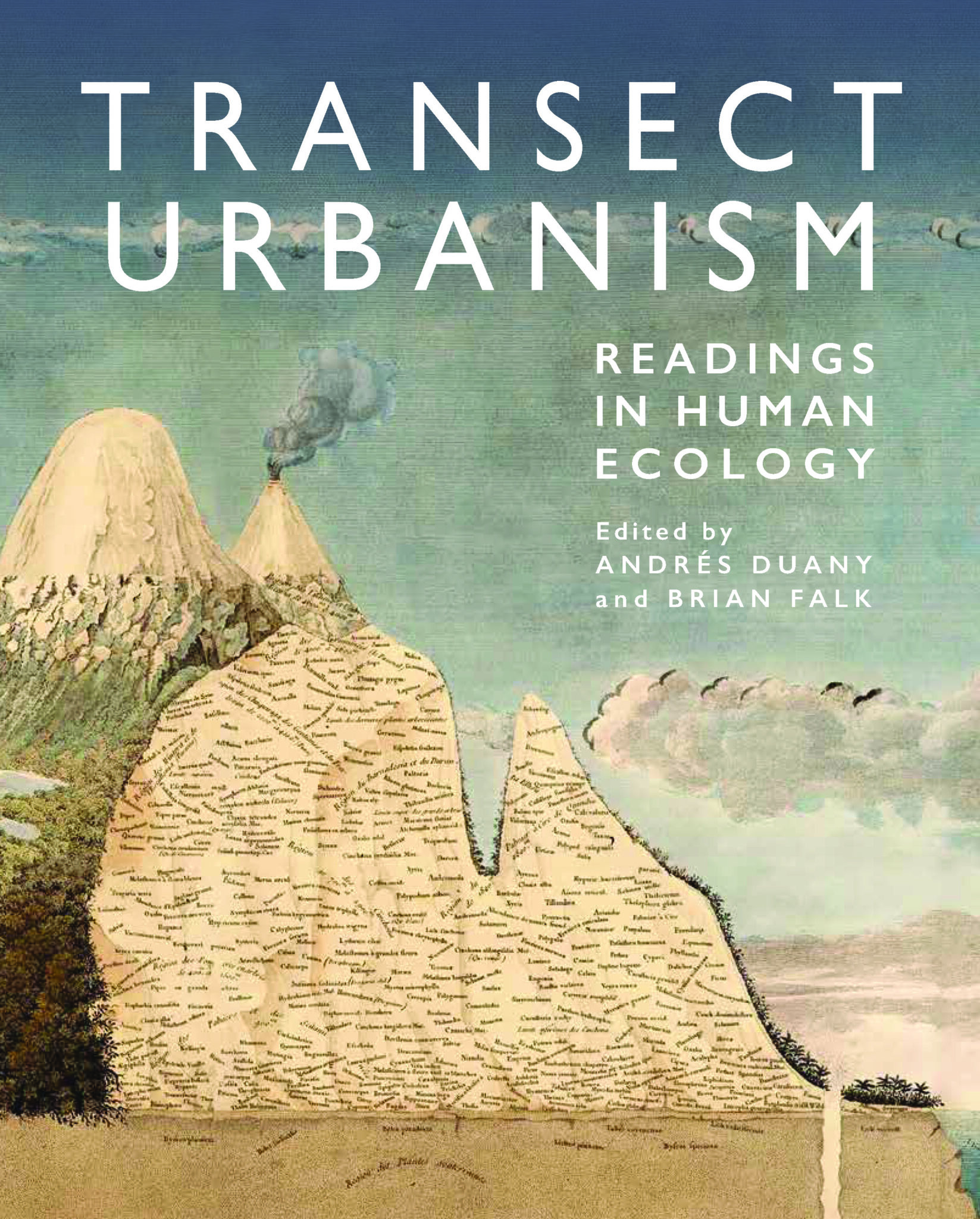
Transect Urbanism: Readings in Human Ecology
– Leon Krier
– Charles Marohn, founder, Strong Towns; author, Strong Towns: A Bottom-Up Revolution to Rebuild American Prosperity
- It is the definitive reference on the Rural-to-Urban Transect, a compilation of the most important essays, diagrams, and images on the subject.
- It provides historical, practical, and theoretical insights into one of the most effective urban planning methodologies developed in the 20th Century. The Transect is a unifying theory, serving as a framework for the various fields of urban design, and provides the basis for thousands of urban plans and zoning codes in cities around the world.
- The editors selected previously published essays and commissioned preeminent academics and professionals to write on the use of the Transect in their areas of expertise, including retail, zoning, thoroughfare design, environmental sustainability, and philosophy.
- It contains the most complete collection of Transect images ever published, with hundreds of photos, illustrations and diagrams.
- Transect Urbanism will serve as a primary reference source for academics, students, and practitioners interested in creating great places.
– Andres Duany, founding partner, DPZ CoDesign and co-editor of Transect Urbanism: Readings in Human Ecology
Outreach for A More Inclusive 21st Century
Outreach for A More Inclusive 21st Century
ENGAGING THE VIRTUAL & THE REAL
To say that the past six months have changed everything, is hardly an understatement. The way we live, work, play, communicate, and even the way we think have required major adjustments. Many of our daily activities have become virtual, remote, and/or guided by new safety protocols. Meanwhile, as many of us tuned in to get daily pandemic updates we witnessed a seemingly sudden, but long-time evolving and irrevocable social awakening. Those of us in the design profession should feel charged with imagining and planning for a new public reality that awaits us after this period of private seclusion, and we should be honing the tools we will use to get there.
THE GOOD NEWS
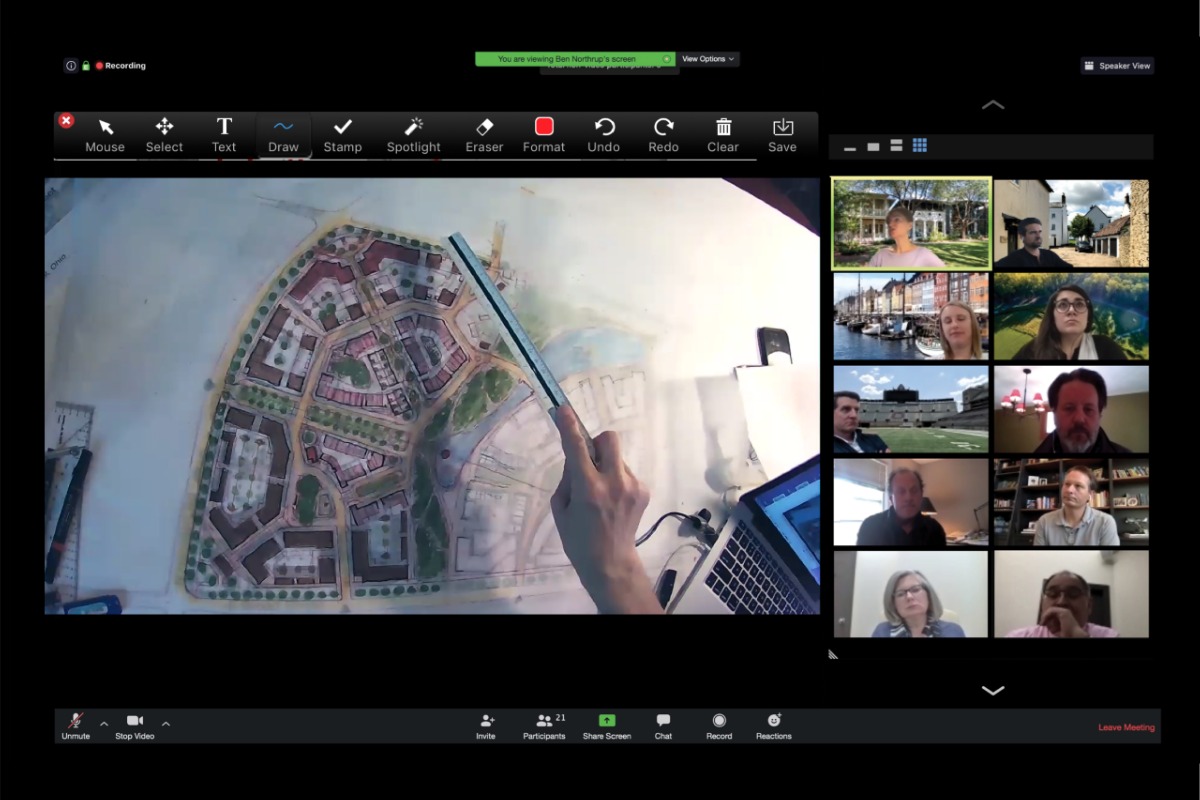
The good news is that this pandemic arrived at a time when technology was already in place to allow meaningful exchanges with clients, project stakeholders, and permitting authorities via video-conference, document sharing, and other online platforms. Inhabiting that 100% virtual world has required a mental shift by most, but it has taught us useful lessons for going forward.
ZOOM FATIGUE
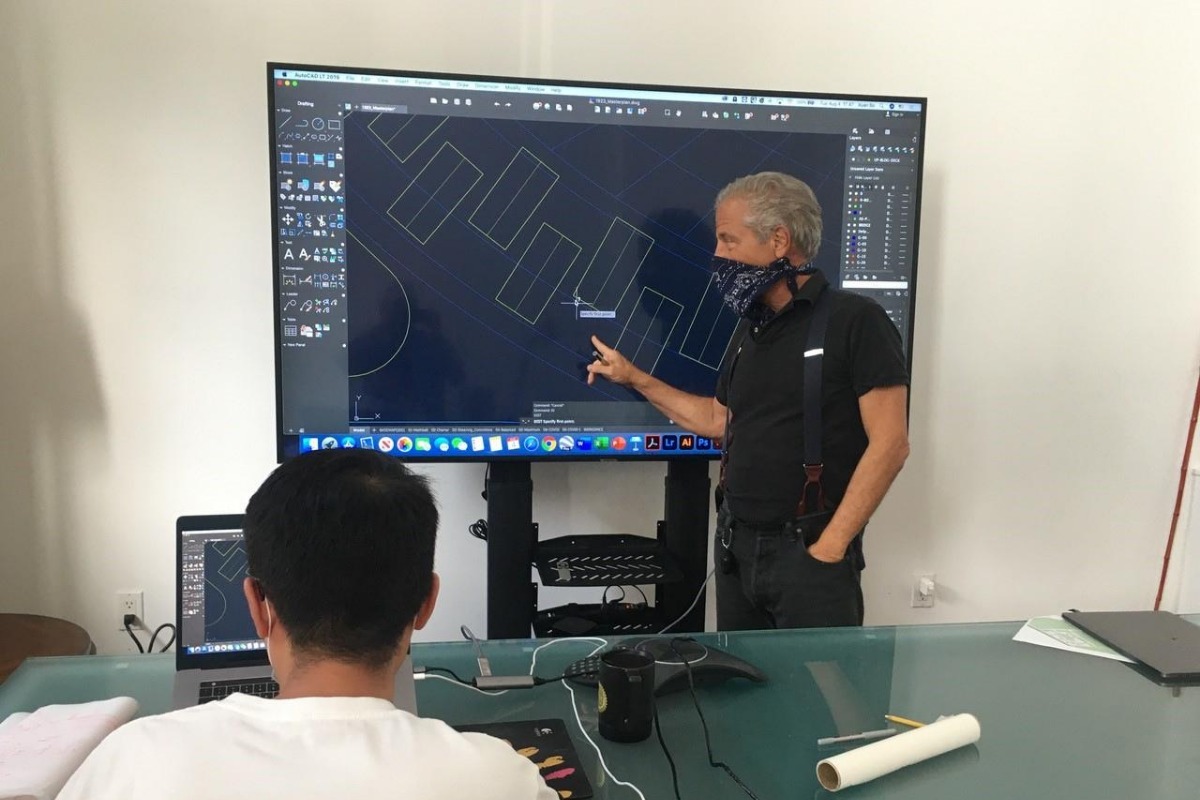
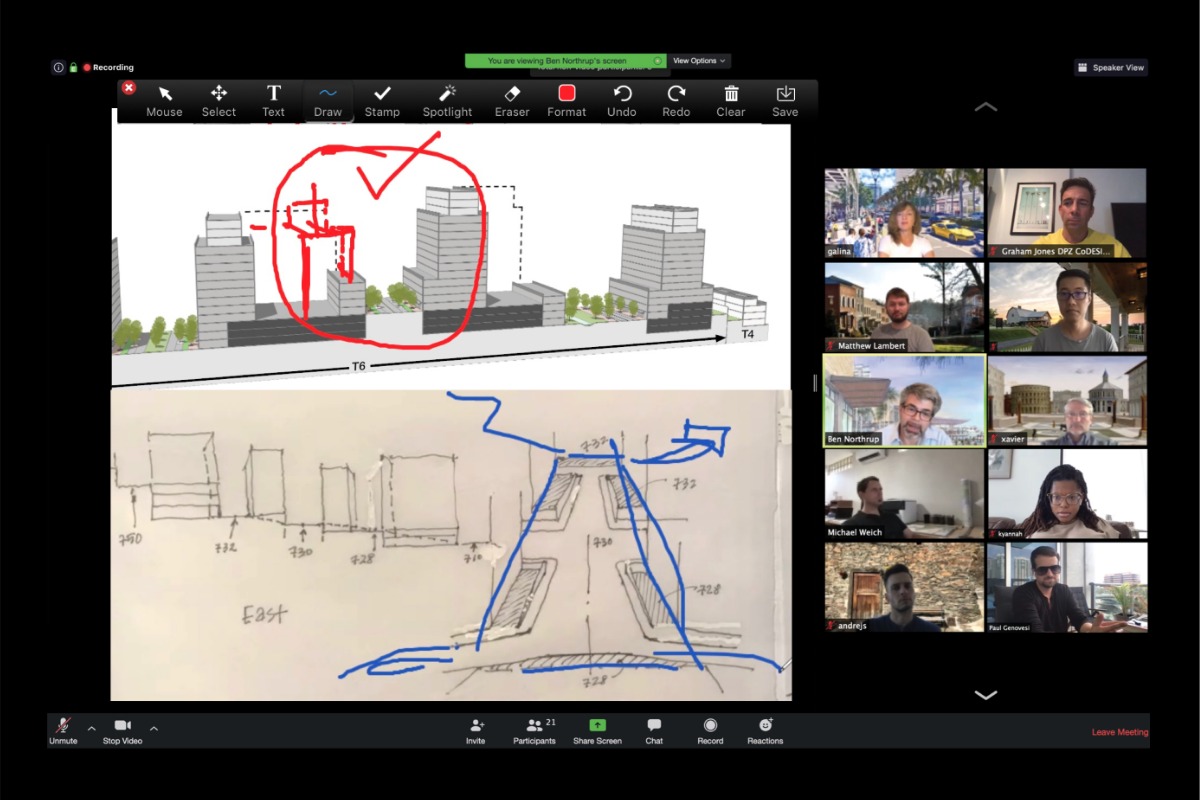
Though we might be zoomed-out with laptop-fatigue by now, what we’ve learned is that the sharing of ideas on a small screen has certain advantages. While nothing replaces the energy and the immediacy of in-person meetings and charrettes, walking your audience through a sequence of images where you can point precisely to details and have anyone mark-up a drawing, post a comment, or engage in a sidebar chat, provides a more intimate and robust exchange than is often possible in an auditorium or a conference room. It also empowers individuals who might not otherwise step up to a microphone or raise their hand in a crowded room to pose a question. Whether having a face to face session with another colleague, attending a small class, or participating in a webinar with a hundred participants, video-conferencing is a tool that is here to stay.
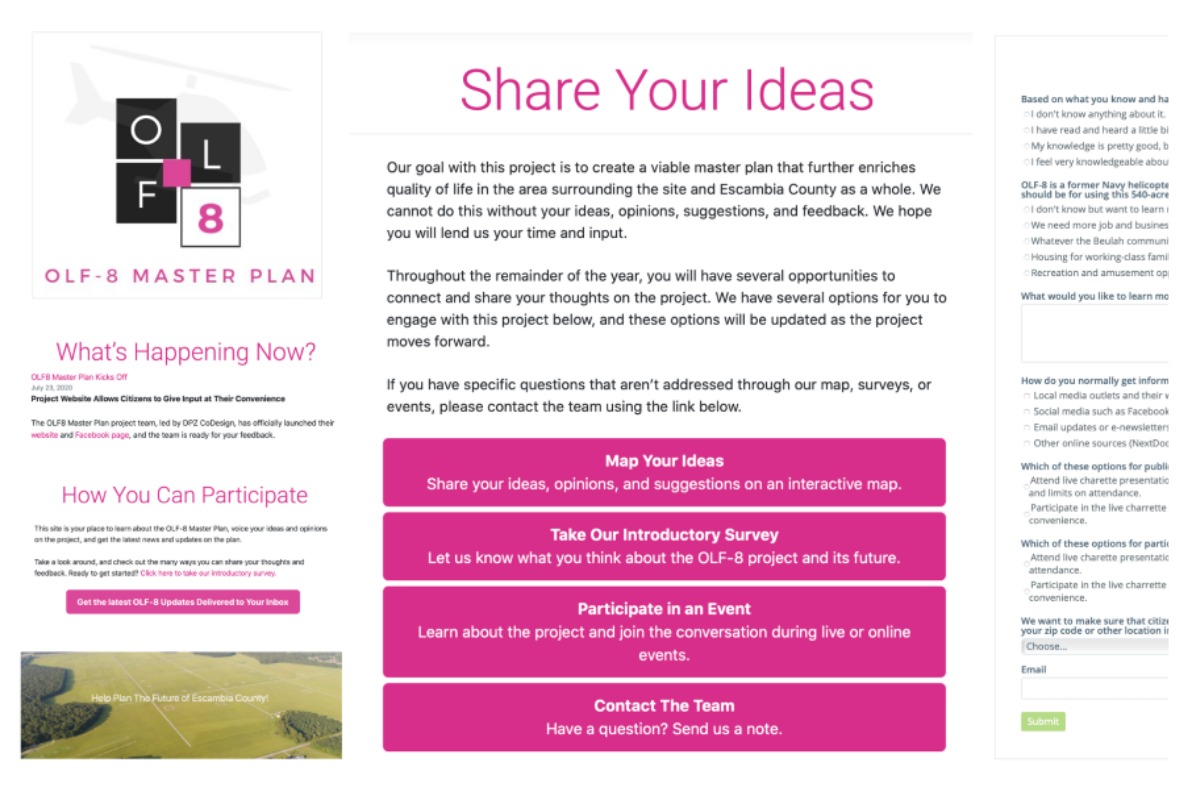
THE DIGITAL DOWNSIDE/ UPSIDE
The downside to this tech-enhanced forum is that those of us on the wrong side of the digital divide are largely left out of the conversation. As we are reminded of the social and economic inequities affecting so many of our neighbors, those of us designing for the public realm need to not only be more inclusive about how we design our communities but also how we engage those more disenfranchised residents. In light of this many of our design narratives and the ways we produce and share ideas will need further re-calibration.
An upside of the pandemic is that it has spurred efforts by Internet Service Providers, local governments, and community organizations to step in to help poor families gain free or low-cost internet access and devices for virtual schooling and working from home. The expansion of digital outreach is helping to keep communities informed and connected at a time of social distancing.
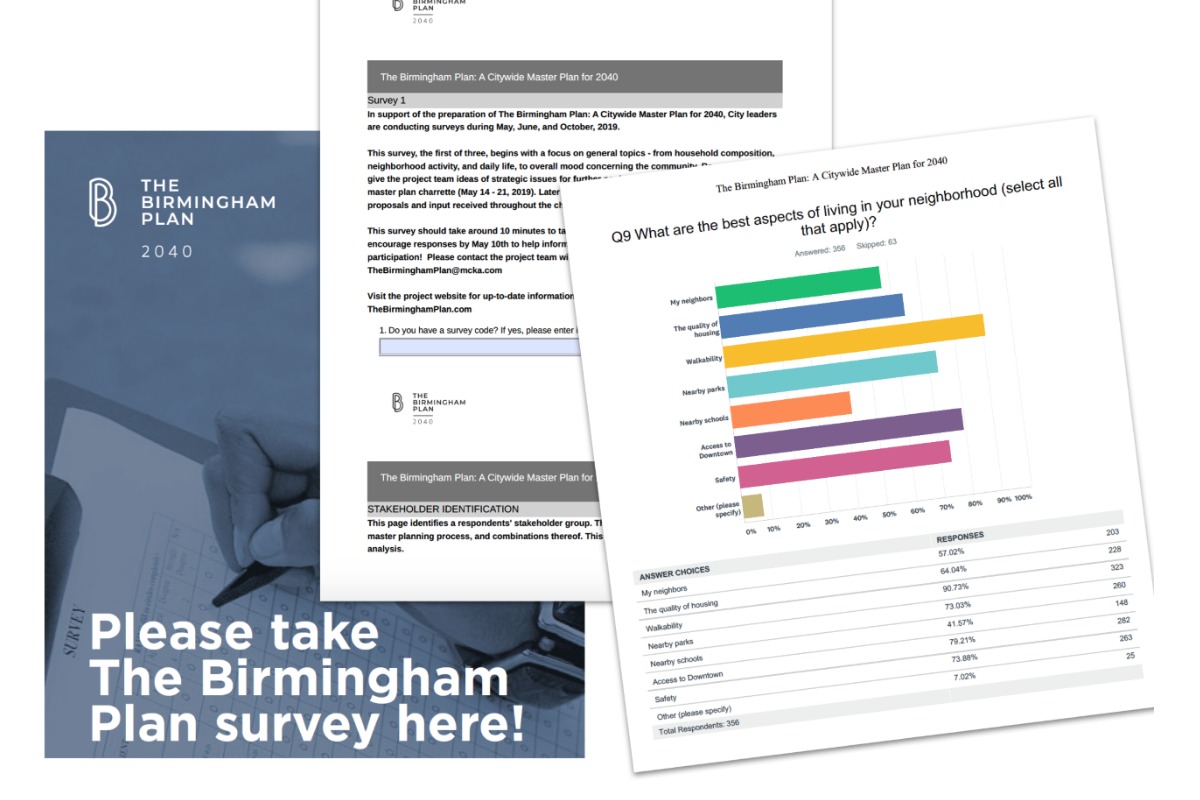
CONNECTING = NEW PLATFORMS + TRADITIONAL OUTREACH
However, we cannot forget the effectiveness of older, more tactile tools like printed surveys, flyers and newsletters that can inform those not so inclined to connect online. We need to utilize simpler, more approachable resources when necessary to better engage the elderly, lower-income folks, racial/ ethnic minorities, and others too often excluded from the planning discourse.
As we work hard to adapt to new circumstances and renew our commitment to creating complete, connected and convivial places, we at DPZ remain devoted to confronting, sorting through and solving complex issues. Furthermore, in order to bring to life visions that are responsive and practical, we must listen more than ever to the actual needs of those whom we are serving. So, until the day we can safely return to interactive, in-person discussions we will hold virtual charrettes, schedule old-school phone conferences, distribute hardcopy documents, and employ any tool at our disposal to guarantee that our dedication to a dynamic, informative, and inclusive design process continues.
Communities Faring Well by Design
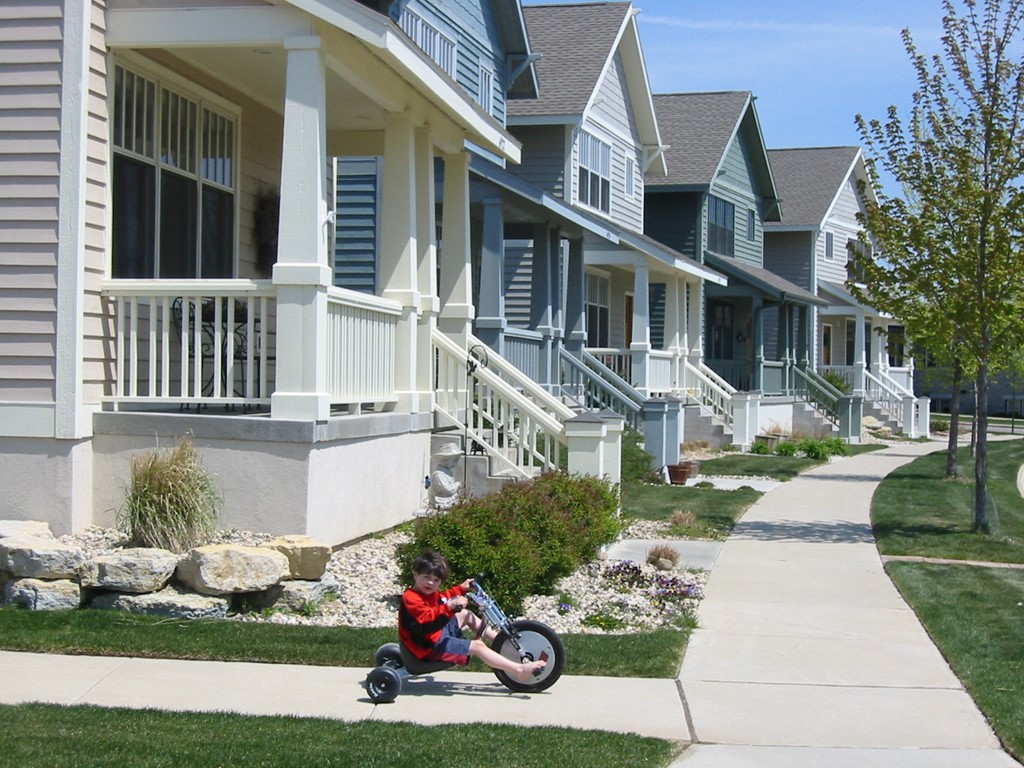
Communities Faring Well by Design
A global pandemic is the type of resiliency test we plan for, but hope never occurs. We are happy to report that amidst the current difficulties, our compact, walkable, mixed-use, and multigenerational communities are not only faring well but are proving to be a source of comfort to their residents as they shelter in place.
The bonds of community—largely forged in those physically interactive and convivial third places we temporarily need to avoid—have resulted in a human infrastructure of support, and neighbors helping neighbors that is particularly useful to those most vulnerable. While social gathering spaces like community centers, plazas, playgrounds, and cafes take a pause, a second, less glamorous tier of neighborhood features are gaining newfound appreciation in keeping residents connected while at a safe distance.
- Live-work units – a popular fixture in many of our neighborhood centers and pioneered by DPZ as far back as Seaside, have re-introduced Americans to creative ways to integrate, yet separate, work space with residential space. They are perfect for remote working during times when “stay-at-home” regulations are essential for curbing the spread of a virus.
- Alleys & Pedestrian Paths –are practical alternate routes for exercising alone or efficiently dropping off food at that elderly neighbor’s house.
- Accessory Dwelling Units or Granny Flats—are welcome physical-distancing assets to protect a vulnerable relative or for quarantining an essential worker in the family.
- Well-connected, shaded, pedestrian-friendly streets – are the ideal amenity to take much needed walks around the block and stroll with the baby and/or the pets. And when too many neighbors are out, the streets easily transform into more ample, shared-space promenades.
- Meaningful open space networks—the mindful assemblages of open space in the form of larger parks and nature preserves are ideal for residents to refresh and stay active at appropriate “social distances”. Kentlands’s lakes and woodland paths were deliberately woven into the greater trail and greenways network. Whether for a vigorous bike ride or a pleasant walk, residents have a regional recreational system to access.
- The front porch, an iconic staple of DPZ towns, makes for a great way to socialize and people-watch from afar – porch or Zoom happy hours, which would you prefer? 🤔
At DPZ’s Middleton Hills and The Kentlands, two exemplary, lifelong communities, we are hearing about countless acts of neighborly interaction during this difficult time. Please read below to learn what some of our residents had to say about their experiences with each other and their surroundings:
MIDDLETON HILLS
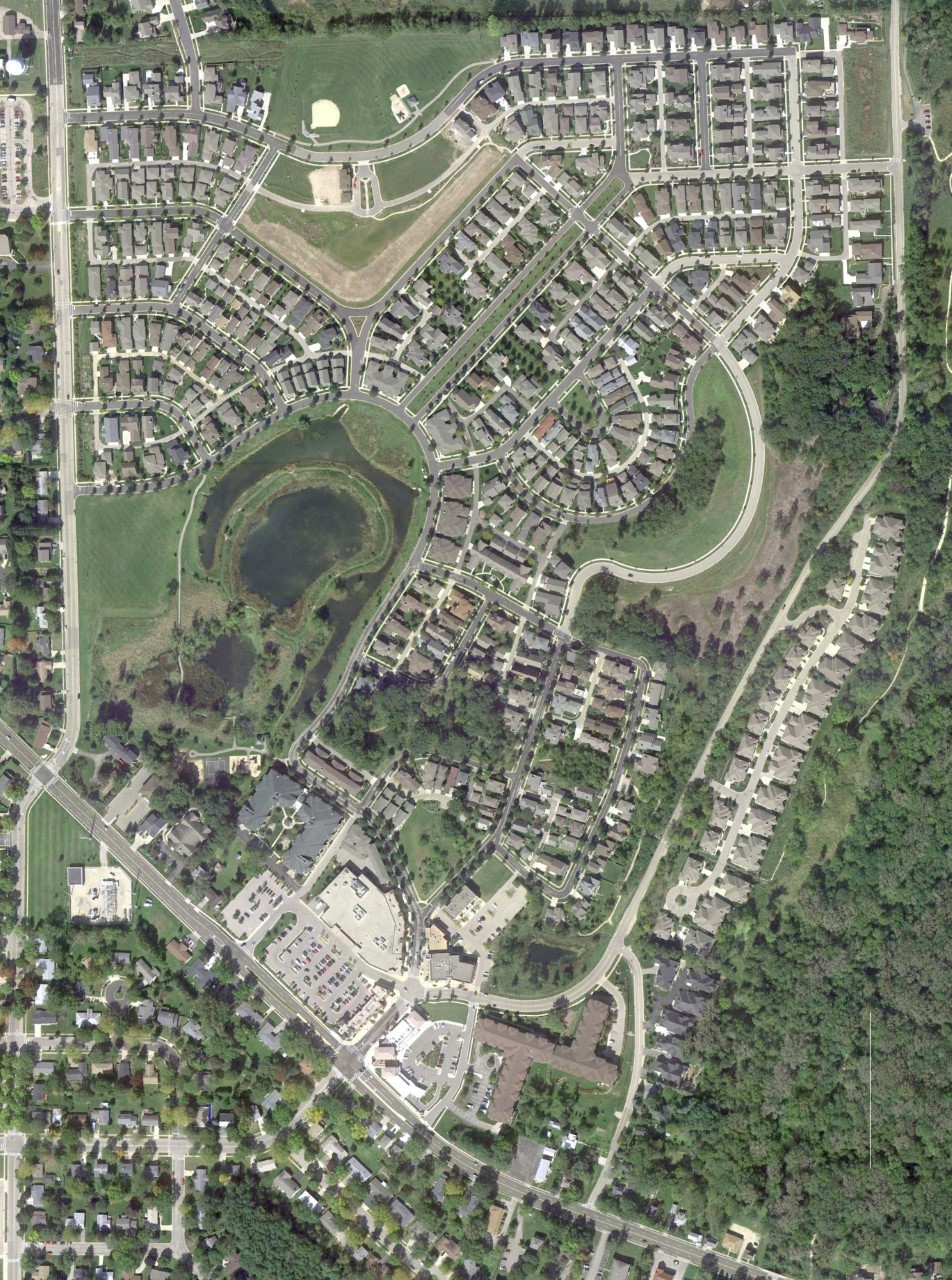
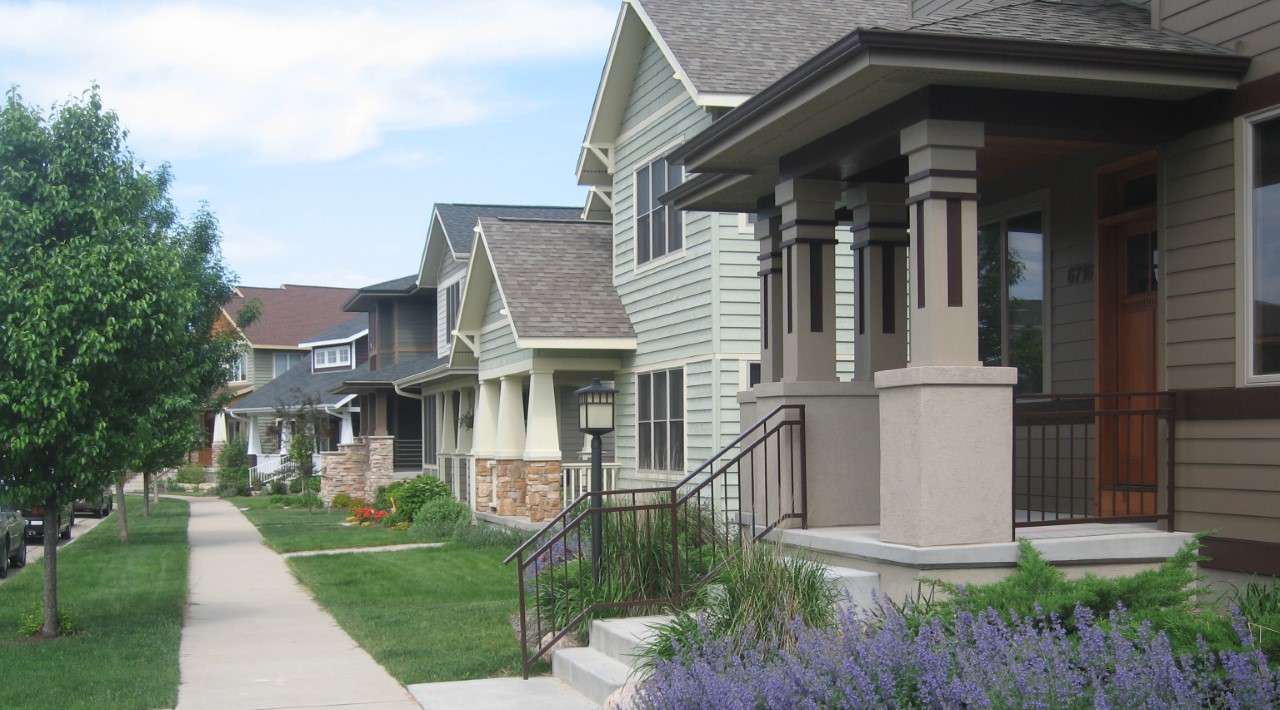
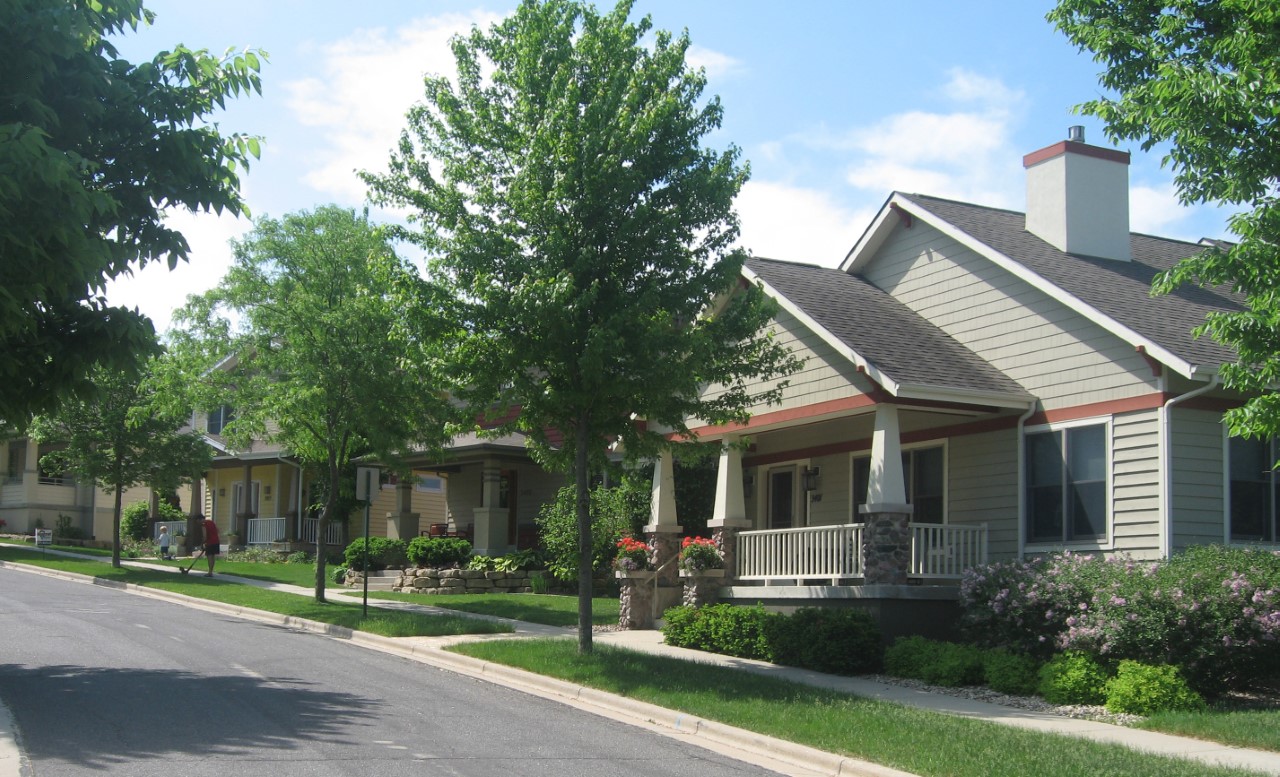
Middleton Hills & COVID-19: Resident Testimonial | April 2020
A letter shared by Jane Grabowski-Miller, formerly with the development team at Erdman Holdings where she served as Town Architect, from a Middleton Hills resident:
“Hi Jane,
The onset of the Coronavirus has given rise to our even deeper appreciation of our neighborhood, and I want to share that with you. Over the ten years we have lived here, we have grown quite close with our “alley neighbors” and we socialize regularly. John and I are the oldest, hence the grandparents of the group. It was no surprise that we have had regular contact from these friends in recent weeks offering food, volunteering to pick up groceries, and just generally checking to be sure we are okay.
Although our primary contacts have been via the alley behind us, our house faces Erdman Boulevard, the neighborhood’s “Main Street,” and before our trees leaf out we enjoy a nice view of the wetland area from our living room. It is hard to look out now without seeing folks out strolling on Erdman or enjoying the new boardwalk near the water. The trees have matured and we now host many birds and waterfowl, including a pair of Sandhill Cranes that return each year. As in other places these days, there is an organized effort to collectively entertain the kids with virtual scavenger hunts and other creative ideas so lots of sidewalk chalk in use.
Not a day goes by when we don’t feel fortunate to live here. Even in the midst of a pandemic the neighborhood seems to have lived up to its potential in so many significant respects. I know you were an integral part of making it a reality and I just wanted to take a moment to say thank you.”
THE KENTLANDS
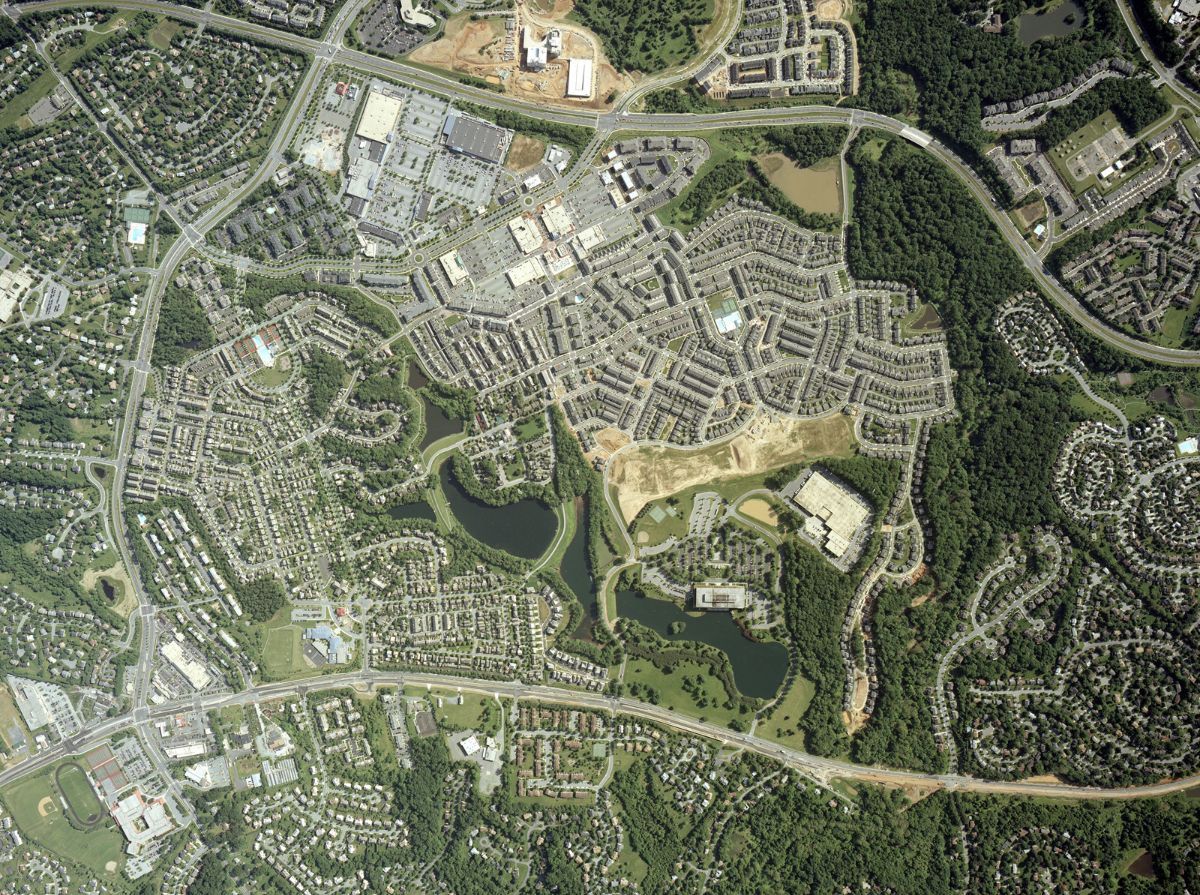
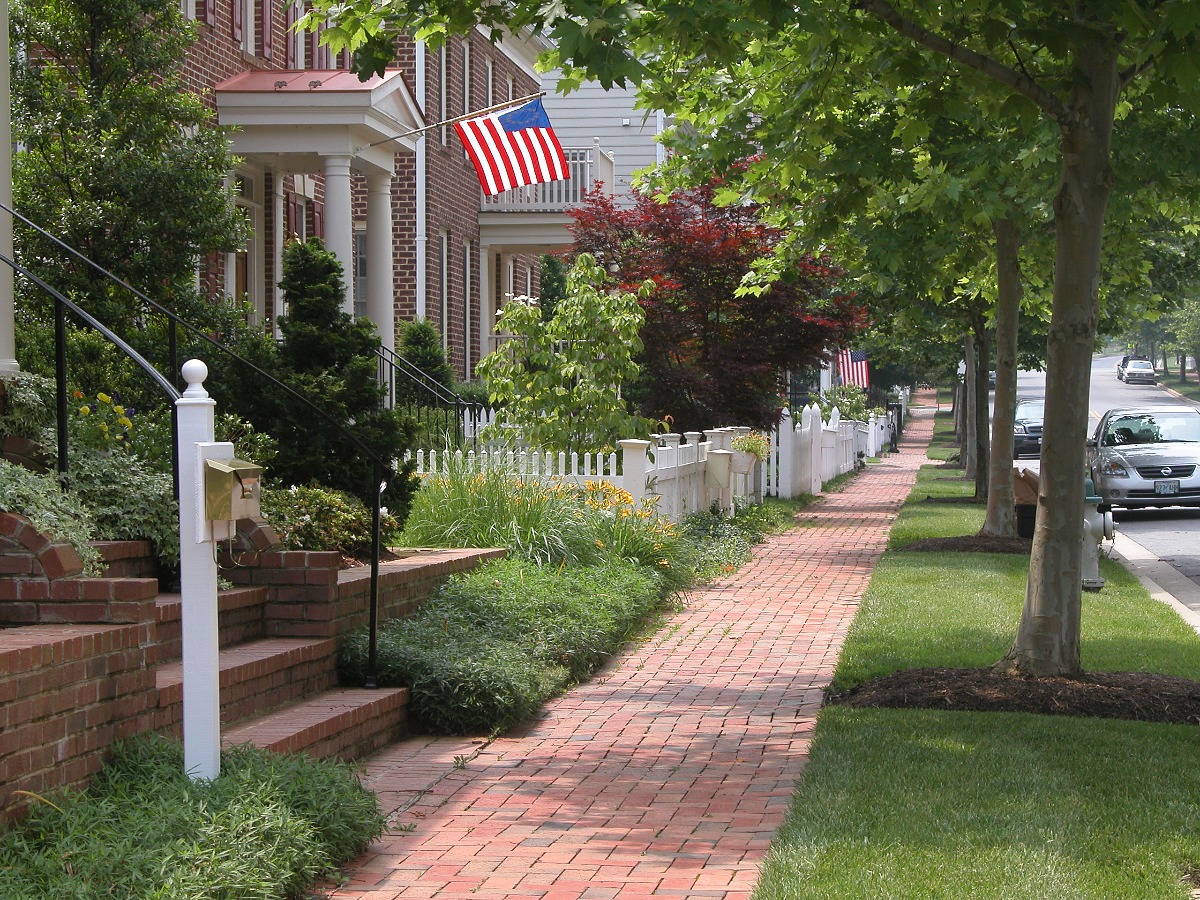
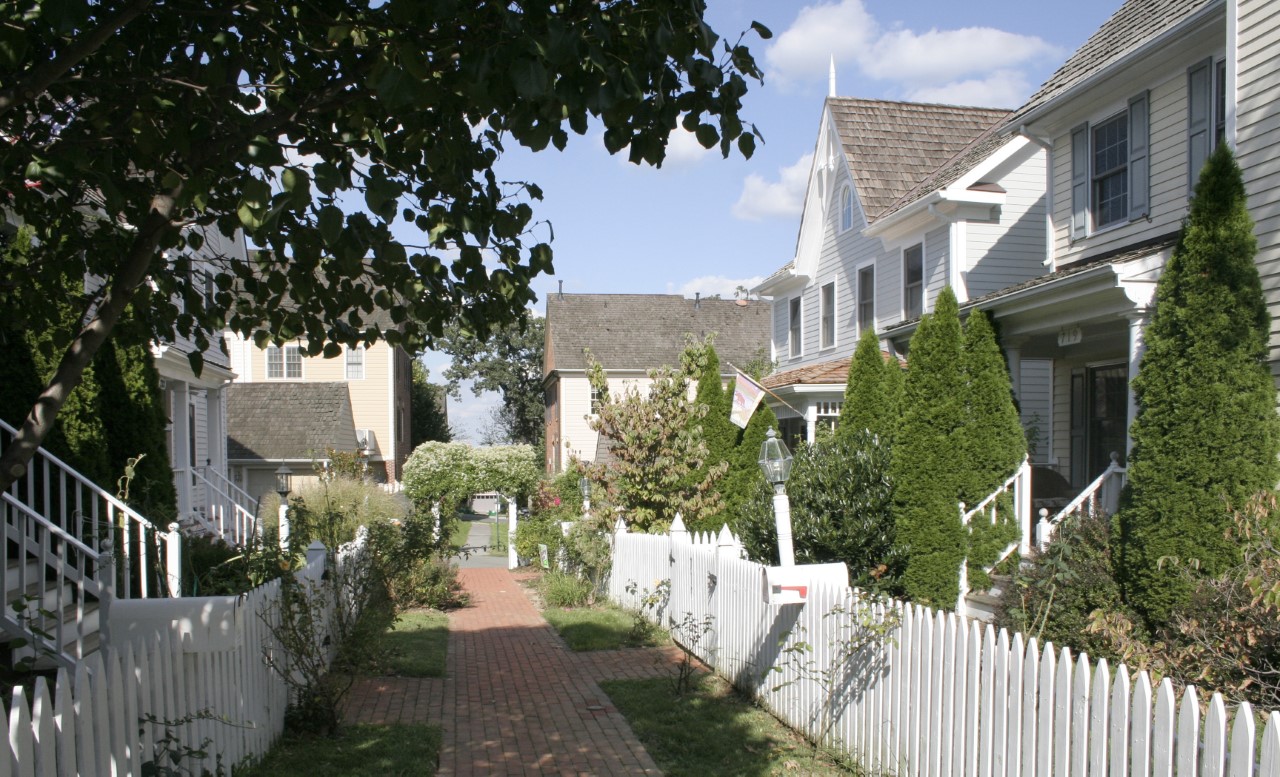
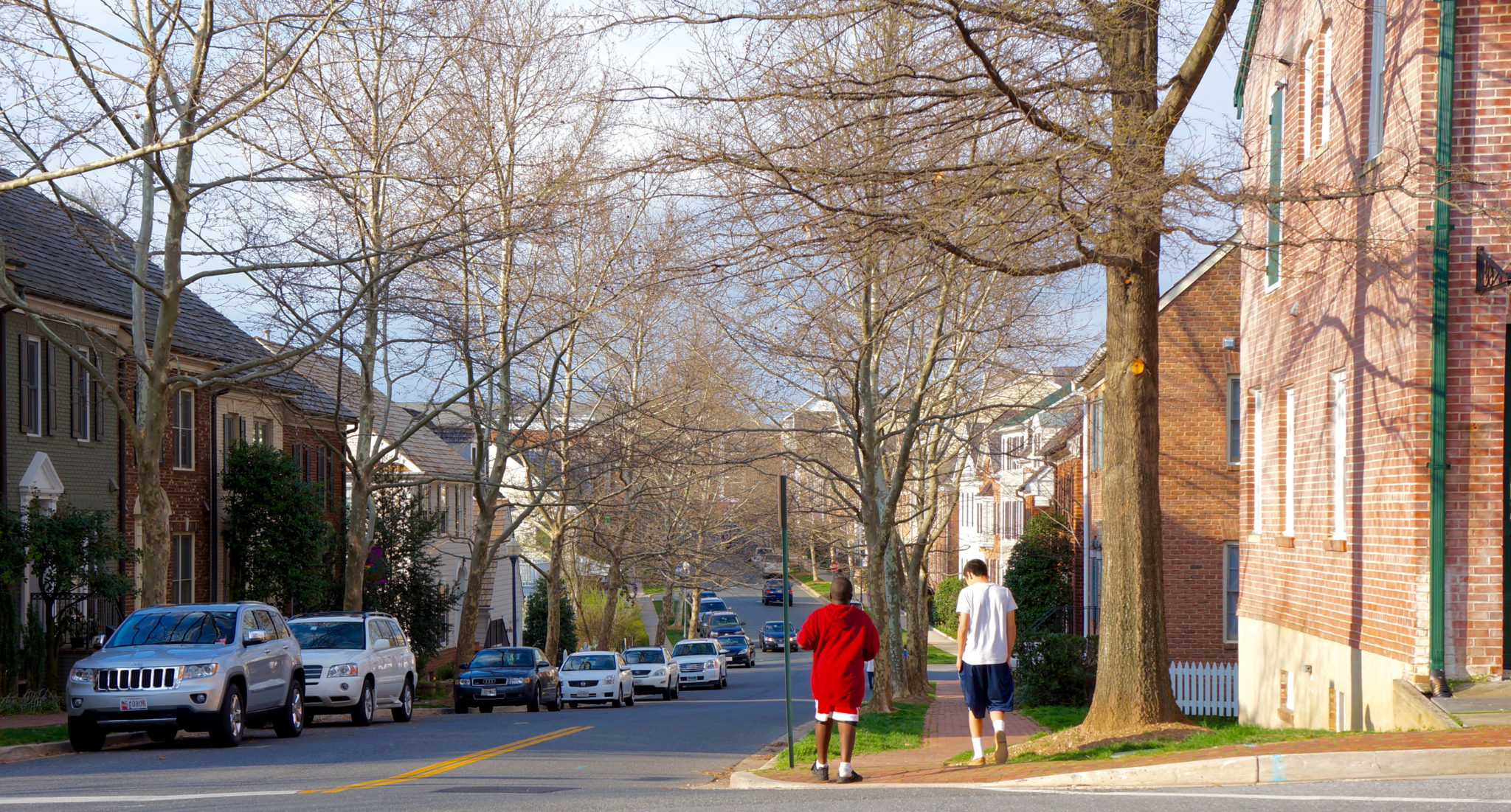
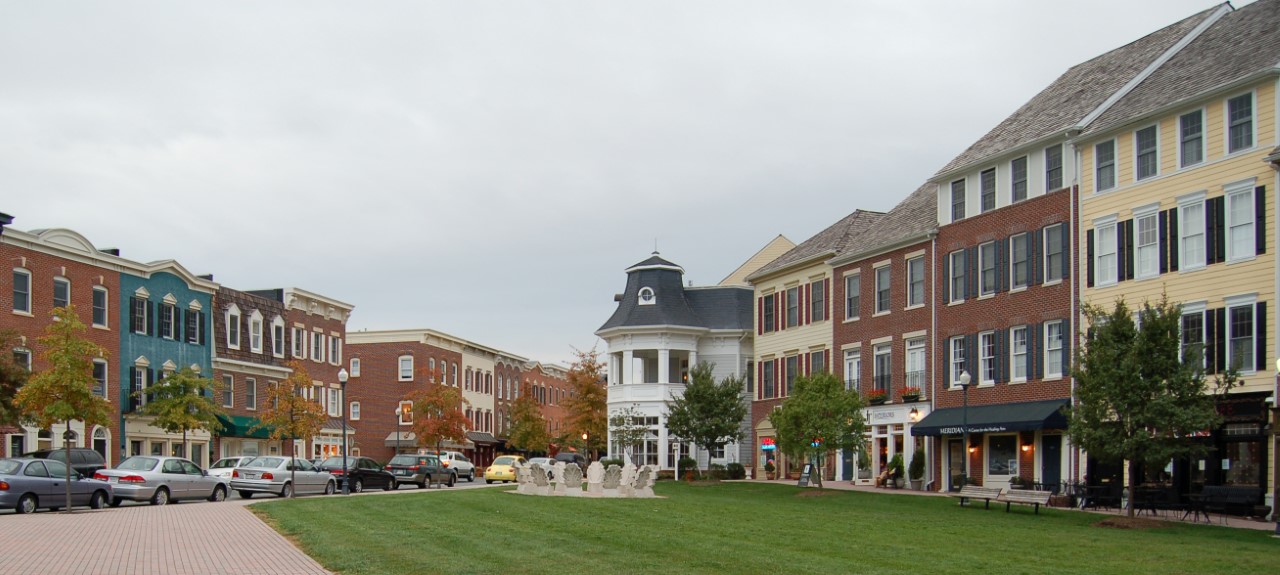
Kentlands & COVID-19: Resident Testimonials | April 2020
In response to a Homeowner Association survey about life during the lockdown, here are some highlights shared by Kentlands residents who had much to say:
Karen G.
“ My husband and I have lived here for 11 years… and there is no place I’d rather be during the Covid19 crisis. Our community is a wonderful mix of multiple generations… Every morning and afternoon we go for a long walk. We see families, young and old, riding bikes, skating, walking their dogs, admiring the beautiful landscape throughout the community. People have been very good about checking in on each other.
Our youngest son is a server at a family run community restaurant that cares about their employees. They actually have a group chat going to keep everyone from feeling isolated…I know that our community will get through this, it may take a while, but as bad as it is, we have the Kentlands.“
Carolina B.
“ Personally, I have always believed that living in the Kentlands is nothing but a positive thing …so easy to just walk next door to a store and grab any item without hesitation… this community has always made me feel spoiled – there is nothing that I cannot do within walking distance; including work- since the office where I work is also conveniently located in the Kentlands.”
Linda W.
“Last spring I moved from my townhouse to a condo …I was eager to stay within the community… I am so glad that I made this move…I cannot begin to tell you about the sense of community in my building.
Shortly after I moved in I had emergency surgery on my knee due to an infection…The residents in my building were absolutely wonderful… brought in groceries…got my mail daily… took out my trash and recycling as needed… brought me food or materials to keep me busy…and many visited…we began to get to know each other…
This sprit has carried on to these times of social isolation. I have a compromised immune system and have not left the building for three weeks as of this writing. Once again, the spirit of this community is being manifested. There has been an effort to bring in groceries …and… a daily call from a Condo Board member to check on us to see if there is anything we need…even daily sanitizing of apartment door knobs, elevator buttons, the outside keypad, etc…
I believe the spirit of the Kentlands/Lakelands communities, nurtured by the New Urbanism precepts, fosters a community spirit that is exemplified by what I have experienced here.”
Sally M.
“ Our son, his wife and our two grandchildren …out for a walk, … texted us to go to our door. We went out and stood six feet from them on our porch, with them on the sidewalk, and chatted for 15 minutes. We have done this regularly since social distancing was initiated.
Our neighbors invited us to a BYO gathering…on the Kentlands Green for wine, snacks, and conversation, at a six foot safe distance from each other…Many of our local restaurants…offer takeout with either curbside or free delivery…
Our beautiful chain of intersecting lake paths offers easy access to nature and respite from cabin fever…
So many of us know and care about each other and watch out for each other. I can’t imagine living anywhere else. So far, everything we need is nearby, and we know and help and are helped by our neighbors.”
Sheri B.
“Great opportunity to tell you how much I appreciate living in the Kentlands at this difficult time…I would never consider leaving.
What has been sustaining is the ability to walk around an area with so many varying views: the lakes, the streets with varied architecture, etc… am constantly delighted by the nooks and crannies of this area. I walk a different route each day and love the surprises I find! The people here are wonderful!”
Luanne H.
“EVERY DAY we give thanks for living in Kentlands during this horrific time…we are so blessed and grateful to be living in the perfect neighborhood where we are very fortunate to be able to work from home.
Beauty and nature everywhere …We take daily walks or runs multiple times a day. … common areas, paths and alleys are fun to explore ..green spaces… creeks and lakes …alive with plants and animals…daffodils and crocuses …rabbits and turtles…
We notice more people sitting on porches … using their yards more these days… …We are getting to know neighbors we haven’t met before. More people are saying hi and chatting and smiling than ever before (from 6 feet or more of course)…
The Mansion, Clubhouse, and Arts Barn amenities are currently closed, but the large grounds around them are still beautiful and very useful for social distancing…
Shopping and restaurants…wonderful to have everything we need right here…and at a variety of price ranges …
Housing for older people …your parents can live right here…easy to check on them, bring food and supplies, and they can still get out for walks if able and still maintain the right distance….
We are grateful to grocery/restaurant workers, healthcare workers, delivery workers, first responders, and our government for everything they are doing to keep us safe and healthy.
And thank you for the wonderful design of this neighborhood!”
Tiny and Double Wide in Vegas?
Tiny and Double Wide in Vegas?
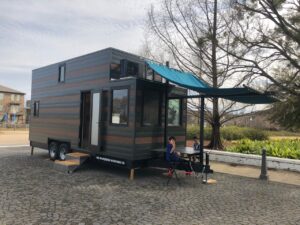
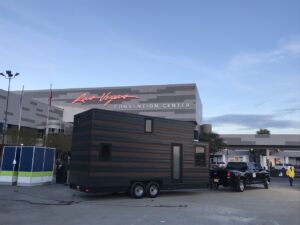
We have two new and exciting prototypes for you to explore. Find us at IBS 2020 in Las Vegas now. Located at the Show Village (outdoor), stop by and experience our showcase and speak with Andrés Duany.
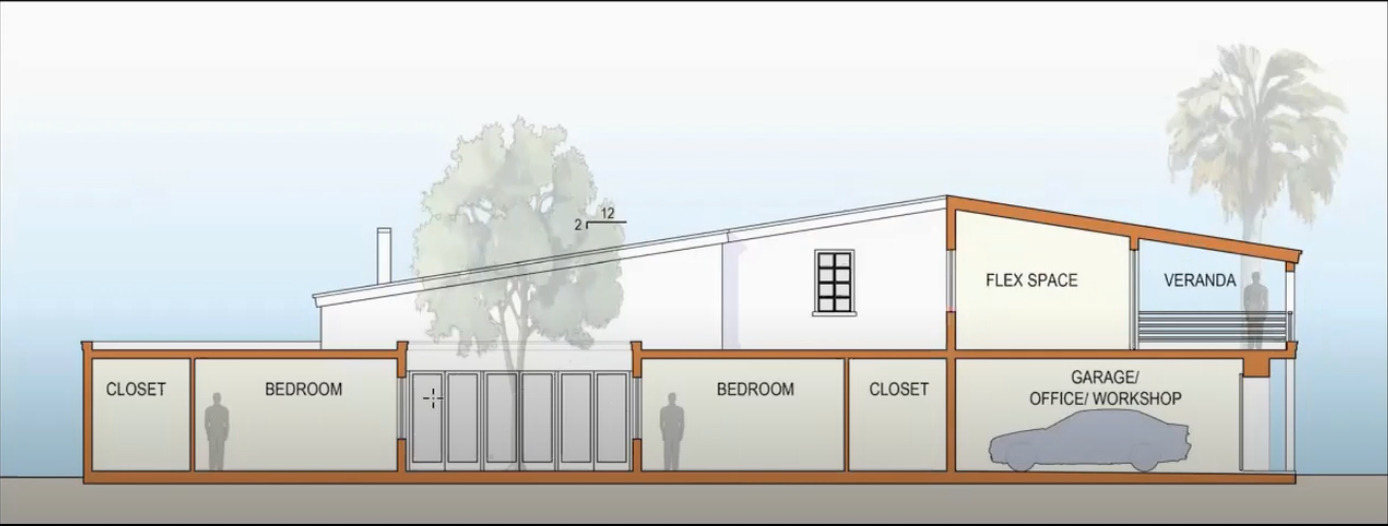
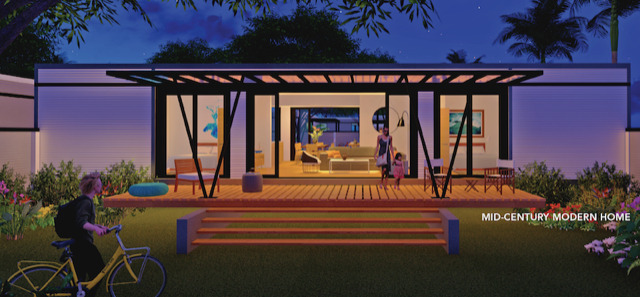
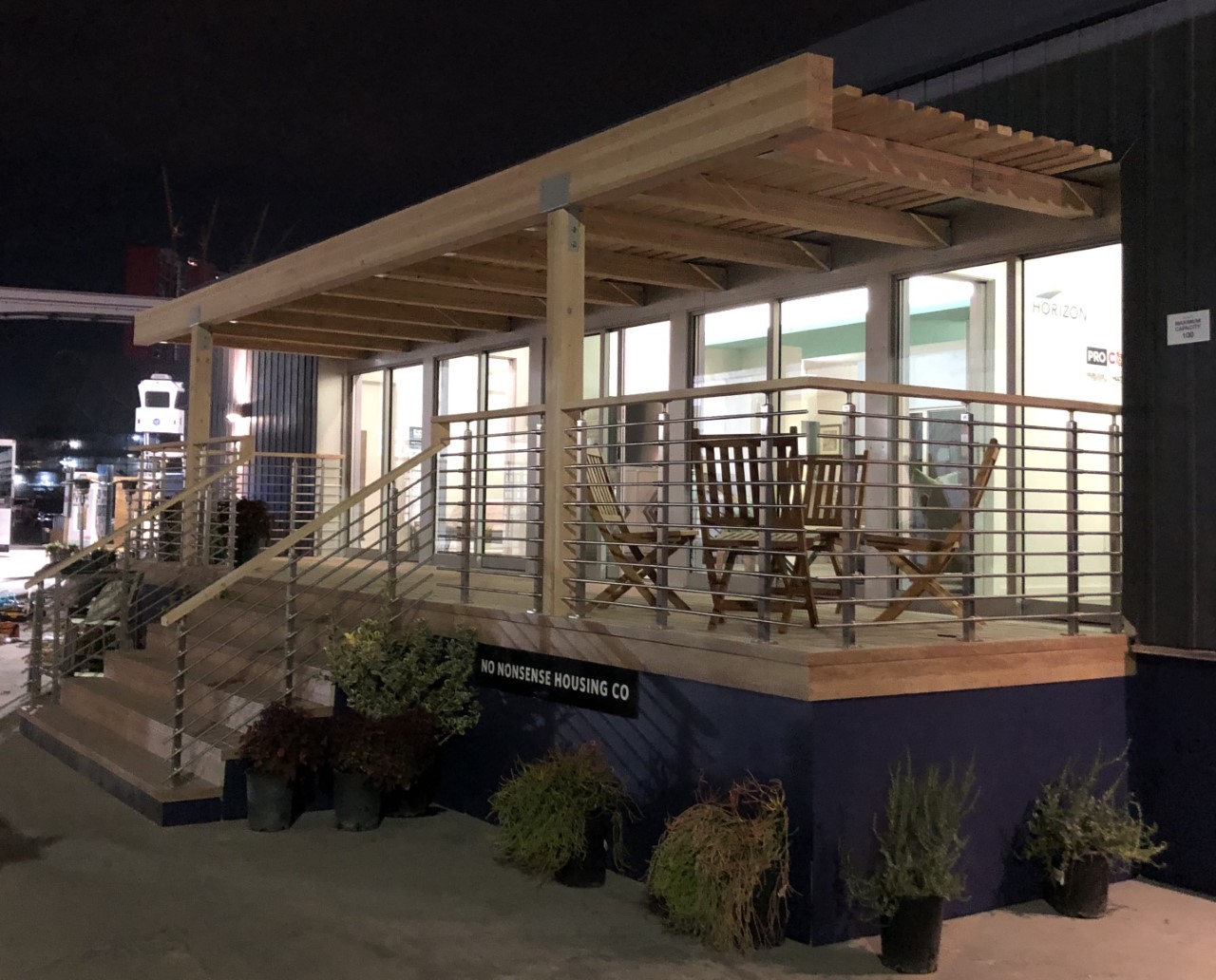
The Mid-Century Modern Home consists of two structures totaling about 1,650 square feet, with a flat roof profile that accommodates 10-foot ceilings. Sustainable elements include enhanced insulation and energy-efficient mechanical systems and appliances. Plenty of natural light streams through five sliding glass doors and three differently sized window types; four metal T-rails set on a gravel bed provide the foundation. Only minimal site work is required, including the installation of an optional deployable awning.
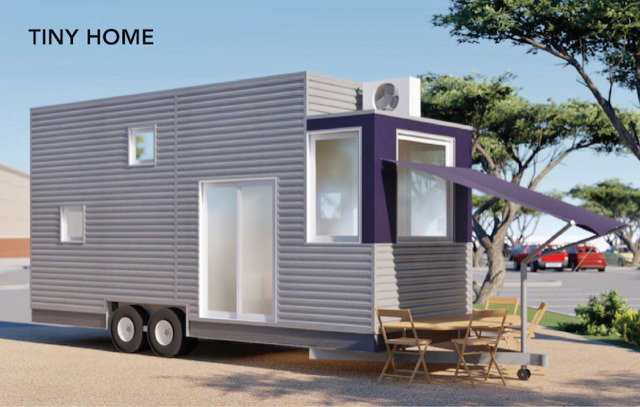
Tiny Home, an apt moniker for the 204-square-foot (24 feet by 8 ½ feet) unit, is constructed with high-grade plywood cut using a computer-controlled router and clad in corrugated metal. The home can be either placed on a wheeled platform or on a permanent foundation.
ABOUT THE PROJECT
As some of you know, the new partnership at DPZ CoDESIGN has challenged Andres to study the problem of affordable housing, an issue that is now dominating the public discussion of urbanism no less than does climate change. The current results of his research will be on display at the International Builders Show in Las Vegas (January 21-23) where two built versions of the three selected DPZ designs will be visitable.
While DPZ has long experience with designing subsidized affordable housing (the first such project was 35 years ago), this is not the concern now – but rather the free market supply of such housing. This initiative has involved research into all aspects of the situation-– the construction technique, the code hurdles, the financing, and the difficulties of cultural acceptance.
During the post-Katrina work , DPZ was involved in a $400 million Louisiana grant to study the savings of prefabrication. The conclusion was that the real promise was in completion of the dwelling at the factory with minimal site work. Experience showed that cost savings could not to be found in panelization or any other innovative construction technologies–but rather the low-tech/high-organization of the manufactured. There was opportunity only in the close reading of the codes for “tiny houses”, “park models”, and “mobile homes”.
These industries had resolved the problems of efficient fabrication, but not of cultural acceptance. One can buy an inexpensive mobile home at a factory, but it is almost impossible to get a new park approved in an urban area. Many people need such homes, but they don’t like what they imply.
Andres took on the problem of how to design a “house delivered on wheels” that is appealing even to those who might afford a site-built dwelling. These are several emerging market segments that need such dwellings, especially in communal arrangements: employed Millennials, retired singles, as well as empty nesters or more complex households of singles.
On view in Vegas will be two complete model homes: a “tiny house” at 204 sf, and a 3-bedroom 3.5-bath “Mid-Century Modern” at 1650 sf. These are two of a full set of models designed by DPZ to meet many market segments.
__________________
Professional Builder Magazine recently highlighted the progress being made:
‘Today, the housing affordability challenge has focused Duany’s attention on small-scale housing, specifically high-quality modular homes. He formed No Nonsense Housing Company to follow that path, with plans to build a factory to mass produce his designs. “Luxury homes are easy to do,” says the company’s project manager Fernando Pagés Ruiz. “We want to create appealing homes at lower costs.”
Planning for Adaptation [Podcast]
Planning for Adaptation [Podcast]
Listen to Elizabeth Plater-Zyberk on the Future of the American City podcast, interviewed by Charles Waldheim: Listen here.
Elizabeth Plater-Zyberk is a pioneering urban planner, architect, and educator. She has been instrumental in developing the City of Miami’s form-based zoning code, Miami 21. Her recent work and teaching focuses on built environment adaptation to climate change.
About Future of the American City
An initiative of the Harvard Graduate School of Design that presents alternative futures and convenes conversations about how we live, where we live. Supported by the John S. and James L. Knight Foundation and generous donors to the American Cities Fund. Future of the American City is curated by the Office for Urbanization, with production by Aziz Barbar, Charlie Gaillard, Jeffrey S. Nesbit, and Mercedes Peralta.
Mitigation vs Adaptation, Part 1: The Current State

Mitigation vs Adaptation, Part 1: The Current State
There’s a lot of confusion lately about the difference between mitigation and adaptation. I think this can be be cleared up relatively easily. Mitigation means reducing the impact of climate change. Adaptation means responding to the impact of climate change. One attempts to prevent it from happening or minimize it, and the other one assumes actually that the ball has been rolling down hill and that we had better adjust to what turns out to be really pretty bad news. Interestingly enough, both sides actually are not in agreement with each other.
There are some who think that we should continue to mitigate, and that’s obvious that we should, because we can always reduce our impact, but there are others who think that any acceptance of adaptation implies giving up on mitigating climate change. I think part of the problem is that the news is awful. Like every one of the metrics actually are going very badly and quickly. Between Kyoto and Paris and most recently Poland, there is very little one can actually be optimistic about. There’s a certain kind of wishful thinking that we need to employ, we need to do it, therefore we will do it.
I think one of the reasons is that climate change has been simply reduced to measuring the impact of carbon – which is inevitable. I mean, we as human beings generate carbon and we consume the good life. Any kind of measure of the good life that we have requires carbon.
So the reduction of carbon actually cuts right across the wellbeing or the immediate wellbeing of too many people. Also the problem is that everybody in the world has to behave, for example, the way that the Norwegians are hoping to reduce their footprint. While, for example, the Chinese continues to build coal fired power plants. It is the first worldwide environmental crisis, unlike the watershed and the airsheds that we have had successes with. This one is worldwide, and so there’s a kind of disempowerment of the small group of the community.
If you want to do something about mitigating climate change, you pick up a sign and you go and have a demonstration in front of the United Nations meeting. You can basically just appeal to the politicians. The great thing about adaptation is that it’s local. There’s a kind of circling of the wagons that says, you know what? I’m going to take care of having my food supplies nearby in my food shed. I’m going to find out where my energy is coming from; whether it’s from my rooftop solar or the nearby power plant. I’m going to make sure that schooling is nearby so that if I can’t drive my kids some distance, the kids can walk. I’m going to make sure that my community is complete, and that I don’t have to actually have to go great distances to find a doctor or to find or buy the ordinary daily things that I need. So the great thing about adaptation is that it empowers the individual and the community to do something about it.
It has certain positive consequences for mitigation, for example, if everything is nearby, you would drive less, which of course reduces the carbon of tailpipe emission. If your food is nearby, it doesn’t have to be transported across the continent. Such as berries come from Chile and lettuce comes from California.
Actually the solar panels on the rooftop are necessary to bridge the Brownouts whenever electricity gets a little dicey, that is good for the environment. It also mitigates, so the argument is not what to do, it is what to lead with. Do you lead with mitigation? Let’s save the planet as a whole, or do you lead your argument with adaptation – let us see what we can do for ourselves, for our community?
I believe that within five or 10 years, and I would give a date – 2030, which is the threshold of the meeting on climate that took place in Poland. 2030, I think the news are likely to continue to be very bad, and at that point, people will be dispirited. They will lose their positive outlook and will be looking for something else. I believe that communities and those who plan communities, those of us who actually are able to create communities that are adapted to climate change, should be ready with built models that demonstrate that life can indeed be very nice.
It’s not a matter of suffering. It’s not a matter of penance. It’s not a matter of being punished, because of climate change. It is actually a more sensible way to live within your local means, within your pedestrian shed, within your energy shed, within your watershed, within your food shed. It actually makes a lot of sense and it could give rise to some very nice daily lives.
So I would urge people actually to give more credence to adaptation so that we’re ready when in fact, what I call the Pearl Harbor moment comes. You know, when somebody says, oh, oops, we have actually reached a tipping point, we’re not going to make it. Let’s now get together and do something about it.
The way this nation often comes together is when there’s a real crisis. I think we should be ready with a strategic plan, and that plan is the adaptive community.